
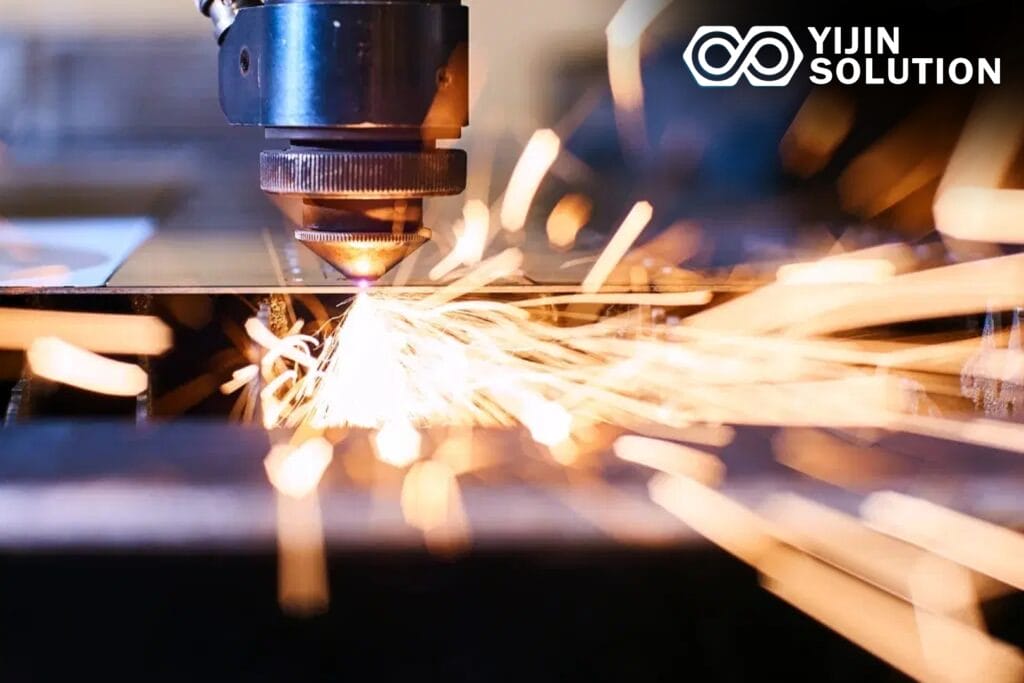
CNC Plasma Cutting Services
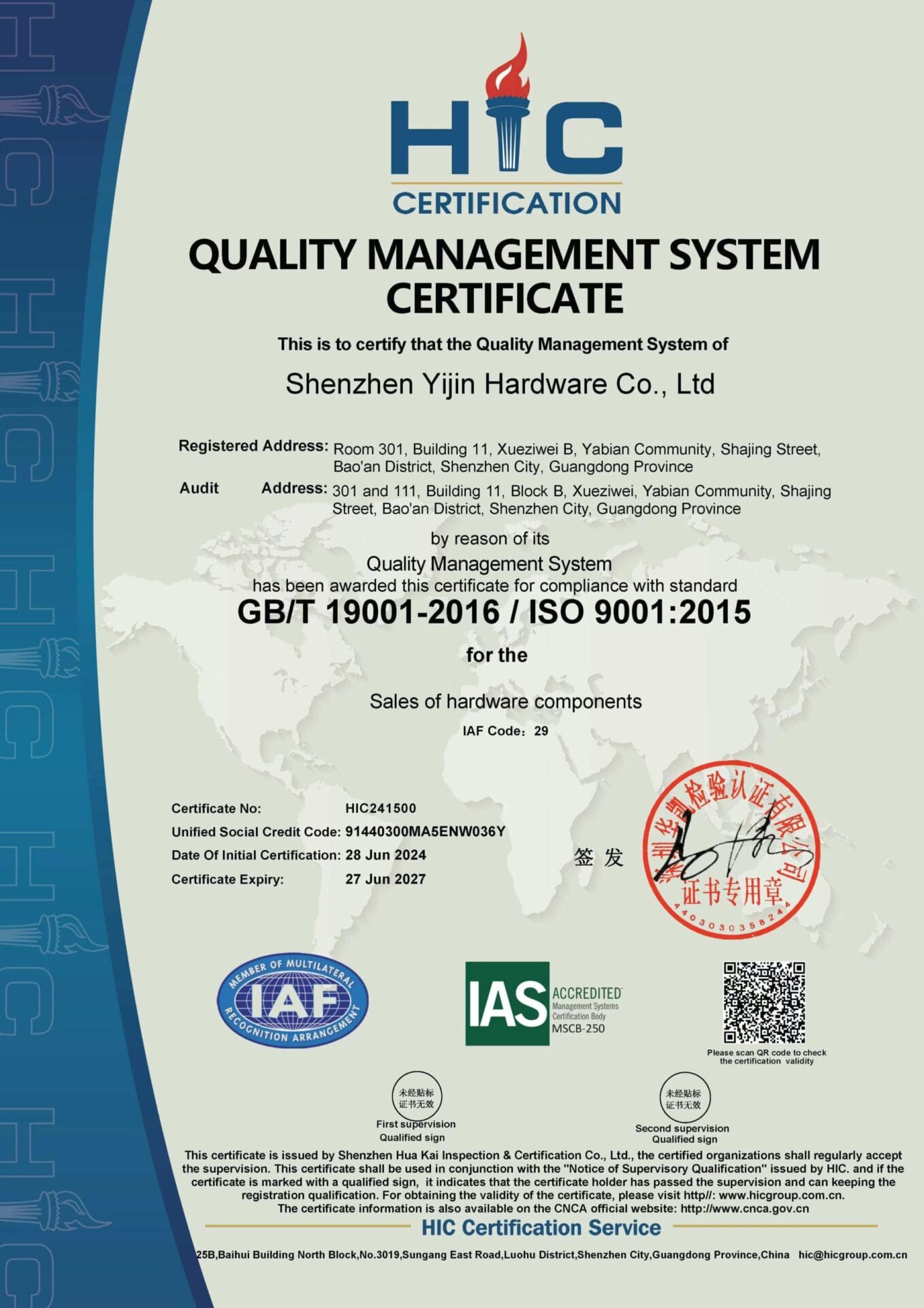
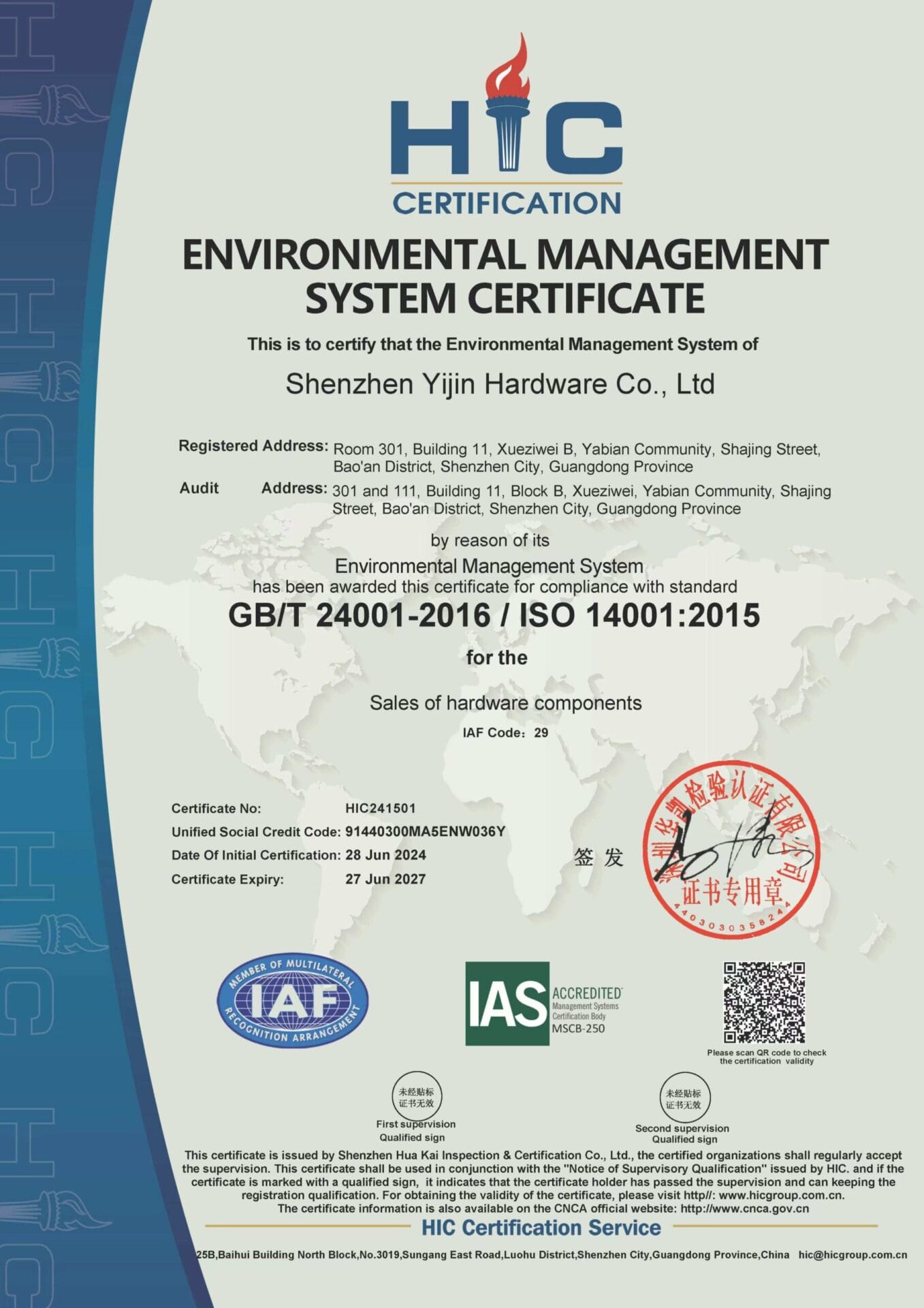
High-speed CNC plasma cutting for carbon steel, stainless steel, and aluminum plate from 1 to 80 mm thick. Conventional and high-definition (HD) plasma systems at our 25,000 m² facility in Shenzhen, operating under ISO 9001 and ISO 14001 quality systems.
Upload your DXF, DWG, or STEP file to receive a DFM review and instant quote within 24 hours.
- Tolerance ±0.5 mm conventional; ±0.2 mm with high-definition plasma
- Cuts conductive metals up to 80 mm thick at high feed rates
- No minimum order. Prototype through serialized production


Custom Plasma Cutting Services with Yijin Solution
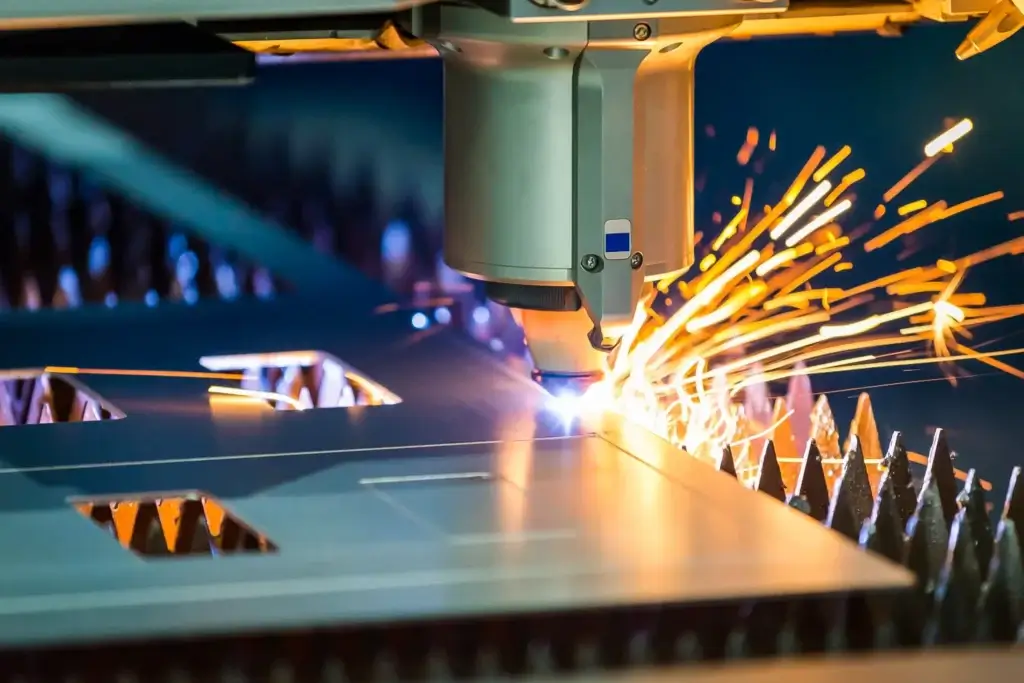
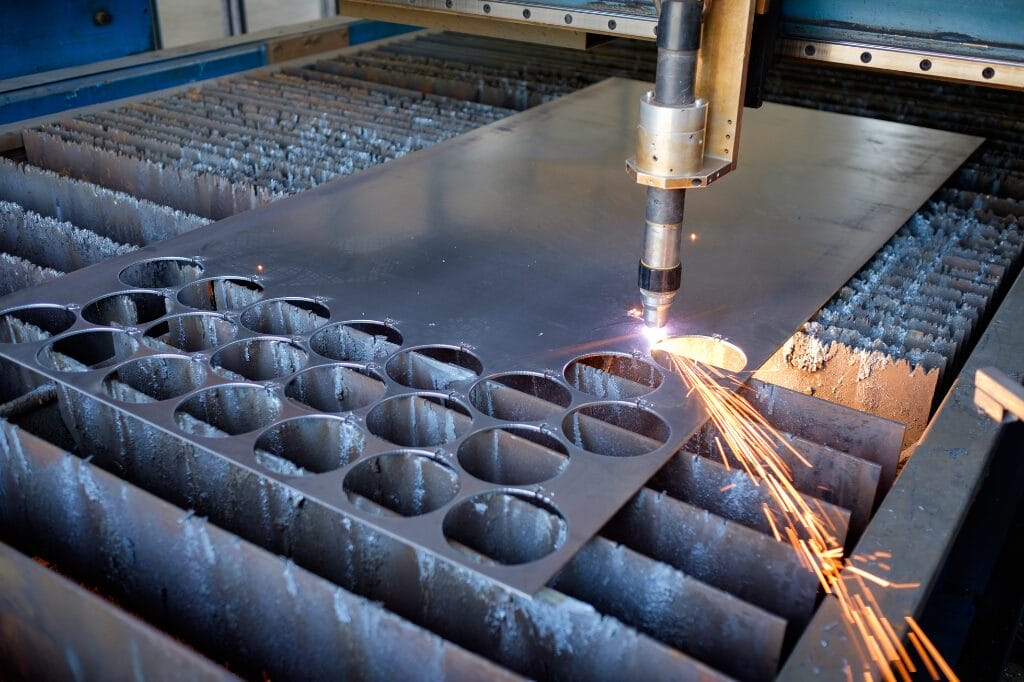
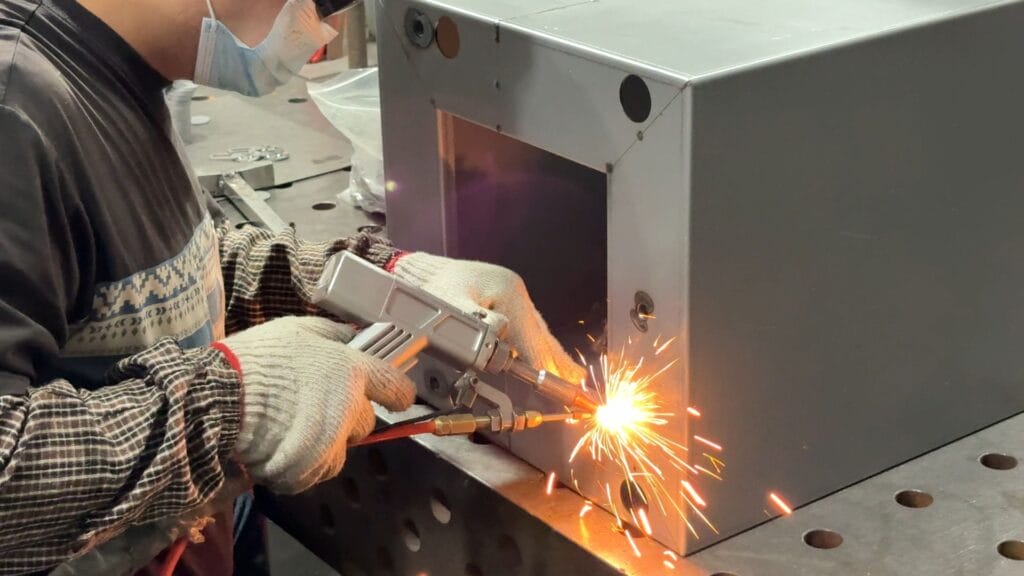
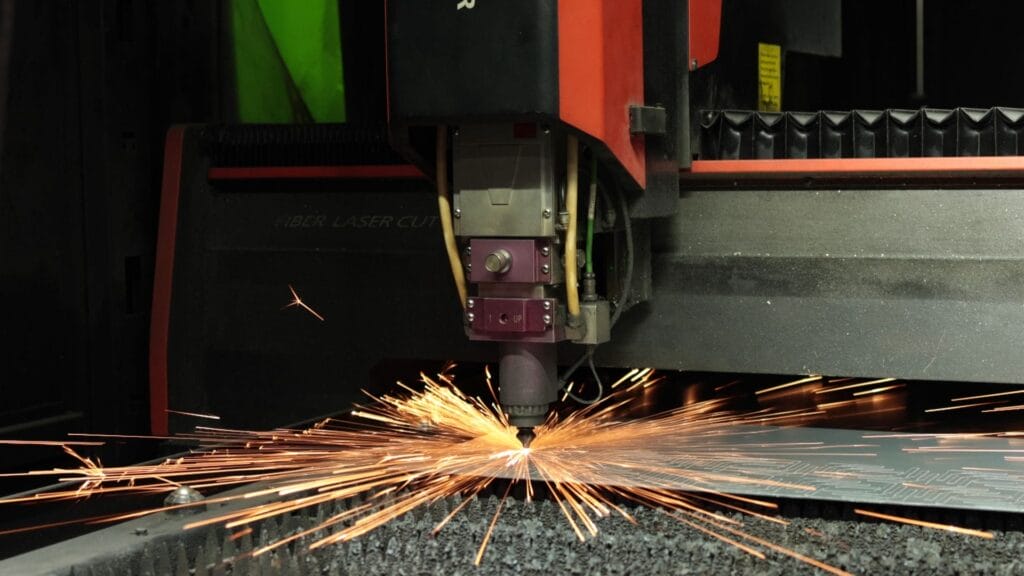
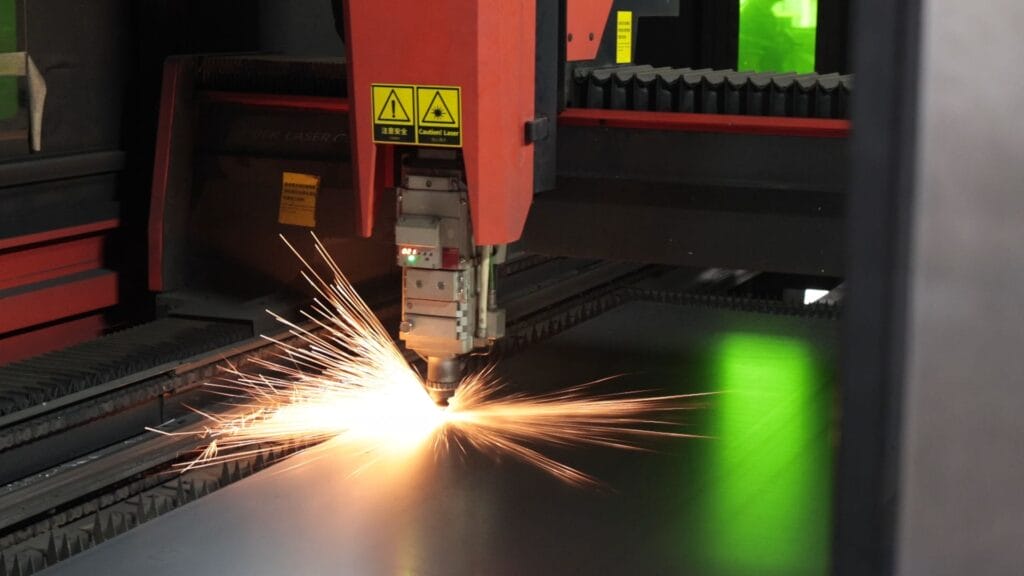
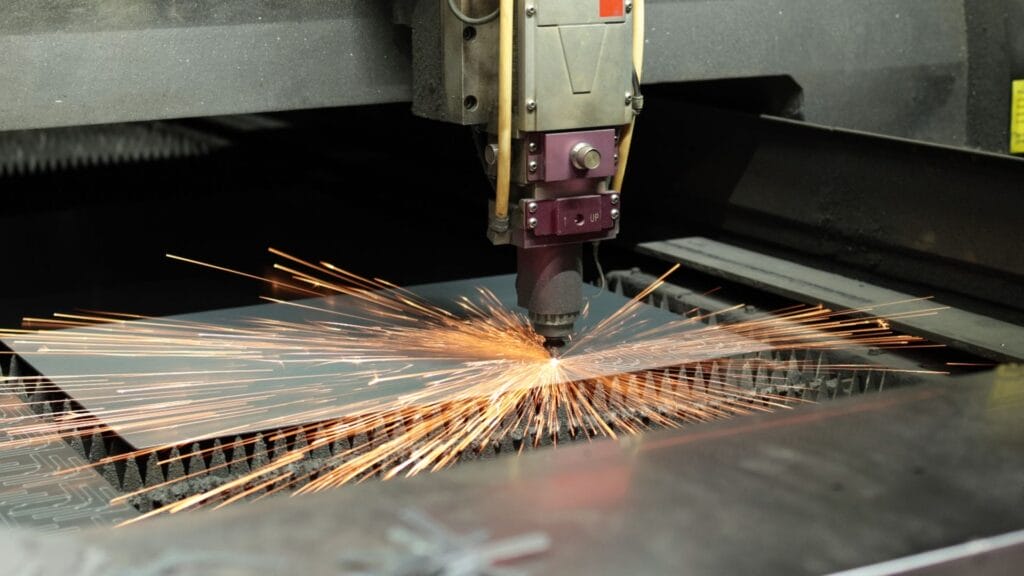
Plasma cutting uses a high-temperature ionized gas jet plus an electric arc to cut conductive metal. Compressed air, oxygen, or nitrogen passes through a constricting nozzle, ionizes into plasma at 20,000 °C and above, and melts a narrow path through the workpiece while the gas flow blows the molten metal clear. The result is a fast, low-cost cut on mild steel, stainless steel, and aluminum from a few millimeters up to 80 mm.
Plasma cutting sits inside our broader Sheet Metal Fabrication service alongside laser cutting, waterjet cutting, bending, and welding. Use plasma when you need to cut thick conductive metal at high speed, when carbon steel plate dominates the bill of materials, or when laser is too slow or too expensive on the thickness range. Bending, welding, and finishing run in-house on the same traveler.

Plasma Cutting Manufacturing Capabilities
| Feature | Description |
|---|---|
| Precision & Tolerance | ±0.5 mm (conventional); ±0.2 mm (high-definition); tolerance increases with thickness (up to ±1.2 mm) |
| Kerf Width | 2.5–5 mm (conventional); 1–2 mm (high-definition plasma) |
| Maximum Capacity | Sheet size up to 3000 × 1500 mm; thickness up to 80 mm (material dependent) |
| Edge Quality | ISO 9013 Range 3–5 (conventional); Range 2–3 (HD plasma); near-square edges under 25 mm |
| Lead Time | Prototypes: 3–7 days; production: 2–4 weeks |
Plasma Cutting Materials
Plasma cutting works on any electrically conductive metal. Mild steel is the cost leader, stainless and aluminum run with nitrogen or argon-hydrogen gas mixes, and copper and brass are cut on shorter runs where waterjet would be slower. Non-conductive materials (glass, stone, plastic, composites) require waterjet or laser instead.
Carbon and Mild Steel
| Type | Common Grades |
| Mild Steel Plate | A36, S235JR, Q235, SPHC, SPCC |
| Structural and Pressure-Vessel | S355J2, A516 Gr 70, Q345, 16Mn |
| High-Strength Low-Alloy | HARDOX 400/450, S690QL, abrasion-resistant plate |
Stainless Steel
| Type | Common Grades |
| Austenitic | 304, 304L, 316, 316L, 321 |
| Ferritic and Martensitic | 430, 410, 420 |
| Duplex and Specialty | 2205 duplex, 2507 super duplex |
Aluminum and Non-Ferrous
| Type | Common Grades |
| Aluminum Sheet and Plate | 1050, 5052, 5083, 6061-T6, 7075 |
| Aluminum and Non-Ferrous | C36000, C26000, C28000, C11000, C12200 |
| Bronze | C51900, C62300 (limited thickness) |
Specialty and Coated Plate
| Type | Common Grades |
| Galvanized Steel | SGCC, DX51D, hot-dip and electro-galvanized |
| Pre-Painted and Coated | Pre-primed steel, coil-coated stock |
| Tool and Wear Plate | A2, D2, hardened plate (with HD plasma) |

Plasma Cutting Surface Finishes
Plasma cutting produces a clean cut with a thin oxide layer along the kerf. The finishes below remove that layer, refine appearance, or prepare parts for downstream bending, welding, painting, or galvanizing.
Surface Finish
SPECIFICATION

As-Cut (ISO 9013 Range 3-5)
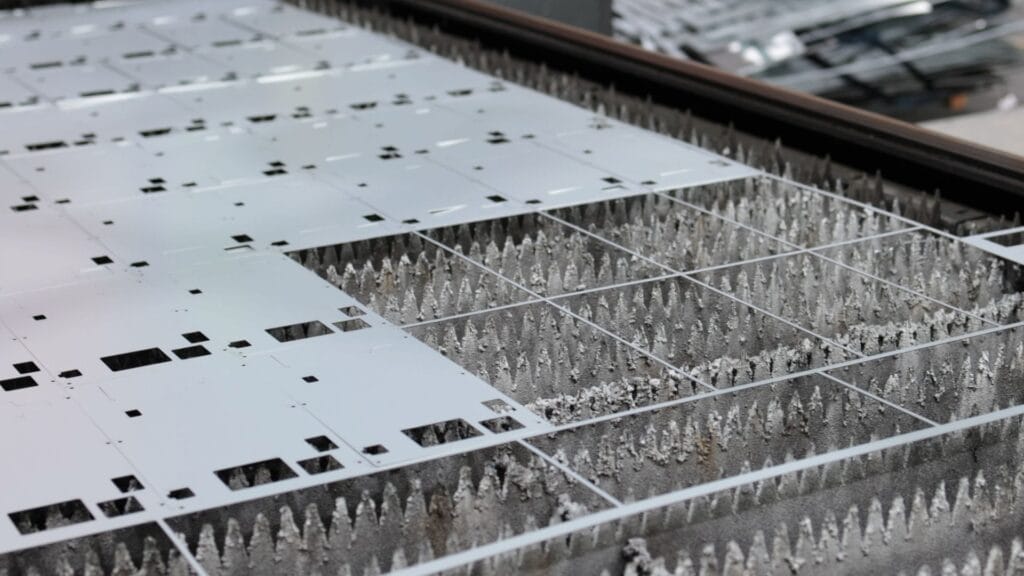
Parts ship directly from the plasma table with the cut edge intact. Acceptable for structural blanks, gussets, and parts that will be bevel-ground or welded later. Standard finish on conventional plasma where appearance is secondary.

Deburring and Slag Removal
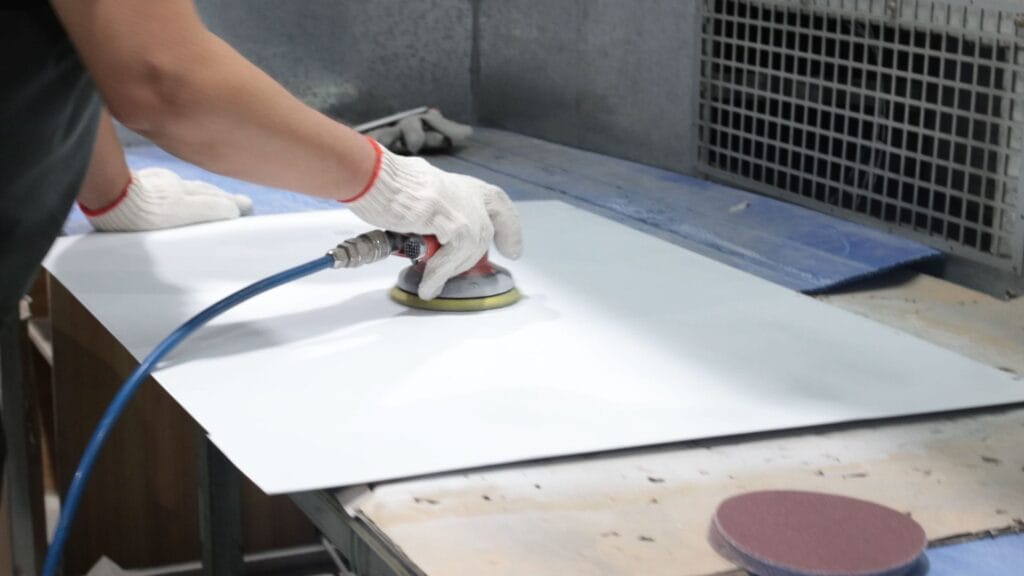
Mechanical deburring, disc grinding, or roto-finishing removes dross and slag from the bottom edge. Required on any part handled by end users or moving into a press brake. Holds Ra 3.2 to 6.3 μm on the cut edge.

HD Plasma Edge (Range 2-3)

Powder Coating
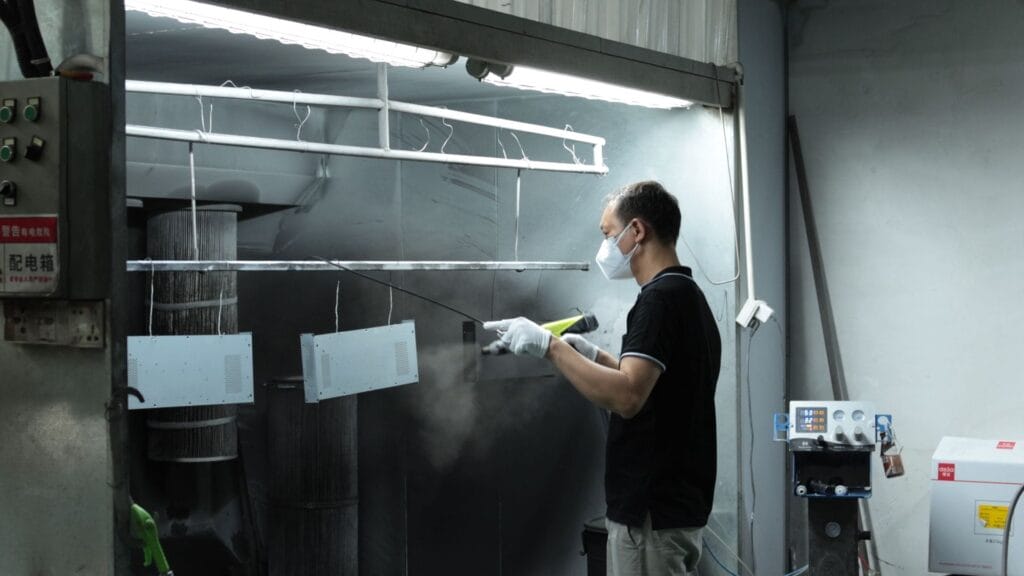
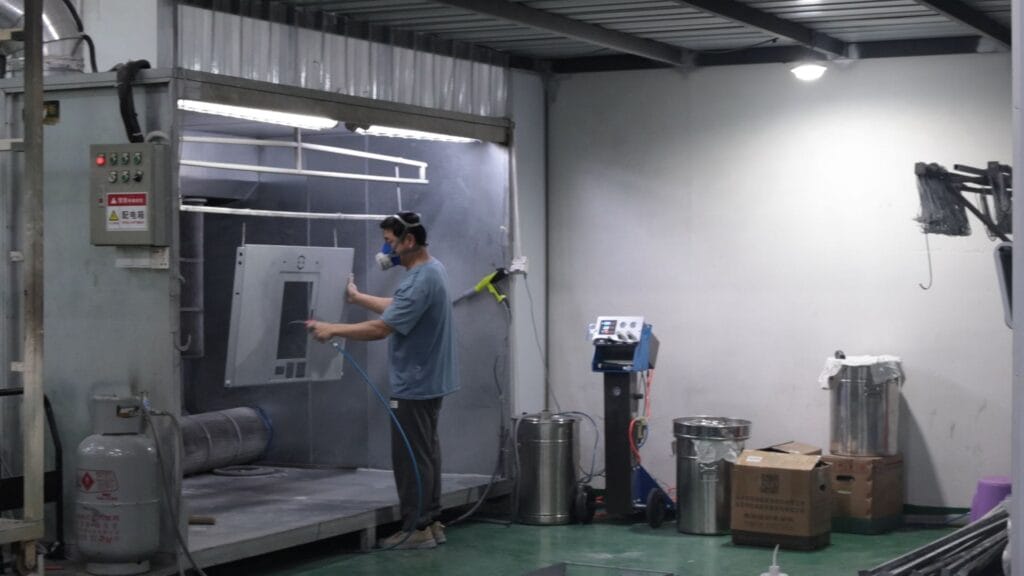
Electrostatic powder application baked at 180 to 200 °C for steel plasma-cut parts. Coating thickness 60 to 120 μm. RAL and Pantone color matches available. Delivers 500 to 1,000 hours of salt spray resistance.

Hot-Dip Galvanizing and Plating
Hot-dip galvanizing per ASTM A123 for outdoor structural parts. Zinc coating thickness 50 to 100 μm. Cold-zinc, nickel, or chrome plating available for cosmetic and corrosion protection. Plating thickness 5 to 30 μm.

Passivation and Pickling
Types of Plasma Cutting We Offer
We run three plasma cutting configurations under one roof, each suited to a different thickness range, edge quality requirement, and budget. Below are the main variants and where each is the correct choice.

Conventional Plasma Cutting
Compressed air or nitrogen plasma at 30 to 200 amperes, cutting carbon steel, stainless, and aluminum from 1 to 50 mm thick. Kerf width 2.5 to 5 mm with a moderate bevel angle on the cut face. The cost leader for structural blanks, gussets, brackets, and parts where edge quality is secondary to throughput.
High-Definition (HD) Plasma Cutting
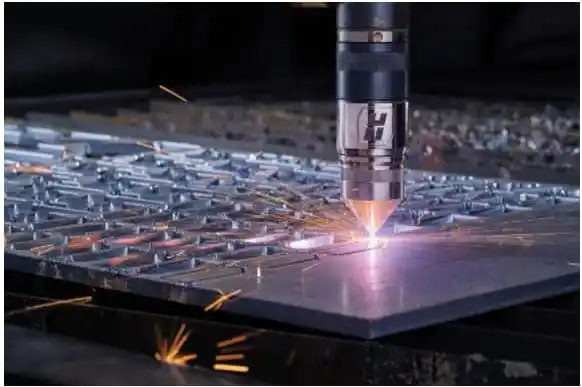
Constricted nozzle and oxygen or argon-hydrogen gas mix at 30 to 130 amperes, producing a tighter arc and a near-square cut edge. Holds ±0.2 mm tolerance and Range 2-3 edge quality on plate up to 25 mm, approaching fiber laser quality at lower equipment cost. The right choice for visible parts and weld-prep edges that would otherwise need machining.
Bevel and 5-Axis Plasma Cutting
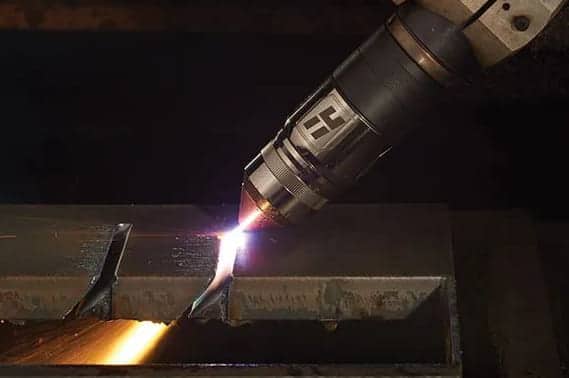
A 5-axis plasma head that tilts the torch during the cut to produce V, X, Y, and K-grooves for weld preparation in one operation. Eliminates a secondary milling or grinding step on thick-plate weldments. Used for pressure-vessel components, structural fabrications, shipbuilding, and any plate over 15 mm where the next operation is welding.
Applications of Plasma Cutting
Structural blanks, gussets, brackets, and thick-plate parts in carbon steel and stainless. Plasma covers the 6 to 80 mm range where laser is too slow and waterjet costs too much per part.
Beam connection plates, base plates, gusset plates, and structural reinforcements in A36, S355, and Q345 steel. Bevel-cut weld preps reduce downstream machining on multi-pass welded joints.
Chassis reinforcements, mounting brackets, frame rails, and protection plates in mild and high-strength steel. Truck, trailer, and agricultural vehicle parts produced under IATF-aligned quality systems.
Hull plate sections, bulkhead panels, deck reinforcements, and bracket fabrications in marine-grade carbon steel and 2205 duplex stainless. Bevel cuts deliver assembly-ready edges for full-penetration welds.
Duct flanges, register frames, equipment housings, and damper bodies in galvanized steel and aluminum. High-volume nesting on standard sheet sizes keeps per-part cost low.
Frame weldments, machine bases, hopper plates, conveyor side panels, and chute liners in structural steel and abrasion-resistant HARDOX plate. Cuts hardened wear plate without annealing the parent material.
Plow shares, harrow discs, mounting frames, hopper bodies, and silo panels in mild steel, stainless, and galvanized plate. High-feed plasma keeps per-part cost competitive against legacy oxy-fuel cutting.
Wind turbine base flanges, solar mounting frames, oil and gas wellhead components, and pipeline reinforcement plates in carbon steel and 2205 duplex. Bevel-cut plate ready for full-penetration welding on tower bases.
Decorative steel screens, perforated facades, signage letters, and architectural metalwork in carbon steel and weathering steel. HD plasma delivers near-laser edge quality on visible parts at lower cost than laser cutting.
Yijin Solution Plasma Cutting Factory
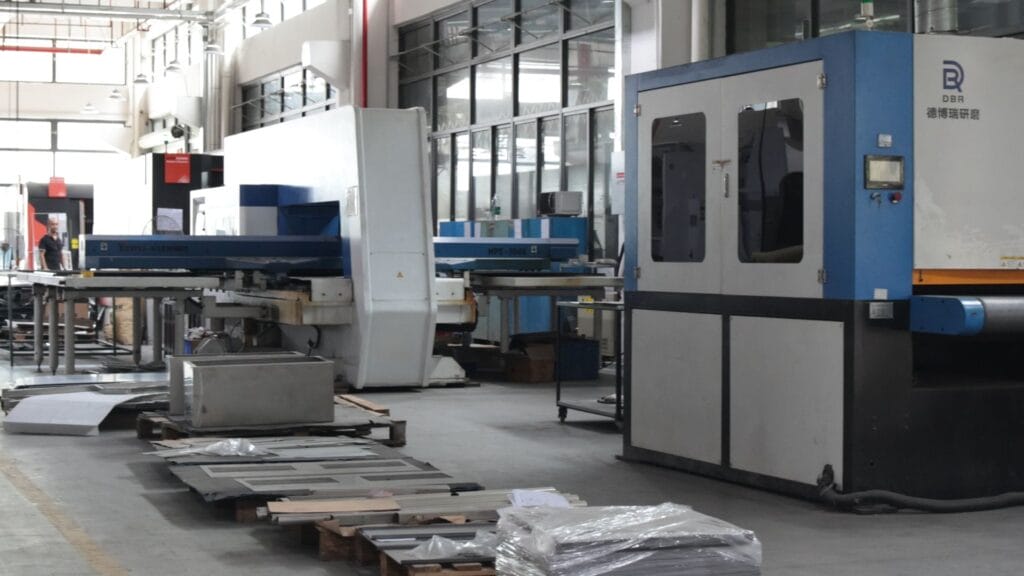
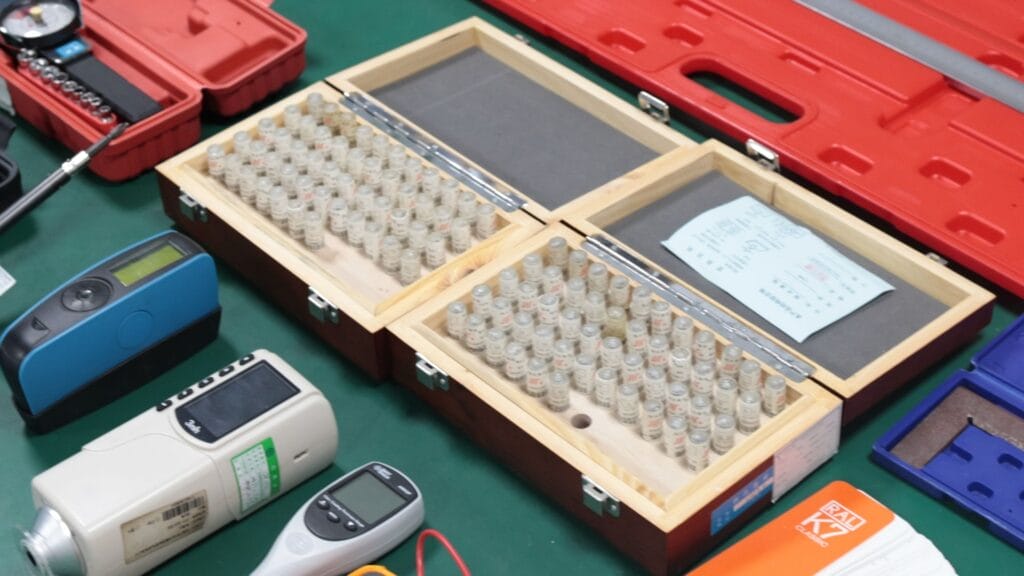
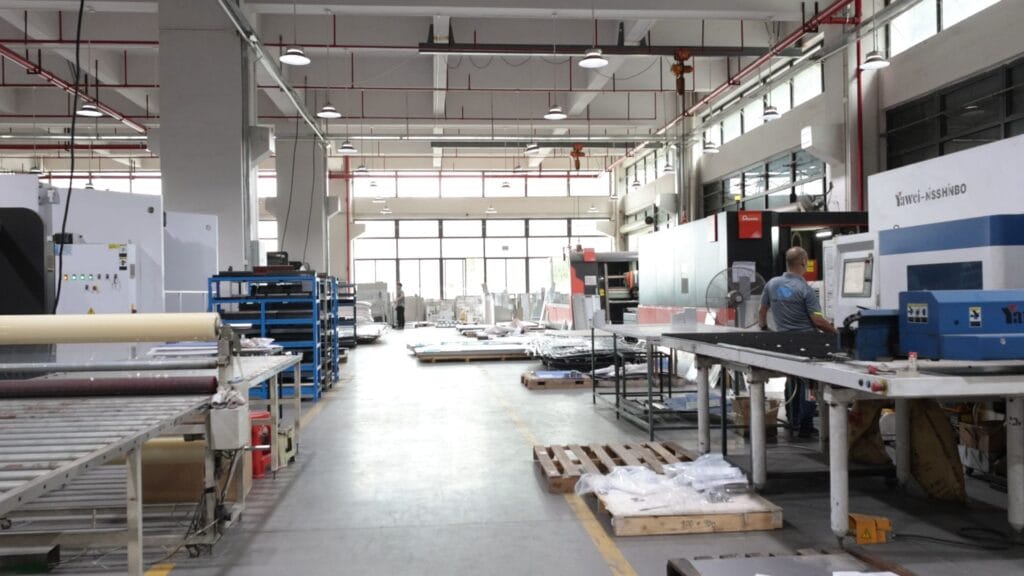
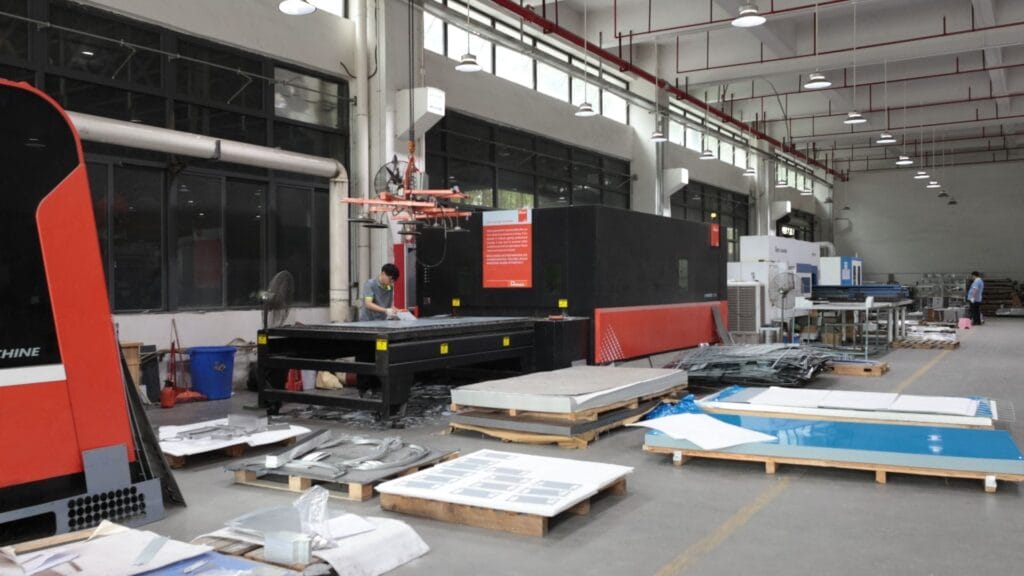
Yijin Solution operates a 25,000+ m² manufacturing facility in Shenzhen, China. The plasma cutting cell houses conventional and high-definition CNC plasma tables with bevel-capable 5-axis torches, plus 281 inspection instruments including Zeiss CMMs, profile projectors, and edge-quality gauges. Sheet, plate, and structural stock move from raw material through plasma cutting, deburring, edge finishing, and inspection without leaving the facility.
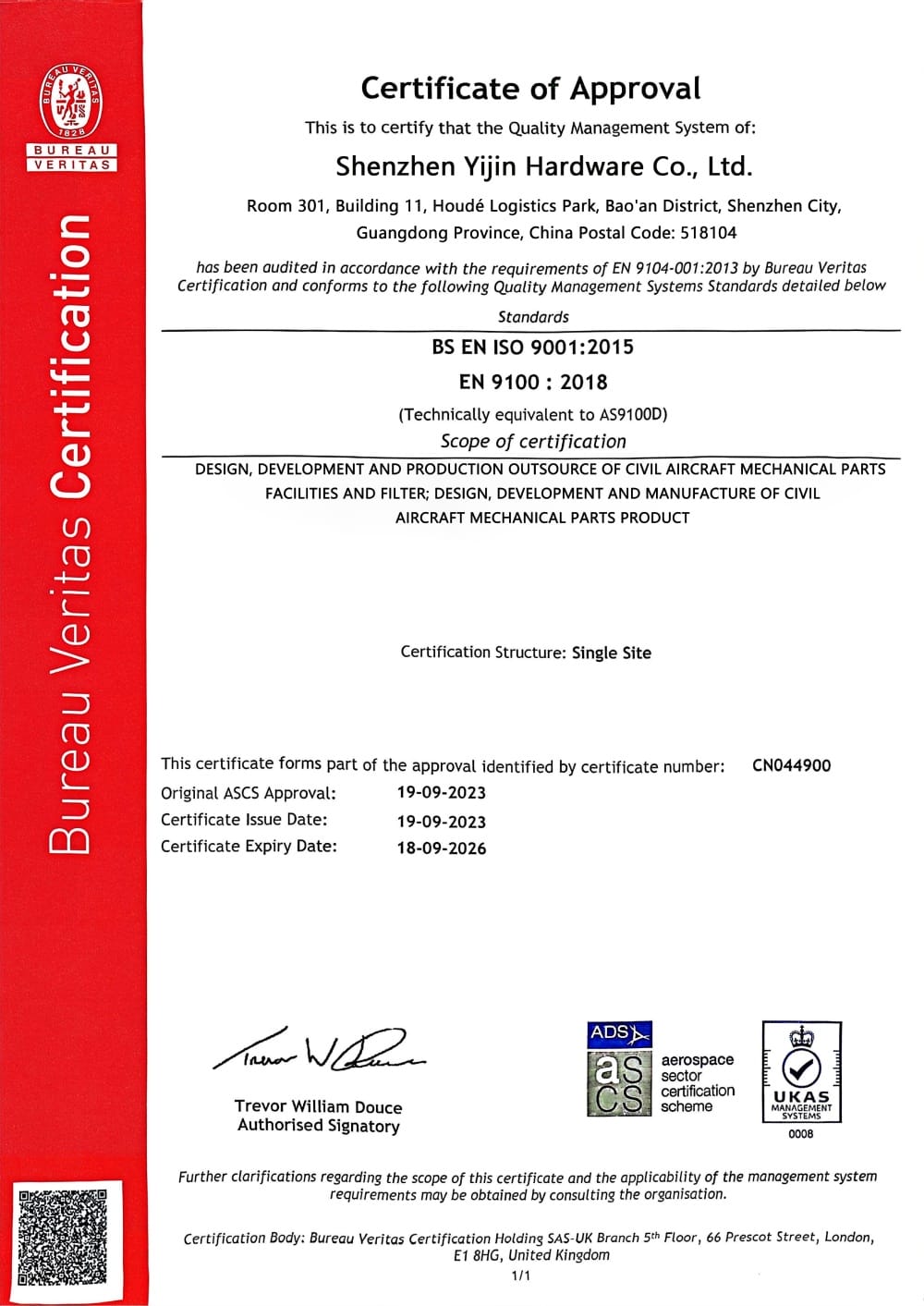
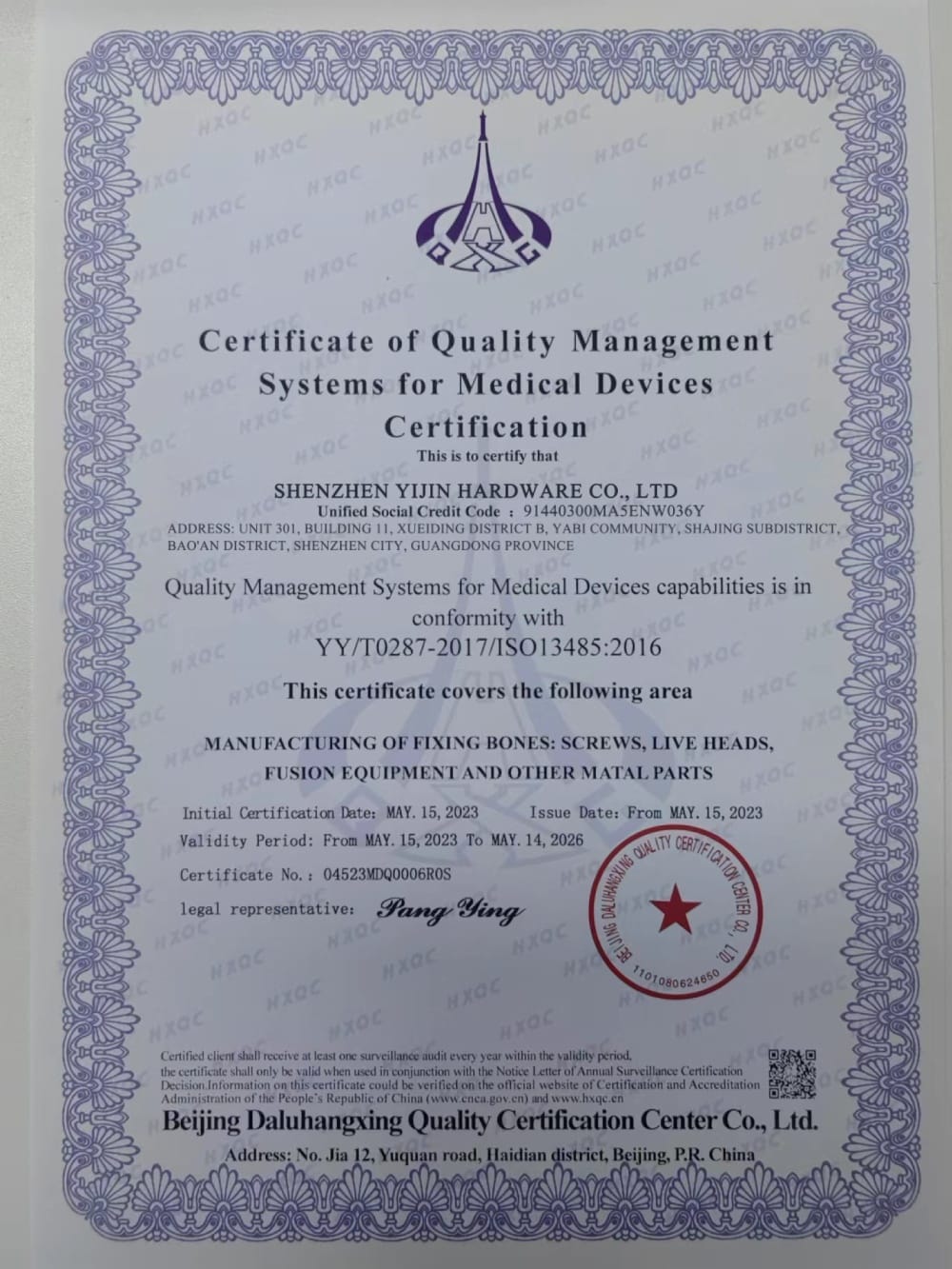
We serve clients across North America, Europe, and Asia-Pacific. Every order ships with full dimensional inspection reports, material certifications, and where applicable, mechanical test data and FAI documentation. For aerospace and medical programs, production runs under AS9100 and ISO 13485 quality management systems.


What's Plasma Cutting
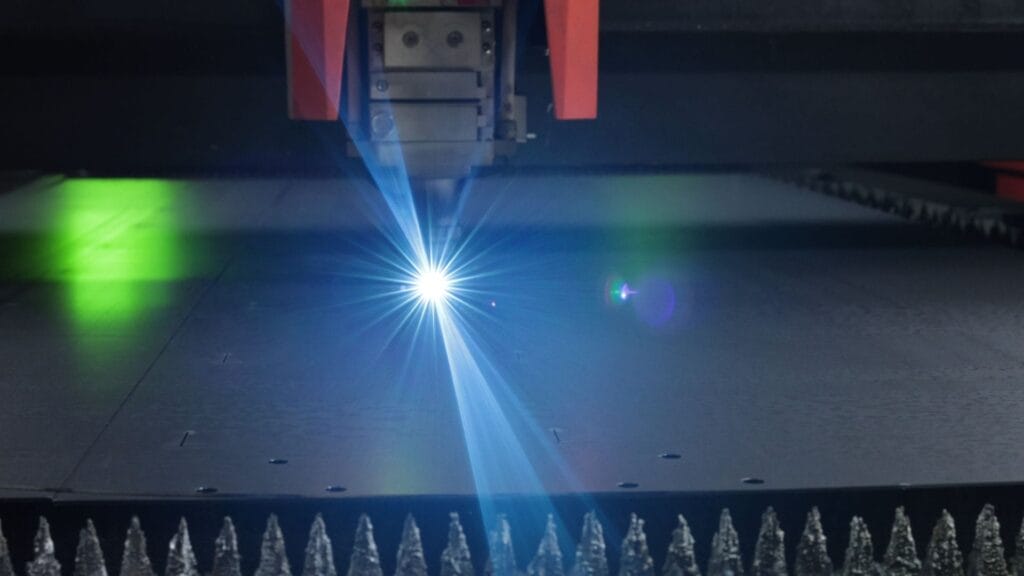
Plasma cutting is a thermal cutting process that uses an electrically conductive gas, called plasma, to melt and cut metal. A high-velocity stream of compressed air, oxygen, or nitrogen passes through a constricting nozzle and is ionized by an electric arc. The resulting plasma reaches temperatures above 20,000 °C and exits the nozzle at near-supersonic speed. When the plasma jet contacts a conductive workpiece, it completes the electrical circuit, melts the metal in its path, and the gas flow blows the molten material clear to leave a clean kerf.
Plasma cutting is the cost leader for cutting thick mild steel, stainless steel, and aluminum at high speed. It is faster than waterjet on most plate over 6 mm, and more economical than laser on plate over 15 mm. The trade-offs are a wider kerf than laser (2 to 5 mm versus 0.1 to 0.5 mm), a small heat-affected zone, and limitation to electrically conductive metals only. For non-conductive materials like stone, glass, or composites, waterjet is the correct process.


How Plasma Cutting Works
Plasma cutting follows four steps from a digital design to a finished part.
- Design to program. Your DXF, DWG, or STEP file is converted to cutting paths in CAM software. The software selects amperage, gas mix, traverse speed, and pierce height based on material and thickness.
- Setup. The operator loads the sheet or plate onto the cutting table, sets the torch standoff, selects the gas (compressed air for mild steel, nitrogen for stainless and aluminum, oxygen for high-speed steel cutting), and starts the cooling water flow on HD systems.
- Cutting. A pilot arc ionizes the gas inside the nozzle, then transfers to the workpiece when the torch comes within standoff distance. The plasma stream reaches over 20,000 °C and cuts at 1,000 to 8,000 mm/min depending on material and thickness. Cutting can happen above the table (dry) or with the plate submerged in water to control fume and noise.
- Deburring and inspection. Cut parts are removed, dross is removed from the bottom edge by mechanical deburring or grinding, and the parts are inspected against the drawing before finishing or shipment.
A typical prototype cycle takes 3 to 7 days. Production batches take 2 to 4 weeks.
Why Choose Yijin Solution for Plasma Cutting
We control every step of plasma cutting from programming through cutting, deburring, finishing, and inspection. That vertical integration means shorter lead times, consistent edge quality, and direct factory pricing without broker margins.

Zeiss CMMs, laser interferometers, and optical comparators verify every critical batch. Parts hold ±0.05 mm typical and ±0.02 mm on 5-axis programs. First Article Inspection and PPAP Level 3 documentation standard on production runs.

Prototypes ship in 3 to 7 business days and production shipments in 2 to 4 weeks. Plasma tables plus in-house deburring, bending, and welding keep parts moving without supplier handoffs.

Single-piece prototypes and production runs of 100,000+ parts go through the same machines and the same inspection standards. No minimum order quantity. Volume does not change quality gates.

Your prototype and production parts come off the same tables with the same program. No re-qualification, no new vendor onboarding, and no process variation when you scale from validation to volume.

Carbon steel up to 80 mm, stainless to 50 mm, aluminum to 40 mm. Bevel-cut weld preparation in one operation. Plasma covers thickness ranges where laser is too slow and waterjet costs too much per part.

Direct factory pricing without broker margins. Our engineering team reviews your drawing before programming starts to identify nesting, common-line cutting, and lead-in optimizations that reduce cycle time and per-part cost.
FAQs About Plasma Cutting
Common questions about plasma cutting processes, materials, and our production system.
1. How Do I Choose Between 3-Axis, 4-Axis, and Bevel and 5-Axis Plasma Cutting?
The choice depends on edge quality, tolerance, and material thickness.
Conventional plasma is the cost leader for structural and non-cosmetic parts in 6 to 80 mm carbon steel. Kerf is 2.5 to 5 mm and the cut edge has a small bevel and visible heat-affected zone. Acceptable when the part will be welded, ground, or hidden in an assembly.
High-definition (HD) plasma uses a constricted nozzle and oxygen or argon-hydrogen gas mix to produce a near-square cut edge at ±0.2 mm tolerance and Range 2-3 edge quality per ISO 9013. The trade-off is slightly higher operating cost. Specify HD plasma for visible parts, weld-prep edges, and any application where laser was the previous default.
For plate over 25 mm thick, HD plasma still delivers a clean cut where laser becomes uneconomical. Our engineering team can recommend the right plasma class during DFM review.
2. What's the Difference Between Plasma and Laser Cutting?
Plasma and laser are both thermal cutting processes but they suit different thickness ranges and budgets.
Laser cutting (fiber or CO2) holds tighter tolerances of ±0.1 mm and produces a narrow 0.1 to 0.3 mm kerf. Best on thin and medium-gauge metal from 0.5 to 25 mm, especially when edge quality must be weld-ready or paint-ready without deburring.
Plasma cutting holds ±0.2 mm with HD systems and ±0.5 mm with conventional, but cuts much faster on plate over 15 mm and at lower equipment cost. Best on plate from 6 to 80 mm thick where speed and per-part cost matter more than the tightest edge quality.
A common production split: laser for the thin parts and HD plasma for the thick plate on the same assembly. Both processes run in our facility on coordinated schedules.
3. What Materials Can Be Plasma Cut?
Plasma cutting requires an electrically conductive material. The process works on any metal that conducts current.
Mild and carbon steel from 1 to 80 mm, including A36, Q235, S235JR, S355, and HARDOX abrasion-resistant plate. Carbon steel is the dominant plasma material because oxygen-plasma combustion accelerates the cut.
Stainless steel from 1 to 50 mm including 304, 316, 321, 430, and 2205 duplex. Cuts with nitrogen or argon-hydrogen gas to keep the edge bright.
Aluminum from 1 to 40 mm, including 1050, 5052, 6061, and 7075 plate. Nitrogen plasma produces cleaner edges than air plasma on aluminum.
Copper, brass, and bronze in limited thickness ranges. These conductive non-ferrous metals cut well on shorter runs but waterjet is often more economical for production volume.
Materials plasma cannot cut: glass, stone, ceramic, plastic, composites, wood, and any non-conductive substrate. Use waterjet or laser for those materials.
4. What Tolerances and Edge Quality Can Plasma Cutting Achieve?
Accuracy depends on plasma class, material thickness, and traverse speed.
Conventional plasma holds ±0.5 mm typical positional tolerance with ISO 9013 Range 3-5 edge quality. Suitable for structural blanks, gussets, and parts where the cut edge will be welded or hidden.
High-definition plasma holds ±0.2 mm typical with ISO 9013 Range 2-3 edge quality. Approaches fiber laser performance on plate up to 25 mm. Standard for visible parts, weld preparation, and parts that previously required laser.
Tolerance loosens with thickness: ±0.2 mm at 1 to 6 mm, ±0.3 mm at 7 to 15 mm, ±0.5 mm at 16 to 25 mm, ±0.8 mm at 26 to 50 mm, and ±1.2 mm at 51 to 80 mm on HD plasma.
Bevel angle on the cut face runs 1 to 3 degrees on conventional plasma and under 1 degree on HD plasma below 25 mm. 5-axis bevel heads compensate for taper and cut intentional weld-prep angles.
5. What Is the Maximum Thickness for Plasma Cutting?
We cut conductive metal up to 80 mm thick on conventional plasma at 200+ amperes.
Typical thickness by material: mild and carbon steel up to 80 mm production (100 mm with severance settings), stainless steel up to 50 mm, aluminum up to 40 mm, copper and brass up to 25 mm before edge quality drops.
Maximum sheet size is 3,000 × 1,500 mm with table extensions available for longer plate. HD plasma typically caps at 25 to 30 mm for tight-tolerance work; above that thickness, conventional plasma is the standard choice.
6. When Should I Choose Plasma over Laser or Waterjet?
Each process has a sweet spot.
Choose laser when the material is thin sheet (0.5 to 12 mm), edge quality must be weld-ready or paint-ready, and tolerance under ±0.1 mm matters.
Choose waterjet when the material is non-conductive (stone, glass, ceramic, composites), heat-sensitive (hardened steel, heat-treated alloys), or thicker than 80 mm.
Choose plasma when cutting conductive plate from 6 to 80 mm thick, especially carbon steel, and per-part cost or throughput is the primary driver. Plasma is also the right choice for bevel-cut weld preparation on thick plate, since 5-axis plasma heads do this in one operation that would otherwise need waterjet plus secondary machining.
Many real fabrication programs use two or three processes: laser for the thin gauges, HD plasma for the structural plate, waterjet for the composites or weld-sensitive material on the same assembly.
7. Can Plasma Cut Parts Be Post-Finished?
Yes. Most production programs include at least one post-machining operation.
Anodizing is standard on aluminum parts for corrosion and wear resistance. Type II anodizing adds 5 to 25 μm; Type III hardcoat adds 25 to 75 μm for abrasion-heavy applications.
Powder coating is standard on steel parts for outdoor or high-salt environments. Powder coat delivers 500 to 1,000 hours of salt spray resistance in 60 to 120 μm coatings.
Passivation is required on stainless steel medical and food-grade parts to remove free iron and restore the chromium oxide layer (ASTM A967).
Hot-Dip Galvanizing and Plating adds bright chrome, nickel, zinc, or tin for cosmetic and functional finishes on steel and brass. Plating adds 5 to 30 μm to part dimensions.
Polishing to Ra 0.2 to 0.8 μm is available for optical surfaces, sealing faces, and mirror finishes. Specify on the drawing which surfaces require polishing since it is a manual operation.
Decide on finish requirements during the DFM review because they often influence material selection and dimensional tolerance.
8. What File Formats Do You Accept and What Does the Quoting Process Look Like?
Custom fastener production covers a range of processes that convert wire or bar stock into finished parts. Here are the primary processes available through most full-service fastener manufacturers.
Cold Heading: Progressive dies form the head, shank, and recesses from a wire blank. The most cost-effective process for volumes above 10,000 pieces. Diameter range 1.5 to 25 mm.
CNC Turning: Rotating bar stock is machined by cutting tools. Suitable for fasteners with complex geometries, unusual thread forms, or tolerances tighter than cold heading allows.
Swiss Machining: A variant of CNC turning for small-diameter, long, or precision parts. Used for miniature fasteners and medical screws with tolerances to ±0.01 mm.
Thread Rolling: Hardened dies form threads by cold displacement rather than cutting. Rolled threads are stronger than cut threads and produce no chips. Standard process for high-strength fasteners.
Heat Treatment: Quenching, tempering, carburizing, or induction hardening produces fasteners to specified strength grades (Grade 5, 8, Class 8.8, 10.9, 12.9).
Plating and Coating: Zinc, hot-dip galvanizing, electroless nickel, black oxide, Dacromet, and chrome plating applied after threading. Provides corrosion resistance and appearance.
Inspection and Testing: Dimensional inspection with CMM and thread gauges. Mechanical testing includes tensile, hardness, and torque-tension. Salt spray testing for plated fasteners.
A full-service manufacturer combines these processes under one roof, reducing lead times and eliminating the coordination overhead of managing multiple suppliers.
Plasma Cutting Guides

Types of Mechanical Threads
Threads are basically helical ridges that get machined onto cylindrical or conical surfaces. They’re pretty ingenious – they convert rotational
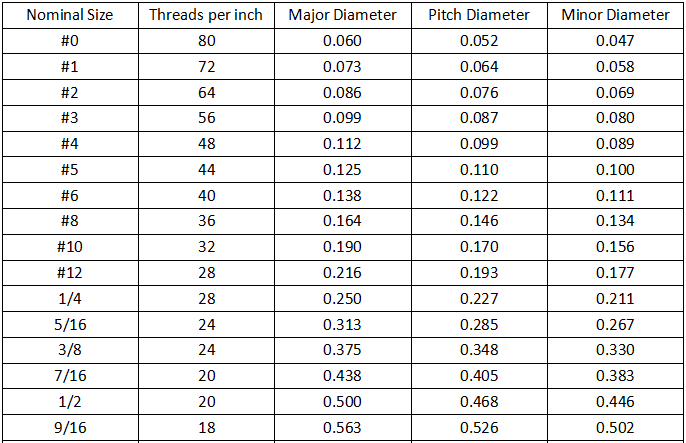
Complete Thread Size Chart Guide: Understanding All Standards and Applications
Threaded components have accurate specifications for assembly integrity and performance. We have put together this thread size chart to help
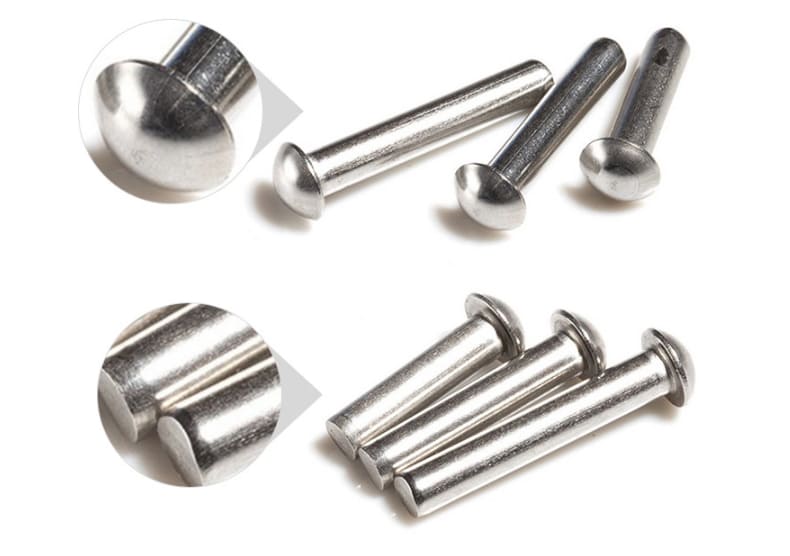
Types of Rivets And Their Applications
Rivets are permanent mechanical fasteners used to join materials. Common types include solid, blind, tubular, split, shoulder, drive, self-piercing, and
Start today. Get parts made fast.
Free Machined Parts Design to Your Projects with Reduced Lead Times Times.