


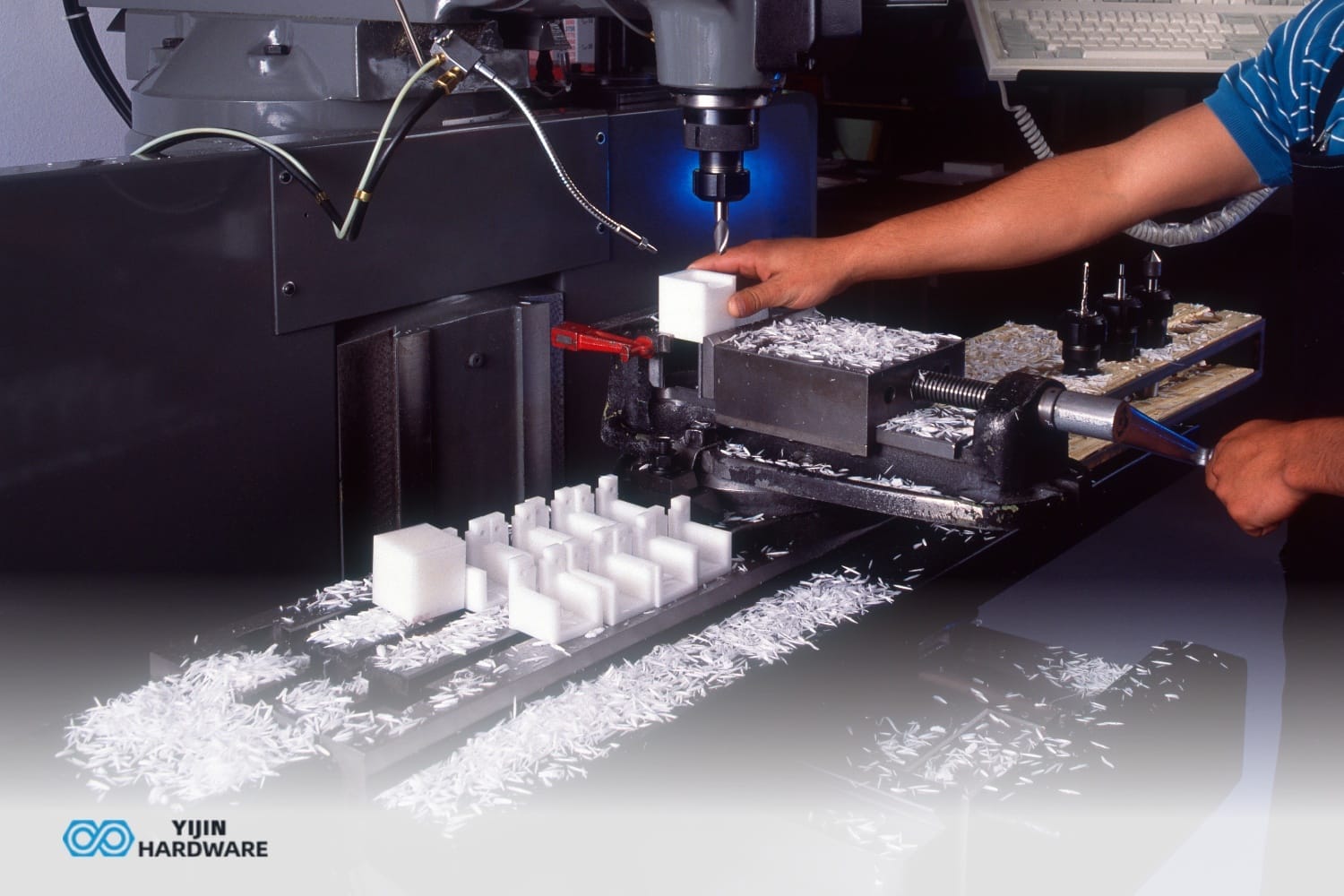
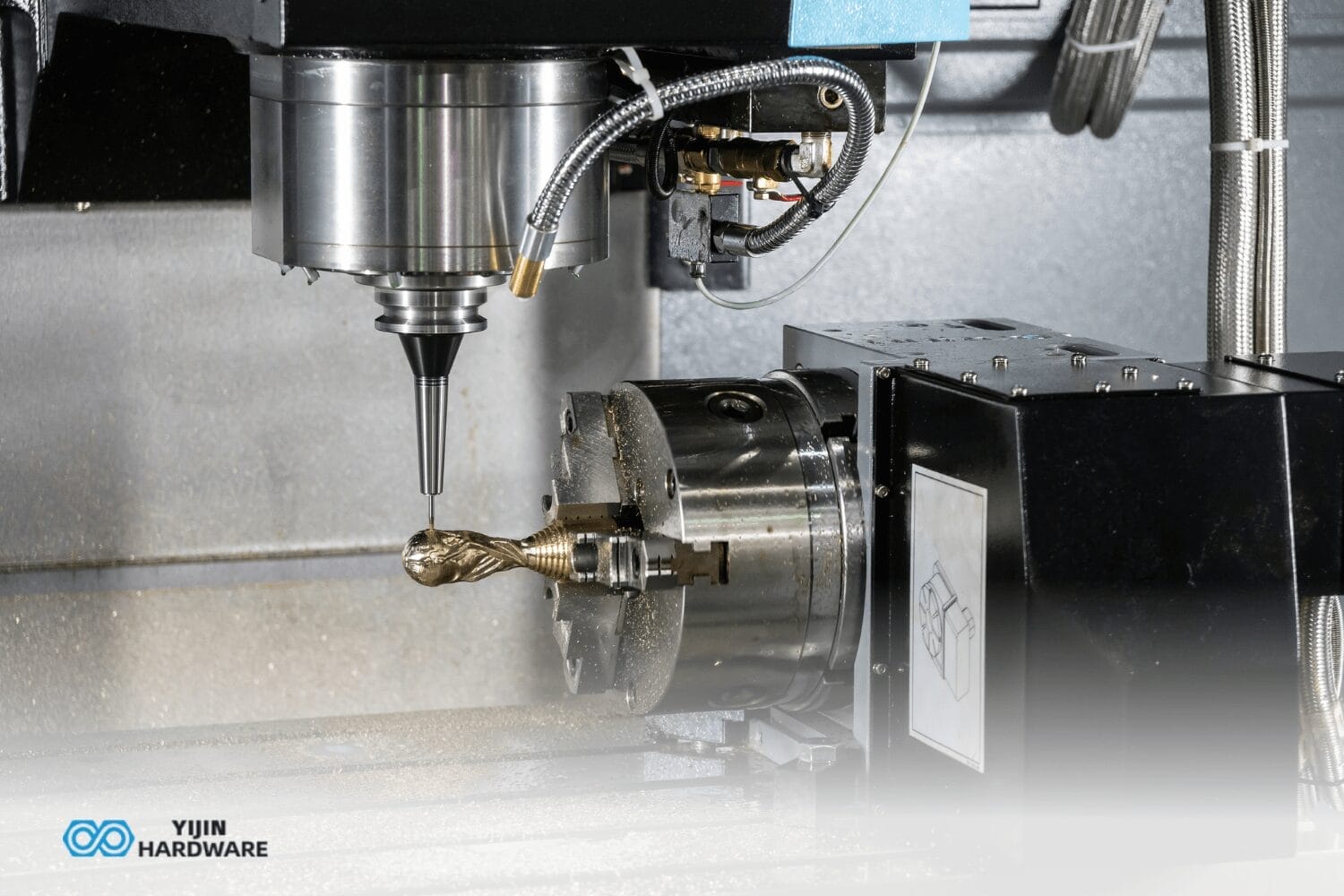
Creating precision parts through CNC machining requires selecting the right plastic material for your specific application. Plastics like POM (Delrin/Acetal), PEEK, and ABS offer unique advantages, including lightweight properties, chemical resistance, and cost-effectiveness. At Yijin Hardware, we’ve perfected the art of CNC machining various plastic materials to meet diverse client requirements.
This guide will help you understand the different types of plastic for CNC machining, their properties, and ideal applications to ensure you select the best plastic for machining your next project.
Key Takeaways
- POM (Delrin) offers the best combination of machinability, dimensional stability, and excellent dimensional stability for precision mechanical components.
- PEEK provides the highest performance in extreme environments, withstanding temperatures up to 260 °C while maintaining excellent mechanical properties.
- ABS delivers cost-effective prototyping capabilities with good impact resistance at approximately 1/3 the cost of specialized engineering plastics.
- Proper material selection can reduce overall project costs by minimizing machining time, preventing tool wear, and avoiding part failures.
- Plastic CNC parts typically offer 50-70% weight reduction compared to metal alternatives, while providing superior chemical resistance.
What are CNC Machinable Plastics?
CNC machinable plastics are polymer materials engineered to withstand the cutting, drilling, and milling processes of computer numerical control machinery. These plastic materials possess dimensional stability, consistent internal structure, and appropriate hardness for precise machining to tight tolerances. Unlike metals, CNC machined plastics offer significant weight reduction while providing excellent resistance to chemicals, electricity, and corrosion.
The selection of appropriate plastic for CNC machining depends on your application requirements, including mechanical properties, environmental conditions, and budget constraints.
Why Should You Choose Plastic For CNC Machining?
Plastics offer significant advantages for CNC machining applications due to their lightweight properties, chemical resistance, and cost-effectiveness. These materials provide weight reductions of 50-70% compared to metal machine parts, making them ideal for weight-critical applications. Many plastics deliver excellent chemical resistance against acids, bases, and solvents that would quickly degrade metal components.
Plastic typically requires less machine time than harder metals, reducing wear on cutting tools and extending tool life. This efficiency translates to faster production cycles and lower overall manufacturing costs for many projects.
| Property | Plastics | Metals |
|---|---|---|
| Weight | Lightweight (0.9-1.4 g/cm³) | Heavy (2.7-8.0 g/cm³) |
| Chemical Resistance | Excellent for most chemicals | Varies; prone to corrosion |
| Electrical Properties | Excellent insulators | Conductive |
| Machining Speed | Higher cutting speeds are possible | Lower cutting speeds are required |
| Tool Wear | Reduced tool wear | Increased tool wear |
| Post-Processing | Minimal finishing required | Often requires finishing |
| Cost | Lower material cost | Higher material cost |
What are The Top Plastics for CNC Machining?
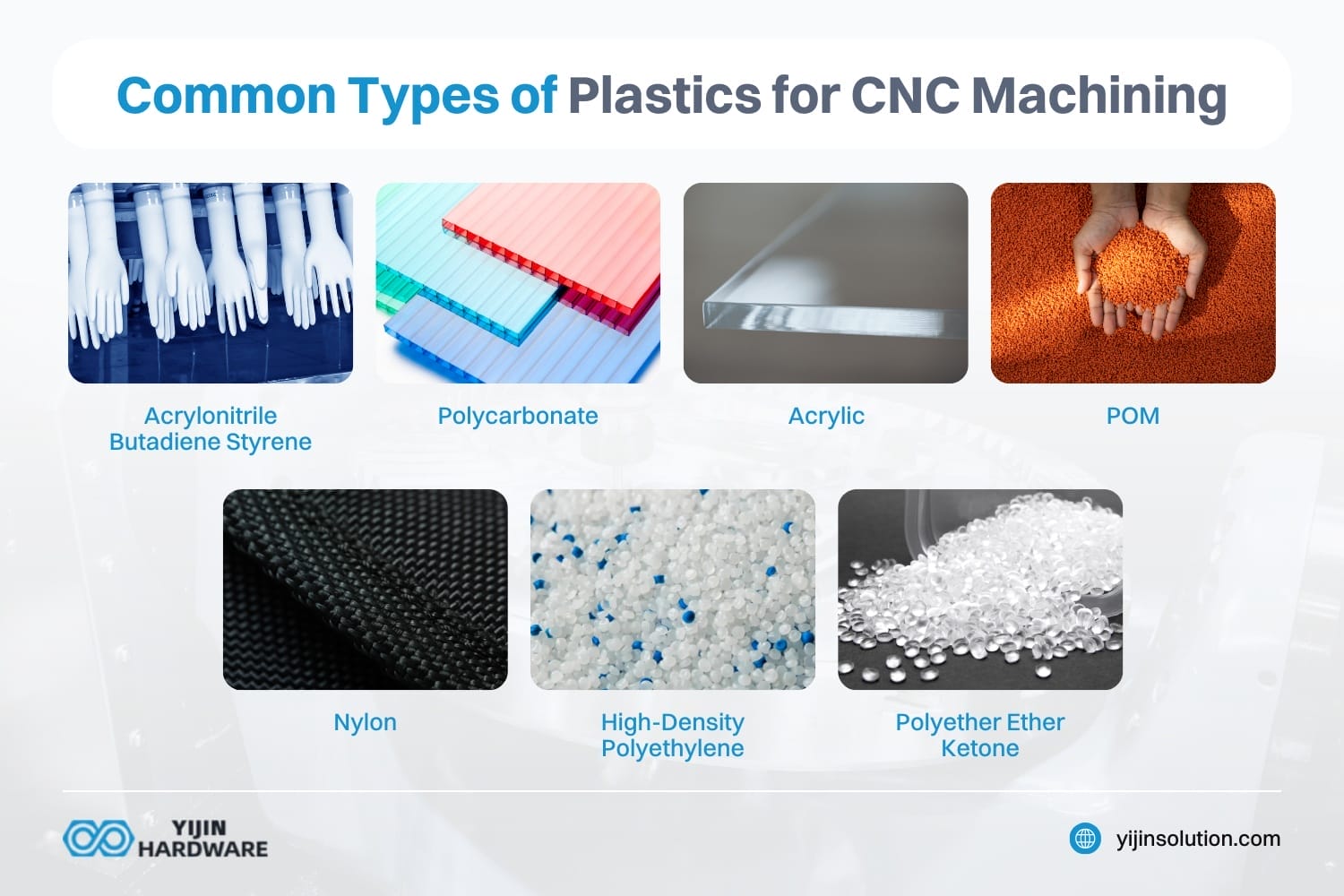
The top plastics for CNC machining included POM (Acetal/Delrin), ABS, and PEEK. Other popular plastics are polycarbonate, nylon, HDPE, acrylic, and PTFE (Teflon). According to the National Library of Medicine, Acetal and Delrin have powerful dimensional stability, making them great options for complex parts that require tight tolerances. Let’s get into why these plastics are the best for machining:
What is POM (Acetal/Delrin) and Why is it Popular?
POM (Polyoxymethylene), also known as Acetal or Delrin, is a high-performance engineering thermoplastic characterized by exceptional dimensional stability, low friction, and excellent machinability. This crystalline polymer offers optimal mechanical properties, with high stiffness (flexural modulus of 2.8-3.1 GPa), good tensile strength (60-70 MPa), and natural lubricity ideal for moving parts.
Delrin is widely considered the most versatile plastic because it maintains tight tolerances throughout the machining process. Its properties remain stable across a wide temperature range, and it exhibits minimal water absorption, contributing to its dimensional stability in varying environments.
Ideal Applications: Precision gears, bearings, bushings, valve components, mechanical assemblies, automotive parts, food processing equipment, consumer electronics.
Why is ABS a Cost-Effective Option for Prototyping?
ABS (Acrylonitrile Butadiene Styrene) presents a cost-effective solution for prototyping and general-purpose applications, offering good impact strength at approximately one-third the cost of specialized engineering plastics. This versatile thermoplastic provides a balanced combination of rigidity (flexural modulus of 2.1-2.4 GPa), impact strength (200-400 J/m), and surface finish quality suitable for both visual prototypes and functional testing.
ABS machines easily with standard cutting tools and can be painted, glued, or otherwise finished for appearance models or pre-production prototypes. Its low cost and straightforward machining process make it valuable during development when multiple design iterations are required. For many projects requiring a prototype, ABS is the best plastic CNC machining choice for initial concept validation.
Ideal Applications: Functional prototypes, pre-production models, consumer product housings, electronic enclosures, interior components.
How does PEEK Perform in Extreme Environments?
PEEK (Polyether Ether Ketone) excels in extreme environments by maintaining exceptional mechanical, thermal, and chemical properties under conditions that degrade most other plastics. This high-performance thermoplastic retains strength and dimensional stability at continuous temperatures up to 260 °C, offers outstanding chemical resistance, and provides excellent mechanical properties, including high tensile strength (90-100 MPa).
PEEK’s performance comes at a premium price—typically 8–10 times more expensive than standard engineering plastics like POM. However, its unique combination of properties makes it irreplaceable in applications exposed to extreme temperatures, chemicals, or mechanical stress. When looking for the best plastic for CNC routing in high-performance applications, PEEK is often optimal despite its higher cost.
Ideal Applications: Aerospace components, semiconductor equipment, oil and gas equipment, medical implants, high-temperature bearings, and bushings.
What Makes Polycarbonate Ideal for Transparent Applications?
Polycarbonate combines exceptional optical clarity with outstanding impact resistance, making it the preferred transparent material for applications requiring both visibility and durability. This engineering plastic transmits light effectively (up to 89% light transmission) while providing impact resistance up to 250 times greater than glass and 20 times greater than acrylic.
Beyond optical properties, polycarbonate offers good heat resistance (HDT of 130-140 °C at 1.8 MPa) and reasonable mechanical properties, with tensile strength between 55-75 MPa. While susceptible to scratching and chemical attack from certain solvents, these limitations can be addressed through appropriate coatings.
Ideal Applications: Safety shields, protective covers, optical components, medical device housings, architectural components, and consumer electronics requiring transparency.
When Should You Choose Nylon for Your Project?
Nylon (polyamide) should be selected for projects requiring a balance of strength, wear resistance, and toughness in demanding mechanical applications. This versatile engineering thermoplastic comes in several variants (notably Nylon 6 and Nylon 6/6), offering excellent tensile strength (70-85 MPa), good impact resistance, and superior abrasion resistance. Nylon CNC machining is effective for parts requiring high durability in dynamic applications.
Nylon’s key limitation is its hygroscopic nature—it absorbs moisture, affecting dimensions and properties. For precision applications, this must be managed through proper material conditioning before machining. Despite this challenge, nylon remains a strong plastic choice for functional components that must withstand mechanical wear and stress.
Ideal Applications: Wear components, bearings, gears, rollers, structural components, fasteners, and parts requiring high fatigue resistance.
How does HDPE Deliver Chemical Resistance and Low Friction?
HDPE (High-Density Polyethylene) provides exceptional chemical resistance and low friction through its simple molecular structure and lack of reactive chemical groups. This semi-crystalline thermoplastic remains chemically inert against most acids, bases, and other aggressive chemicals due to its stable carbon-hydrogen bonds and crystalline structure. HDPE CNC machining is frequently used for components that require electrical insulation combined with chemical resistance.
The material’s natural lubricity results from its smooth molecular profile and low coefficient of friction between 0.1-0.2, among the lowest of commonly machined plastics aside from PTFE. While HDPE offers moderate mechanical properties (tensile strength of 20-30 MPa), its chemical resistance, low friction, and low cost make it valuable for specific applications. Polyethylene variants like HDPE are commonly used in CNC when both economy and chemical resistance are required.
Ideal Applications: Chemical tanks and containers, laboratory equipment, food processing components, wear strips and guides, cutting boards, plastic bottles, and low-friction surfaces.
What Makes Acrylic (PMMA) The Top Choice for Optical Clarity?
Acrylic (PMMA or Polymethyl Methacrylate) delivers superior optical clarity through its amorphous polymer structure that allows up to 92% light transmission, higher than glass or polycarbonate. This transparent thermoplastic provides exceptional weather resistance, UV stability, and a high-quality surface finish ideal for visual applications requiring long-term clarity. Acrylic is an excellent choice for CNC plastic machining when the final product must maintain transparency.
While offering good rigidity (flexural modulus of 3.0-3.3 GPa) and reasonable tensile strength (70-80 MPa), acrylic’s primary limitation is brittleness and poor impact resistance compared to polycarbonate. However, its superior scratch resistance, optical clarity, and lower cost make it preferable where impact resistance is less critical. When using a CNC milling machine for transparent parts, acrylic provides the best combination of machinability and optical properties.
Ideal Applications: Display cases, lenses, light guides, signs, architectural features, medical device components, retail displays.
Why is PTFE (Teflon) Unmatched for Low Friction Applications?
PTFE (Polytetrafluoroethylene/Teflon) provides unparalleled low-friction performance due to its unique molecular structure featuring strong carbon-fluorine bonds. This specialized fluoropolymer exhibits the lowest coefficient of friction of any solid material (0.05-0.10), approximately half that of HDPE, creating nearly frictionless surfaces ideal for bearing applications. Plastics like PTFE are suitable for applications where minimal friction is the primary requirement.
Beyond its lubricity, PTFE offers outstanding chemical resistance against virtually all chemicals except molten alkali metals and elemental fluorine. Its temperature resistance is equally impressive, maintaining stable properties from cryogenic temperatures to 260 °C continuous use. The removal during machining can be challenging, but the resulting machined plastic components provide exceptional performance in sliding applications.
Ideal Applications: Bearings, seals, gaskets, chemical handling equipment, electrical insulators, non-stick surfaces, low-friction guides.
Which Plastic is Best for CNC Machining?
The ideal plastic for CNC machining depends on specific application requirements and operating conditions, rather than a universal “best” material. Engineering thermoplastics like POM (Delrin) offer the most balanced combination of machinability, dimensional stability, and mechanical properties for precision components. High-performance materials like PEEK provide superior properties at higher costs, while commodity plastics like ABS deliver cost-effective solutions for less demanding applications. The types of plastic used in CNC projects should be selected based on this balance of properties and cost.
Yijin Hardware’s extensive experience with diverse plastic machining projects has shown that material selection is one of the most critical decisions in the component design process. The right choice ensures performance while impacting manufacturing costs, lead times, and reliability. CNC plastic machined components perform best when materials are selected with machining characteristics in mind.
| Material | Relative Cost | Dimensional Stability | Machinability | Surface Finish Quality | Overall Value |
|---|---|---|---|---|---|
| POM (Delrin) | ●●○○○ | ●●●●● | ●●●●● | ●●●●○ | ●●●●● |
| ABS | ●○○○○ | ●●○○○ | ●●●○○ | ●●●○○ | ●●●○○ |
| Nylon 6/6 | ●●○○○ | ●●○○○ | ●●●○○ | ●●●○○ | ●●●○○ |
| PEEK | ●●●●● | ●●●●● | ●●○○○ | ●●●○○ | ●●●○○ |
| Polycarbonate | ●●●○○ | ●●●○○ | ●●●○○ | ●●●●○ | ●●●○○ |
| HDPE | ●○○○○ | ●●○○○ | ●●●○○ | ●●○○○ | ●●○○○ |
| Acrylic | ●●○○○ | ●●●○○ | ●●●●○ | ●●●●● | ●●●●○ |
| PTFE | ●●●○○ | ●●○○○ | ●●○○○ | ●●○○○ | ●●○○○ |
Rating scale: ● = Low/Poor, ●●●●● = High/Excellent
How do we Select The Best Plastic for CNC Machining?
Material selection for CNC machining requires evaluating mechanical requirements, environmental conditions, and cost constraints to identify the optimal plastic type. The process involves matching material properties such as tensile strength, impact resistance, and heat deflection temperature with application demands. Selecting the right plastic for your project ensures component performance and longevity.
At Yijin Hardware, our selection methodology analyzes application-specific factors like load requirements, chemical exposure, temperature ranges, and dimensional stability needs. We consider both immediate performance requirements and long-term factors like aging, UV exposure, and stress relaxation.
What Mechanical Properties are Critical for Plastic Selection?
Critical properties include tensile strength (maximum stress before breaking), flexural modulus (resistance to bending), and impact strength (shock absorption capability). Mechanical properties determine a plastic’s structural performance under physical stress and load conditions. These properties vary significantly between plastic types, with engineering plastics like PEEK and PEI offering higher strength values than commonly used plastics like ABS.
Consider both static and dynamic loading conditions that your plastic parts will experience. Components under continuous load need good creep resistance, while parts subjected to repeated impact require excellent impact resistance and toughness.
| Material | Tensile Strength (MPa) | Flexural Modulus (GPa) | Impact Strength (J/m) |
|---|---|---|---|
| POM (Delrin) | 60-70 | 2.8-3.1 | 80-160 |
| ABS | 40-50 | 2.1-2.4 | 200-400 |
| Nylon 6/6 | 70-85 | 2.5-3.0 | 50-150 |
| PEEK | 90-100 | 3.6-4.1 | 85-100 |
| Polycarbonate | 55-75 | 2.1-2.4 | 600-850 |
| HDPE | 20-30 | 0.7-1.0 | No break |
| Acrylic | 70-80 | 3.0-3.3 | 15-20 |
| PTFE | 20-30 | 0.4-0.6 | 130-160 |
How does Temperature Affect Plastic CNC Parts?
Temperature impacts plastic performance through three critical mechanisms: heat resistance, thermal expansion, and thermal conductivity. These properties determine whether a plastic maintains its shape, size, and strength in various thermal environments, from freezing conditions to high-heat applications.
Heat deflection temperature (HDT) represents the point at which a plastic part deforms under load at elevated temperatures. This specification is crucial for components used in high-temperature environments. When choosing the best plastic for CNC milling, consider the coefficient of thermal expansion to ensure dimensional stability across temperature ranges.
| Material | Heat Deflection Temp (°C at 1.8MPa) | Thermal Expansion Coefficient (10⁻⁵/°C) | Max Continuous Use Temp (°C) |
|---|---|---|---|
| POM (Delrin) | 110-115 | 11-13 | 90-110 |
| ABS | 85-100 | 7-9 | 70-80 |
| Nylon 6/6 | 75-85 | 8-10 | 80-100 |
| PEEK | 150-160 | 4.7-5.5 | 240-260 |
| Polycarbonate | 130-140 | 6.5-7.0 | 115-130 |
| HDPE | 45-55 | 12-13 | 55-70 |
| Acrylic | 90-105 | 6-8 | 80-90 |
| PTFE | 55-60 | 12-15 | 260-280 |
What Chemical Environments Can Different Plastics Withstand?
Chemical resistance varies dramatically between plastic types, with each material offering a unique compatibility profile with acids, bases, solvents, and other chemical agents. PTFE (Teflon) offers the broadest chemical resistance, while materials like polycarbonate show vulnerability to specific organic solvents. Good chemical resistance should be evaluated based on the specific substances and their concentration levels.
Duration of exposure affects chemical resistance, as some plastics withstand brief contact but degrade under prolonged exposure. Temperature further complicates compatibility, as higher temperatures typically accelerate chemical reactions. This is especially important when considering plastics for CNC machining applications in chemical processing environments.
| Material | Acids | Bases | Organic Solvents | Hydrocarbons | UV Resistance |
|---|---|---|---|---|---|
| POM (Delrin) | Good | Good | Good | Excellent | Poor |
| ABS | Poor | Good | Poor | Poor | Poor |
| Nylon 6/6 | Poor | Excellent | Good | Excellent | Poor |
| PEEK | Excellent | Excellent | Good | Excellent | Good |
| Polycarbonate | Poor | Poor | Poor | Good | Poor-Fair |
| HDPE | Excellent | Excellent | Good | Good | Poor |
| Acrylic | Good | Good | Poor | Good | Excellent |
| PTFE | Excellent | Excellent | Excellent | Excellent | Good |
What are the Unique Machining Considerations for Plastics?
The unique machining considerations for plastics include cutting parameters, tooling strategies, and surface finishes. Let’s take a look at these aspects more closely!
How do Cutting Parameters Differ from Metal Machining?
Cutting parameters for plastic CNC machining differ fundamentally from metal machining through higher cutting speeds, lower feed rates, and modified tool geometry. Plastics require cutting speeds typically 2-3 times faster than for aluminum, with feed rates reduced by 25-50% to prevent melting. Plastic machining requires tooling with higher rake angles (15-20° versus 0-10° for metals) to slice rather than push material. Understanding these differences is essential when determining the best plastic for CNC milling.
Temperature management is critical in plastic machining due to low thermal conductivity. Without proper cooling, heat builds up quickly, potentially causing melting, deformation, or tool fouling that compromises accuracy and surface finish. This is especially important when using CNC machines for plastic materials with low heat resistance.
| Machining Parameter | For Plastics | For Metals | Key Difference |
|---|---|---|---|
| Cutting Speed | Higher | Lower | Plastics cut more easily, but must avoid heat buildup |
| Feed Rate | Lower | Higher | Prevents melting and deformation in plastics |
| Tool Rake Angle | 15-20° | 0-10° | Creates a slicing action instead of pushing |
| Cooling | Air or mist preferred | Liquid coolant standard | Prevents material softening |
| Tool Sharpness | Extremely sharp | Standard | Reduces friction and heat generation |
| Chip Evacuation | Critical | Important | Prevents re-cutting and heat buildup |
What are The Best Tooling Strategies for Different Plastics?
Tooling strategies for plastic machining should be tailored to specific material characteristics. For crystalline polymers like POM and HDPE, single-flute end mills with high helix angles (35-45°) produce clean cuts while effectively evacuating chips. When using CNC machines for plastic parts, tool selection significantly impacts final quality and dimensional accuracy.
Amorphous plastics like polycarbonate and acrylic benefit from multi-flute tools (2-3 flutes) with polished cutting edges for optical-quality surface finishes. High-performance materials like PEEK require specially designed end mills with enhanced coating technologies to withstand higher cutting forces and temperatures. The right combination of tooling and machining parameters is crucial when creating custom parts through CNC plastic machining services.
| Plastic Type | Recommended Tool Type | Coating | Coolant Strategy | Special Considerations |
|---|---|---|---|---|
| POM/Acetal | Single or double flute end mill | Uncoated/TiN | Compressed air | Sharp cutting edges |
| ABS/Styrene | Double flute end mill | Uncoated | Air blast | High rake angle |
| Nylon | Single flute end mill | ZrN | Mist coolant | Dry material before machining |
| PEEK/PEI | Diamond-coated end mill | Diamond | Compressed air/Mist | Rigid setup required |
| Polycarbonate | Polished 2-3 flute end mill | Uncoated | Air only | Avoid coolant (crazing) |
| HDPE/LDPE | Single flute with high rake | Uncoated | Air blast | Support thin walls |
| Acrylic | Polished O-flute or 2-flute | Uncoated | Air only | Avoid coolant (crazing) |
| PTFE | Diamond-coated end mill | Diamond | Air blast | Specialized fixturing needed |
How Can You Achieve Optimal Surface Finish on Plastic Parts?
Optimal surface finish on plastic parts combines appropriate cutting parameters, proper tooling, and effective cooling strategies tailored to specific material characteristics. For finishing passes, increase cutting speeds by 20-30% and decrease feed rates by 40-50% compared to roughing operations for smoother surfaces with minimal tool marks.
Understanding millable plastics for CNC machining is essential for superior surface quality.
For transparent materials, diamond-polished tools produce superior finishes directly from the machine. For the highest quality finish, techniques like vapor polishing (for ABS and acrylic) or flame polishing (for acrylic) can produce glass-like surfaces without dimensional changes. These techniques are valuable for creating durable plastic components with aesthetic requirements.
| Material | Optimal Cutting Speed | Feed Rate for Finishing | Best Tool Type | Post-Processing Options |
|---|---|---|---|---|
| POM/Acetal | 500-800 m/min | 0.05-0.1 mm/tooth | Polished 2-flute | Tumbling |
| ABS | 300-500 m/min | 0.05-0.1 mm/tooth | Polished O-flute | Vapor polishing |
| Nylon | 400-600 m/min | 0.05-0.1 mm/tooth | Single-flute | Tumbling, vibratory finishing |
| PEEK | 250-400 m/min | 0.03-0.08 mm/tooth | Diamond-coated | Abrasive polishing |
| Polycarbonate | 300-600 m/min | 0.05-0.08 mm/tooth | Super-polished 2-flute | Vapor polishing |
| HDPE | 500-700 m/min | 0.1-0.15 mm/tooth | High rake single-flute | None typically required |
| Acrylic | 300-500 m/min | 0.03-0.08 mm/tooth | Diamond-polished 2-flute | Vapor/flame polishing |
| PTFE | 200-400 m/min | 0.1-0.2 mm/tooth | Sharp single-flute | None typically required |
What Surface Finishes and Post-Processing Options are Available?
Surface finishes and post-processing techniques enhance both aesthetic appeal and functional properties of CNC-machined plastic parts. These treatments transform raw machined surfaces into components with specific performance characteristics. Each plastic type responds differently to various finishing techniques, requiring tailored process parameters. This guide to the best millable plastics includes essential finishing options for optimal results.
At Yijin Hardware, we’ve developed proprietary finishing techniques optimized for different plastic types, ensuring consistent results across production runs. Our approach considers the molecular structure and crystallinity of each polymer to determine the most effective process parameters for the manufacturing process.
What are The Most Effective Mechanical Finishing Methods?
Mechanical finishing techniques physically alter plastic surfaces through controlled abrasion or impact processes. These methods remove tool marks, smooth transitions, and create uniform textures without chemical or thermal modification. Selection depends on material hardness, thermal sensitivity, and desired aesthetic outcome.
Different abrasive media produce specific surface characteristics, from fine matte finishes to highly polished surfaces. For crystalline polymers like POM and HDPE, controlled abrasion with graduated grit progression yields superior results compared to single-stage processes.
| Finishing Method | Process Description | Best Suited Materials | Surface Result | Technical Benefits |
|---|---|---|---|---|
| Bead Blasting | Pressurized projection of glass media at 40-60 PSI | POM, ABS, Nylon, PEEK, PC | Uniform matte finish | Stress relief, burr removal |
| Tumbling | Vibratory action with ceramic or plastic media | All plastics | Rounded edges, smooth surface | Deburring, edge conditioning |
| Abrasive Polishing | Progressive sanding with 400-2000 grit media | Acrylic, PC, PEEK | High-gloss finish | Surface leveling, optical clarity |
| Micro-Finishing | Controlled abrasion with fine mineral slurry | POM, PEEK, Nylon | Micro-textured surface | Controlled friction characteristics |
| Ultrasonic Finishing | High-frequency vibration with specialized media | Delicate parts of all materials | Precision deburring | Selective feature refinement |
What are the Environmental Considerations for Plastic CNC Machining?
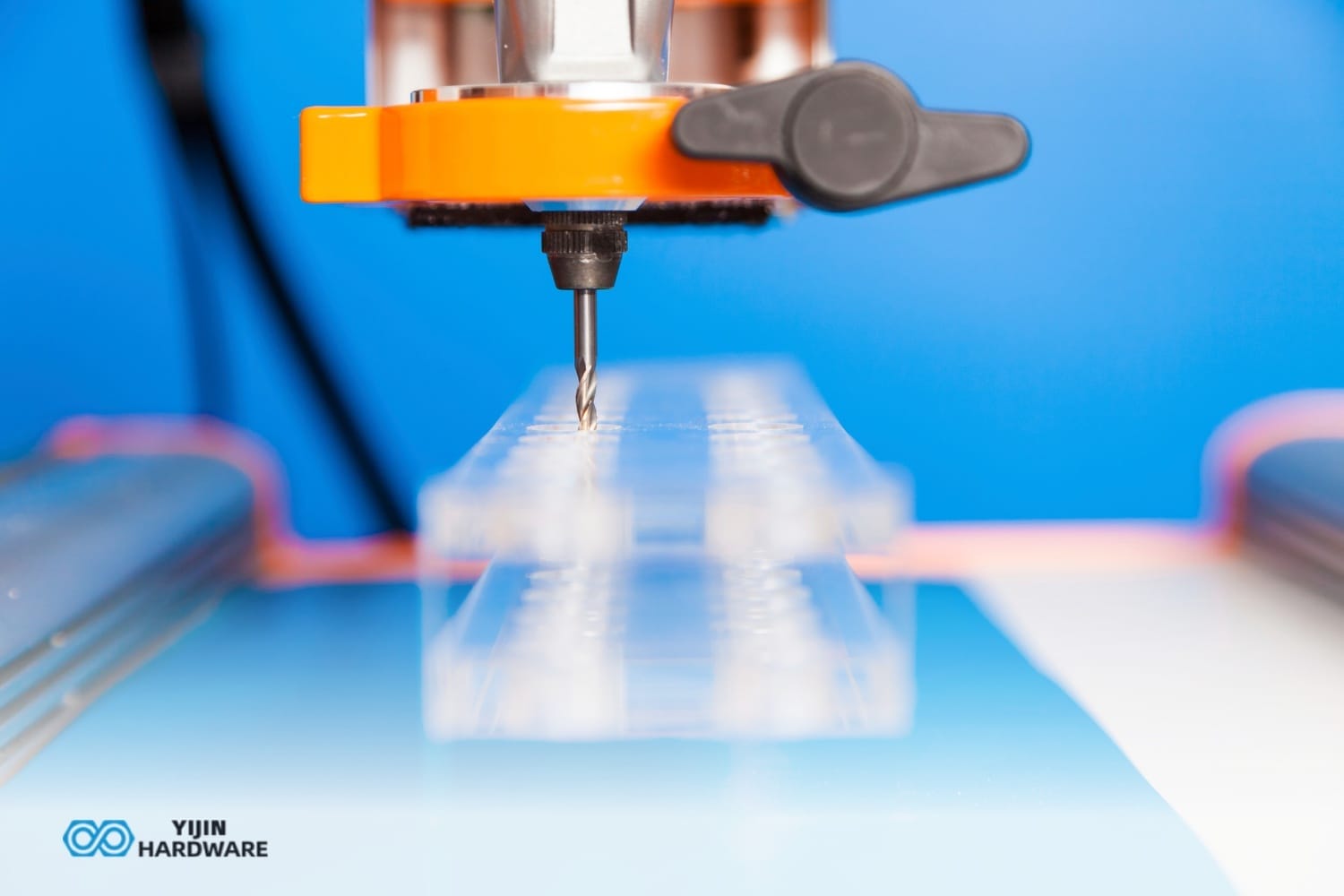
Environmental considerations in plastic CNC machining encompass material selection, process efficiency, waste management, and recycling practices. These factors impact both the ecological footprint of manufacturing operations and long-term sustainability. Modern approaches integrate environmental consciousness throughout the production lifecycle. When a part should be plastic rather than metal, considering these environmental factors becomes increasingly important.
At Yijin Hardware, we’ve implemented comprehensive environmental management systems, exceeding regulatory requirements while maintaining production efficiency. Our approach includes closed-loop coolant systems, energy-efficient machining parameters, and material-specific recycling protocols, recovering over 95% of plastic waste. The best millable plastics for CNC include those with strong recycling potential.
What Sustainable Material Alternatives are Available?
Sustainable material alternatives for CNC machining include bio-based plastics, recycled content plastics, and environmentally responsible composites offering reduced ecological impact without compromising technical performance.
At Yijin Hardware, we evaluate emerging sustainable materials against rigorous performance criteria to ensure they meet application requirements. Our materials’ science team tests physical properties, long-term stability, and machining characteristics before qualifying new materials for production.
| Sustainable Material | Technical Composition | Properties Comparison | Environmental Benefit |
|---|---|---|---|
| Bio-Based PLA Composites | Polylactic acid with natural fiber reinforcement | • 80% strength of ABS • Improved heat resistance (HDT 90-110 °C) | • 65% reduction in carbon footprint • Biodegradable under industrial conditions |
| Recycled Engineering Polymers | Post-industrial PC, POM, or Nylon with stabilizers | • 90-95% of virgin material properties • Enhanced UV stability | • 70-85% reduction in energy consumption • Diverts material from landfill |
| Plant-Based Polyamides | Castor oil-derived nylon with mineral reinforcement | • Comparable to Nylon 6/6 • Excellent chemical resistance | • 40-60% reduction in greenhouse gas emissions • Reduced dependency on petrochemicals |
| Cellulose-Derived Composites | Modified cellulose with cross-linking polymers | • Similar to ABS/PC blends • Natural flame retardancy | • Renewable forestry-derived base material • Biodegradable with specialized treatment |
Yijin Hardware: Reliable Plastic CNC Machining Services
At Yijin Hardware, our expertise in plastic CNC machining extends across all major engineering thermoplastics and machining materials. Our engineers work closely with clients to identify the ideal material for each application, ensuring optimal performance while maintaining cost-effectiveness. Contact our material specialists today to discuss your next plastic machining project and leverage our experience to select the perfect material for your unique requirements.
Best Plastic For Machining FAQs
What is the cheapest plastic to CNC?
ABS is often the best plastic for CNC milling due to its low cost and machinability. However, the cheapest plastic for CNC machining depends on the application and manufacturing process. HDPE is the best plastic for CNC routing, offering affordability and ease of cutting. Both materials provide cost-effective solutions for producing plastic parts with good durability.
Is plastic CNC machining worthwhile?
Yes, CNC machining is a great option for producing machined plastic parts with precision. Delrin is an excellent choice for CNC plastic machining parts due to its strength and stability. The removal during machining is efficient, reducing waste and improving production speed. Plastic machining is worthwhile for prototypes, machine parts, and specialized components.
What makes a plastic millable?
Plastics that resist melting and deformation are ideal for milling with high-speed cutting tools. Delrin, acrylic, and nylon are among the top choices in the guide to the best millable plastics for CNC machining. The material must balance toughness and machinability to produce high-quality machine parts. Choosing the right plastic ensures accuracy, efficiency, and cost-effectiveness in CNC machining.
Back to Top: Types of Plastic Materials for CNC Machining




 EN
EN  ES
ES  RU
RU  DE
DE  FR
FR