



Computer numerical control (CNC) machining has revolutionized manufacturing by automating the production of complex parts with exceptional precision. This machining technology enables manufacturers to transform raw materials into finished components with minimal human intervention. At Yijin Hardware, our advanced CNC technology allows us to create custom parts with tolerances as tight as ±0.005 mm, making CNC machining the preferred method for industries requiring precision components.
CNC machining works by using computer-controlled machines that automatically cut and shape materials with high precision. These machines follow digital instructions to move cutting tools along multiple axes, removing material from a workpiece until the desired shape is achieved. The entire process combines computer programming, mechanical engineering, and automated manufacturing to create precise parts that would be difficult or impossible to make by hand.
Key Takeaways
- CNC machining uses computer-controlled automation to remove material precisely from a workpiece.
- The CNC machining process follows four main stages: CAD design, CAM programming, machine setup, and automated cutting.
- CNC machines operate on Cartesian coordinate systems (X, Y, Z) to position cutting tools with extreme accuracy.
- Modern CNC machine types offer superior precision, with tolerances as tight as ±0.005 mm.
- CNC technology increases production speed, consistency, and quality while reducing human error.
What is CNC Machining?
CNC machining is a manufacturing process that uses computer-controlled machines to remove material from a workpiece. These automated systems follow precise programming instructions to control the movement of cutting tools in multiple directions. Unlike a manual machine, CNC technology eliminates human variability, resulting in highly accurate, repeatable results that can be produced rapidly.
CNC machining falls under the category of “subtractive manufacturing” since it creates parts by removing material, unlike “additive manufacturing” methods like 3D printing. This approach allows for exceptionally precise tolerances, superior surface finishes, and the ability to work with a wide range of materials.
According to Makera, AI could simplify CNC machining by automating complex programming, allowing users to focus on design and creativity, especially helpful for non-experts.
What are the Advantages and Limitations of CNC Machining?
CNC machining offers significant advantages over traditional manual machining methods, making it the preferred choice for precision manufacturing, but it also comes with certain trade-offs to consider.
Key Advantages
- Precision and Repeatability: CNC machines consistently produce parts with accuracy as high as ±0.005 mm, ensuring part interchangeability.
- Productivity: Once programmed, CNC machines can operate continuously with minimal supervision.
- Complex Geometries: Multi-axis CNC machines can create intricate shapes impossible with manual machining.
- Material Versatility: CNC technology can process nearly any machinable material, from plastics to hardened steels.
- Reduced Labor Costs: Automation reduces the need for skilled machinists to manually control each operation.
Limitations to Consider
- Initial Investment: High-quality CNC machines require significant upfront capital.
- Programming Complexity: Creating efficient G-code programs requires specialized knowledge.
- Setup Time: Initial machine setup and program verification can be time-consuming.
- Material Waste: As a subtractive process, CNC machining generates material scrap.
How does the CNC Machining Process Work?
The CNC machining process works through a sequence of four main stages: design, programming, setup, and machining. Each stage builds upon the previous one to transform digital designs into physical parts with high precision. This systematic workflow ensures consistency and accuracy across multiple production runs.
Step 1: Creating the Digital Model (CAD)
Computer-aided design (CAD) software creates the digital blueprint that defines the part’s geometry and specifications. Engineers use CAD software like SolidWorks, AutoCAD, or Fusion 360 to develop detailed 3D models. These CAD models include all the part’s dimensions, features, and tolerances that will guide the machining process.
The CAD model must be complete and accurate, as it forms the foundation for all subsequent manufacturing steps. Designers must consider not only the final form but also manufacturability factors like tool access, material properties, and fixturing requirements.
Step 2: Converting the Design to Machine Instructions (CAM)
Computer-aided manufacturing (CAM) software translates the CAD model into specific machining instructions. This critical conversion process determines how the machine will work to create the designed part. CAM software analyzes the model geometry and generates toolpaths based on the cutting tools, machining strategies, and material properties.
During this stage, programmers specify cutting parameters such as tool selection, spindle speeds, feed rates, and cutting depths. They also determine the machining sequence, optimizing for efficiency while maintaining quality. The CAM system simulates these operations virtually to identify potential issues before actual cutting begins.
The final output from the CAM software is a set of instructions in a specialized language called G-code. This code contains sequential commands that direct the CNC machine’s movements and operations.
Step 3: Machine Setup and Workpiece Preparation
Machine setup involves preparing both the CNC machine and the raw material for the machining operation. Operators mount the appropriate cutting tools in the machine’s tool carousel or magazine. They also secure the workpiece in fixtures, vises, or clamps to prevent movement during machining.
Effective workholding is critical to machining accuracy and part quality. Fixtures and workholding devices maintain precise part positioning throughout the machining process, prevent deflection and vibration, and enable complex parts to be machined from multiple angles in a single setup.
The setup process includes establishing the reference points, or “zeros,” from which all machining coordinates will be measured. This step ensures the CNC mill knows exactly where the workpiece is positioned in relation to the cutting tools. Tool offsets, which account for the specific dimensions of each tool, are also programmed into the machine.
Step 4: Program Execution and Machining
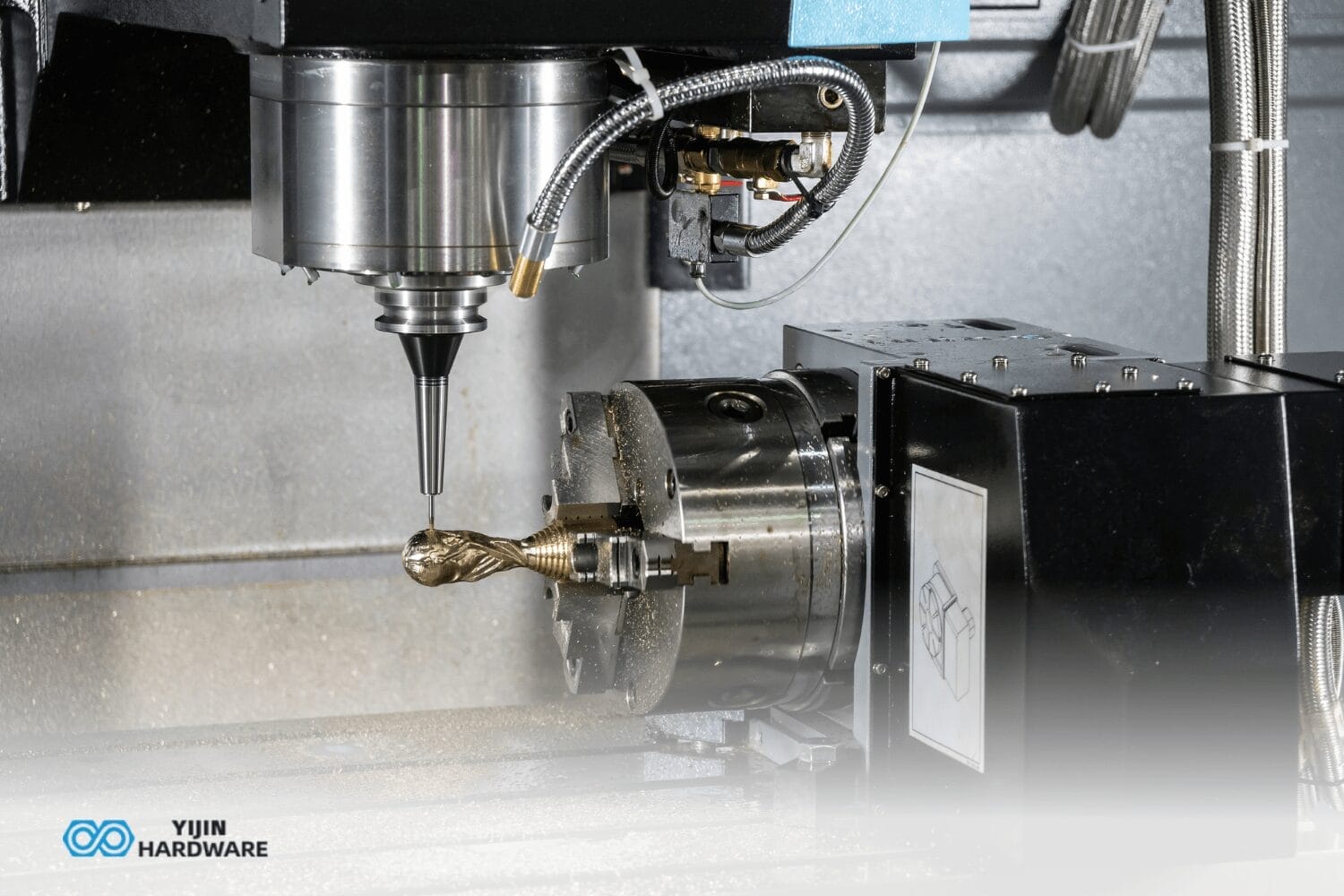
The execution phase is where the CNC machine automatically carries out the programmed instructions. The CNC controller reads the G-code, converting each command into precise movements of the cutting tools and workpiece. Multiple axes move simultaneously to create complex geometries that would be impossible with a manual milling machine.
During operation, the machine maintains precise control over:
- Tool position in space (X, Y, Z coordinates)
- Tool rotation and orientation (for multi-axis machines)
- Cutting speed (RPM of the spindle)
- Feed rate (how fast the tool moves through the material)
- Coolant application to manage heat and remove chips
Modern CNC machines include feedback systems that continuously monitor the operation, making micro-adjustments to maintain accuracy. Once the primary machining is complete, the part may undergo secondary operations like deburring, surface finishing, or quality inspection.
What are the Main Components of a CNC Machine?
A CNC machine consists of several integrated systems that work together to enable precise automated manufacturing. The CNC controller serves as the brain, interpreting program instructions and coordinating all machine movements. Motion systems convert these commands into physical movement along multiple axes with high precision.
| Component | Function | Characteristics |
|---|---|---|
| Controller | Processes G-code and coordinates functions | Computer system with specialized software |
| Drive System | Converts electrical signals to motion | Uses servo or stepper motors |
| Mechanical Structure | Provides a rigid framework | Made from cast iron or polymer concrete |
| Cutting Tools | Remove material from workpiece | Various types for different operations |
| Workholding Devices | Secure material during machining | Vises, fixtures, clamps, vacuum tables |
CNC machines use various cutting tools based on the specific operation and material being machined, including end mills for slots and pockets, face mills for flat surfaces, drills for holes, taps for threads, and boring tools for internal diameters.
Coordinate System and Positioning
CNC machines operate on a three-dimensional Cartesian coordinate system (X, Y, Z). This system maps out tool paths and defines positioning during machining operations. Additional rotary axes (A, B, C) may rotate around the X, Y, and Z axes, respectively, enabling more complex geometries in multi-axis machines.
The machine’s “home position” or “machine zero” serves as the reference point for all movements. Each machining operation begins by establishing this reference through a homing procedure. Absolute coordinates specify exact positions in the workspace, while incremental coordinates define movements relative to the current position.
Coolant and Safety Systems
Coolant systems play a critical role in CNC machining by:
- Reducing cutting temperatures to prevent tool wear
- Lubricating the cutting interface
- Flushing away chips to prevent re-cutting
- Improving surface finish quality
Safety systems protect both operators and the machine itself, including emergency stops, guard doors, and overload protection. Many modern CNC machines also incorporate advanced features like in-process measurement, adaptive control, and remote monitoring capabilities.
What Types of CNC Machines are used in Manufacturing?
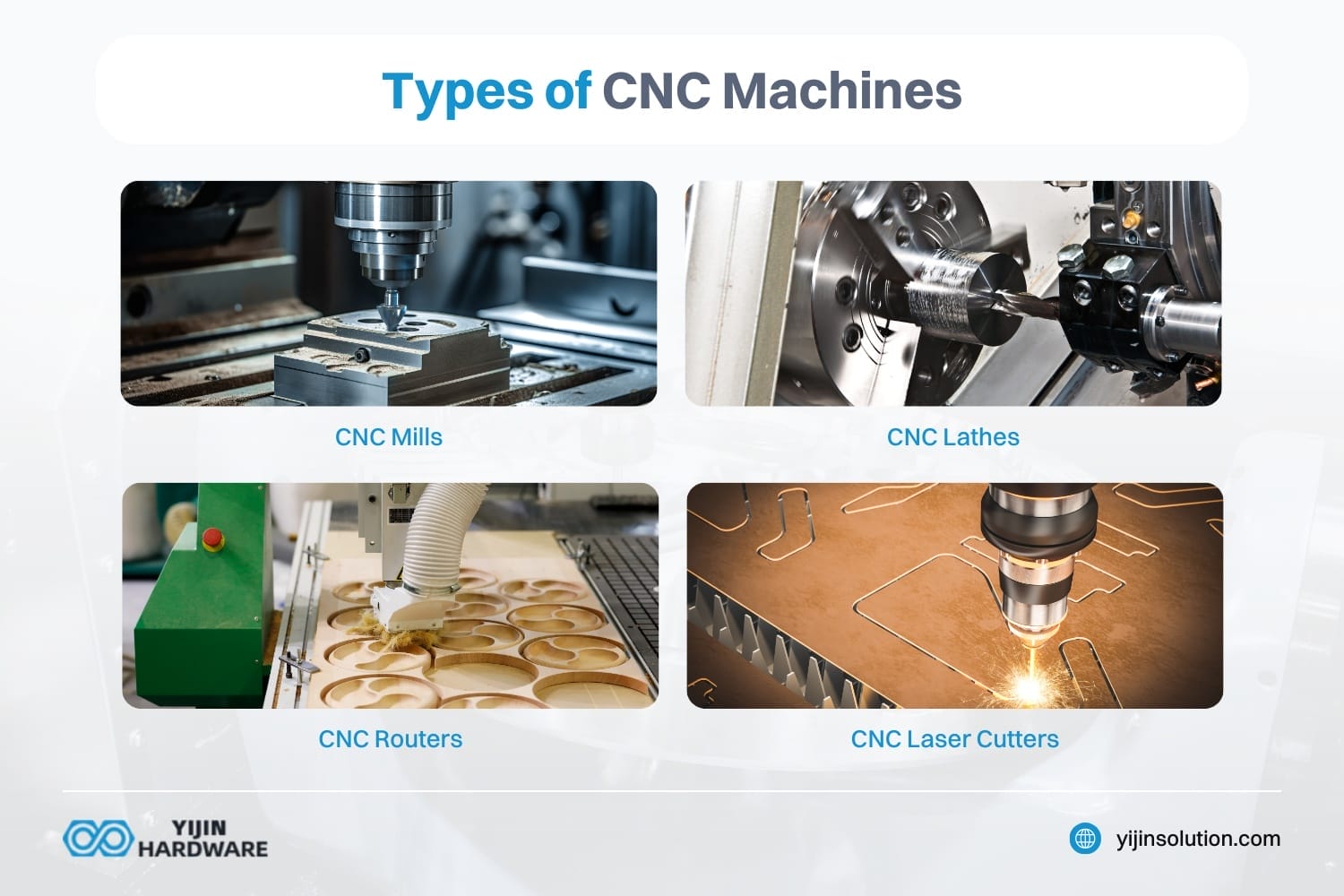
CNC technology powers a diverse range of machine types, each specialized for particular manufacturing operations. A CNC mill uses rotating cutting tools to remove material from stationary workpieces, making it ideal for creating complex 3D shapes and features. These machines can have 3, 4, or 5 axes of movement, with more axes enabling more complex geometries.
CNC Mills and Milling Operations
CNC mills perform machining by rotating cutting tools against stationary workpieces. These versatile machines excel at creating complex geometries with flat surfaces, contours, pockets, slots, and holes. Mills can have 3 to 5 axes of movement, with more axes enabling more complex parts to be machined in a single setup.
Milling operations are categorized by how the tool engages the material:
- Face milling removes material from flat surfaces
- End milling creates vertical walls, slots, and pockets
- Profile milling follows contours to create external features
- Pocket milling hollows out internal features
CNC Lathes and Turning Operations
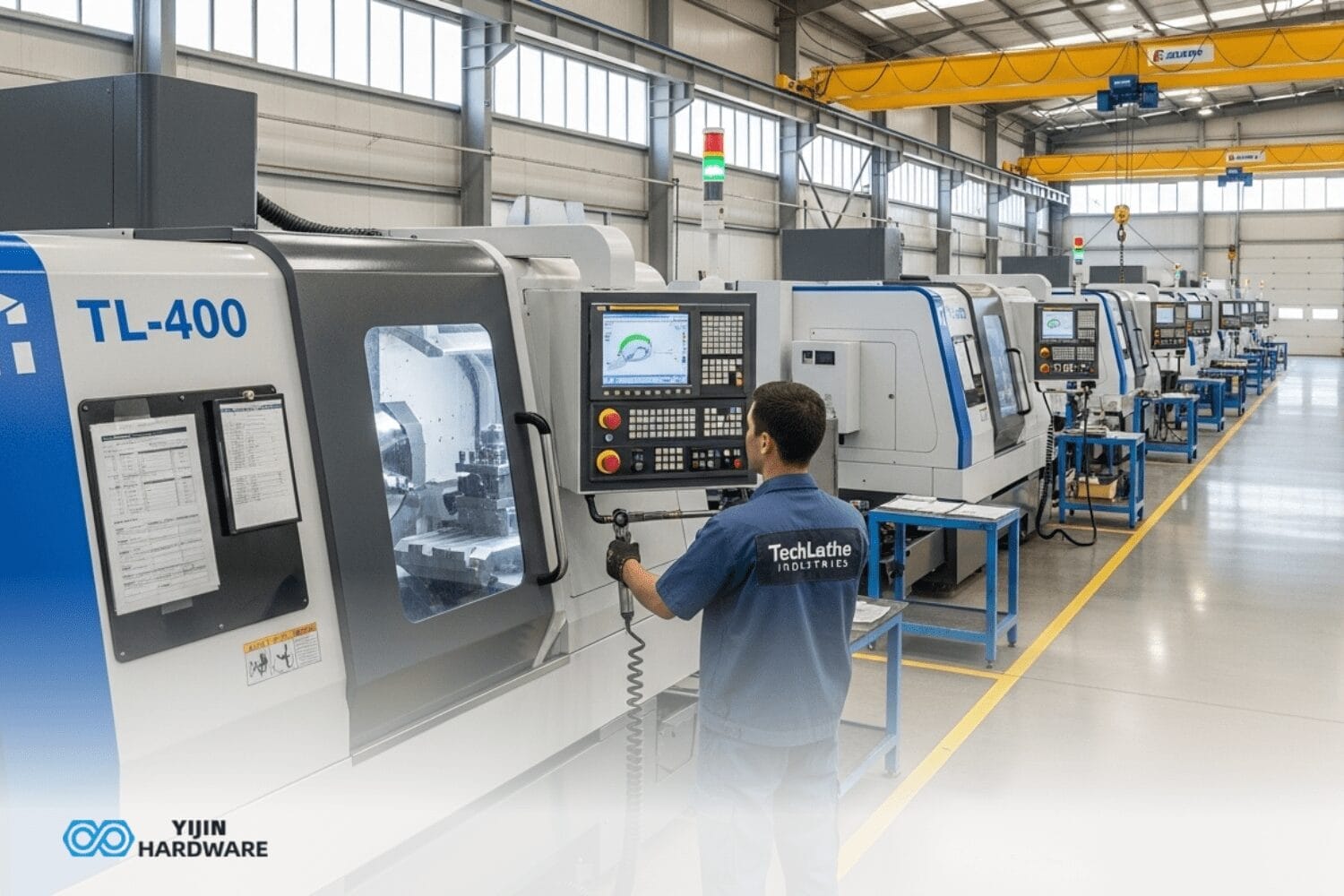
CNC lathe machines create cylindrical parts by rotating the workpiece against stationary cutting tools. The primary operation, CNC turning, produces cylindrical features with precise diameters, tapers, profiles, and finishes. Modern CNC lathes often include “live tooling,” which allows rotating tools to mill and drill features while the part is still mounted.
Turning operations include:
- OD turning (shaping the outside diameter)
- ID turning (shaping the inside diameter)
- Facing (creating flat surfaces perpendicular to the rotation axis)
- Threading (cutting precise internal or external threads)
- Grooving (creating recesses or grooves)
Multi-axis CNC turning machines can perform complex operations in a single setup, significantly reducing production time and improving accuracy. Our Swiss-type CNC lathes at Yijin Hardware specialize in producing small, precise components with tight tolerances.
Specialized CNC Technologies
Beyond traditional mills and lathes, modern manufacturing employs several specialized CNC technologies:
- Electrical Discharge Machining (EDM): Uses electrical discharges to erode material, ideal for hardened steels and intricate shapes
- CNC Grinding: Delivers superior surface finishes and tight tolerances through controlled abrasive processes
- CNC Router: Designed for wood, plastics, and composites, often with larger work areas than mills
- Laser Cutting: Creates precise 2D cuts using a focused laser beam
- Waterjet Cutting: Cuts using high-pressure water with abrasive additives, without heat
- Plasma Cutting: Uses a plasma torch to cut through conductive materials quickly
How does CNC Programming Work?
CNC programming creates the instructions that guide machining tools through precise movements. These programs, written in a language called G-code, control everything from tool positions to cutting speeds. Modern programming combines automated CAM systems with human expertise to optimize machining operations.
Understanding G-code and M-code
G-code serves as the primary language that the CNC machine can understand, controlling motion and cutting operations. This standardized language consists of commands that begin with G (for geometric movements) or M (for miscellaneous functions), followed by numerical codes and parameters. Each line of code instructs the machine to perform a specific action.
Common G-codes include:
- G00: Rapid positioning (moving quickly without cutting)
- G01: Linear interpolation (straight-line cutting)
- G02/G03: Circular interpolation (clockwise/counterclockwise arcs)
- G20/G21: Unit selection (inches/millimeters)
- G90/G91: Absolute/incremental positioning
M-codes control auxiliary functions like:
- M03/M04: Spindle start (clockwise/counterclockwise)
- M05: Spindle stop
- M06: Tool change
- M08/M09: Coolant on/off
- M30: Program end
While modern CAM software generates most G-code automatically, understanding these fundamentals helps machinists optimize and troubleshoot machining operations.
Interpreting Complex Geometries
Most CNC controllers only understand straight lines and circular arcs, yet must faithfully reproduce curved surfaces and complex geometries. The solution lies in approximation techniques that convert complex curves into manageable segments.
NURBS curves (Non-Uniform Rational B-Splines) and other complex geometries get converted into:
- A series of short linear segments (polylines)
- Tangent arc segments
- Combinations of lines and arcs
This conversion process, handled by CAM software, must balance accuracy against the machine’s processing capabilities. Too many short segments can overwhelm older machines, while too few, create visible faceting on the finished part. At Yijin Hardware, our advanced CAM systems optimize this conversion process for each specific machine and application.
What Materials Can Be Machined Using CNC Technology?
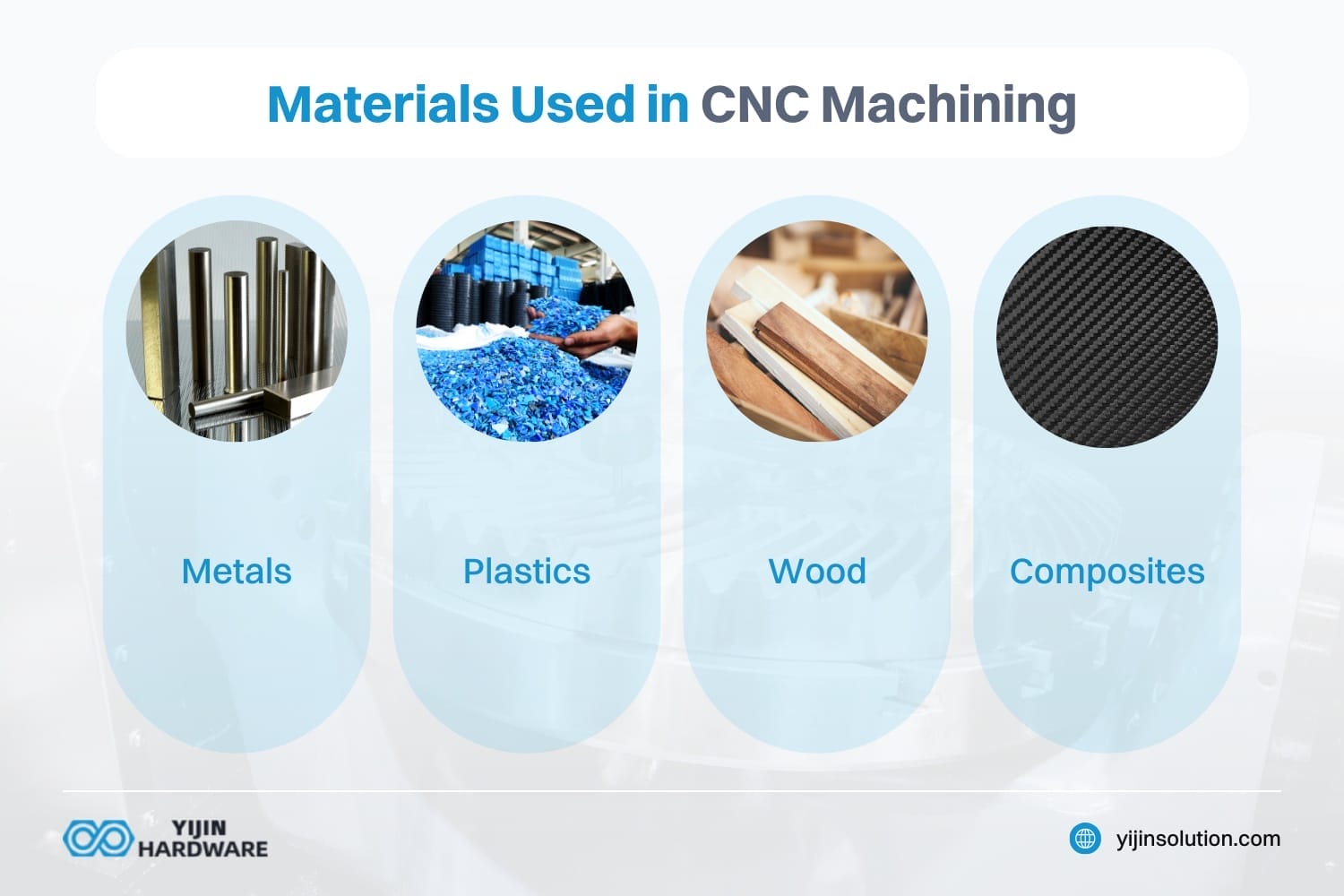
CNC machining can process a wide range of materials from metals to plastics, composites, and even wood. Each material requires specific cutting parameters including appropriate tools, speeds, feeds, and cooling strategies. The versatility of CNC technology allows manufacturers to select materials based on application requirements rather than manufacturing limitations.
Metals and Alloys
Metals constitute the largest category of CNC-machined materials, with applications across virtually every industry. Aluminum alloys offer excellent machinability, lighter weight, and good corrosion resistance, making them popular for aerospace, automotive, and consumer products. Steel alloys provide higher strength and wear resistance but require slower cutting speeds and more robust tooling.
Specialized metals include:
- Stainless steel for medical, food processing, and marine applications
- Titanium for aerospace, medical implants, and high-performance components
- Brass for electrical components, decorative parts, and fluid systems
- Copper for electrical conductivity and thermal management applications
Plastics and Polymers
Engineering plastics offer unique properties, including chemical resistance, electrical insulation, and lightweight. Acetal (Delrin) provides excellent dimensional stability and low friction, making it ideal for gears, bearings, and precision components. Nylon offers good impact resistance and self-lubricating properties for mechanical parts.
Industry Applications and Cost Considerations
CNC machining serves critical manufacturing needs across multiple industries. In aerospace, it creates turbine components and structural elements requiring exceptional precision. The medical industry relies on CNC for orthopedic implants and surgical instruments made from biocompatible materials. Automotive applications include engine components, transmission elements, and prototype parts that need tight tolerances.
Several factors influence CNC machining costs:
- Material selection (exotic metals cost more than aluminum or plastics)
- Part complexity (multiple setups and special tooling increase machining time)
- Tolerance requirements (tighter tolerances require slower speeds)
- Production volume (higher quantities distribute setup costs)
Yijin Hardware: High Quality CNC Machining Operations
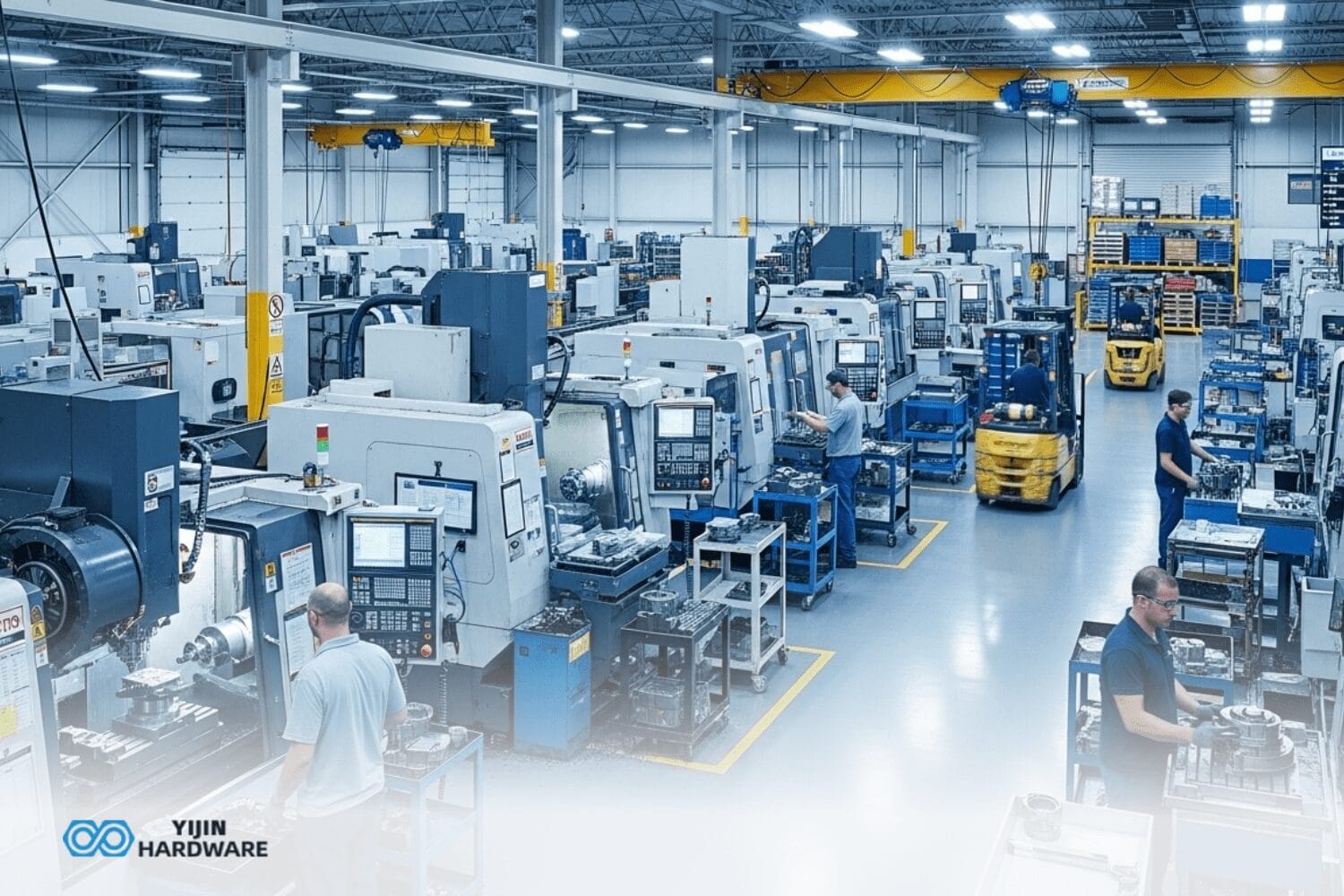
At Yijin Hardware, we use advanced CNC machining technology to deliver premium quality machined parts for applications across industries. Our CNC machining services include milling, turning, and multi-axis machining with capabilities to work with metals, polymers, and specialty materials. Whether you need prototypes or production runs, our machining experts will help you use CNC manufacturing to achieve your goals with precision and cost-efficiency.
To learn more about how our CNC machining capabilities can benefit your next project, contact our team today for a consultation and quote. Experience the advantages of CNC machining work done right.
Frequently Asked Questions
How accurate is CNC machining?
CNC machining achieves exceptional accuracy, with typical tolerances of ±0.025 mm (0.001″) and precision capabilities as tight as ±0.005 mm (0.0002″) on advanced machines. This accuracy comes from computer control, rigid machine construction, and feedback systems that continuously monitor position. Temperature-controlled environments further enhance precision for critical applications. Different materials and part geometries may affect achievable tolerances.
How does CNC machining compare to 3D printing?
CNC machining and 3D printing represent fundamentally different manufacturing approaches with distinct advantages. CNC machining excels at producing parts with tight tolerances, excellent surface finishes, and superior mechanical properties from a wide range of materials. 3D printing offers advantages for highly complex internal geometries, custom one-off parts, and designs that would be impossible to machine conventionally. Many modern manufacturing operations use both technologies strategically.
How does CNC machining compare to manual machining?
CNC machining offers significant advantages over manual machining, including higher precision, greater consistency, increased production speed, and the ability to create complex geometries. While manual machining requires a skilled machinist to control every movement, CNC automated processes eliminate human variability. Manual machining may have lower initial costs, but becomes less economical as production quantities increase, while CNC machining delivers consistent quality regardless of volume.
How can I prepare my design for CNC machining?
Designing parts specifically for CNC machining improves quality while reducing costs and lead times. The most important considerations include incorporating machining-friendly features that account for tool access, maintaining uniform wall thickness, specifying realistic tolerances based on feature size and material, and including adequate support for thin walls or features. Provide complete 3D models with corresponding 2D drawings that clearly indicate dimensions, tolerances, and critical features.
Using CNC machining effectively means understanding the different types of CNC and selecting the right type of machine for each job before design. CNC milling machines, CNC drilling, and CNC routing are all types of CNC cutting that a machine might perform. A controlled machine with precise CNC controls can create complex geometries that manual tools cannot achieve. To fully leverage all aspects of CNC machining, use a CNC system designed for your part’s specific needs.
Back to Top: How does CNC Machining Work? A Comprehensive Guide




 EN
EN  ES
ES  RU
RU  DE
DE  FR
FR