- Производитель прецизионных деталей
- Услуги
- 3d-печать
Услуги 3D-печати
Yijin Hardware runs online 3D printing services that take your digital дизайны and make them physical—usually in 1-5 business days. We use different 3D printing technologies and have over 50 engineering-grade materials available, so whether you’re prototyping or making end-use parts, we’ve got you covered. Just upload your 3D file (STEP, STL, IGES, or SLDPRT formats work) and you’ll get an instant quote.
- ⬤Сервис
- ⬤Ваши данные
- ⬤Отправить


What is 3D Printing?
3D printing is an additive manufacturing process that builds three-dimensional objects by depositing material layer-by-layer from digital CAD models. The technology joins thermoplastics, photopolymers, metal powders, or composites in successive 0.05-0.3 mm layers until the complete geometry forms. Unlike CNC machining that removes material from solid blocks, this digital manufacturing method only uses the exact material volume required for the final part.
Core Manufacturing Technologies
The 3D printing process begins when slicing software divides your 3D model into horizontal cross-sections and generates toolpaths for the printer. Each technology uses different bonding mechanisms:
- FDM (Fused Deposition Modeling): Extrudes molten plastic through heated nozzles at 200-400 °C
- SLA (Stereolithography): Cures liquid photopolymer resin using UV lasers at 355-405 nm wavelengths
- SLS (Selective Laser Sintering): Fuses nylon powder particles with infrared CO₂ lasers
- MJF (Multi Jet Fusion): Applies fusing agents before infrared energy exposure for production parts
- DMLS: Melts metal powder with high-power fiber lasers at 200–400 watts
Build platforms lower incrementally after each layer completes, allowing the next layer to bond through thermal fusion, photopolymerization, or powder sintering.
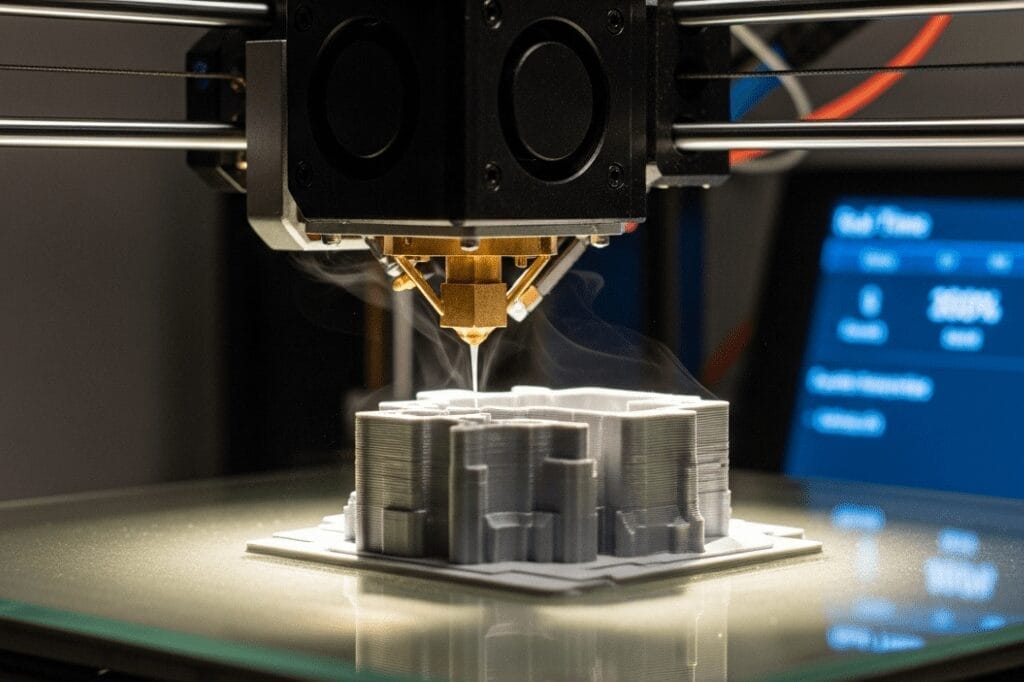

Our 3D Print Services: Technologies and Materials
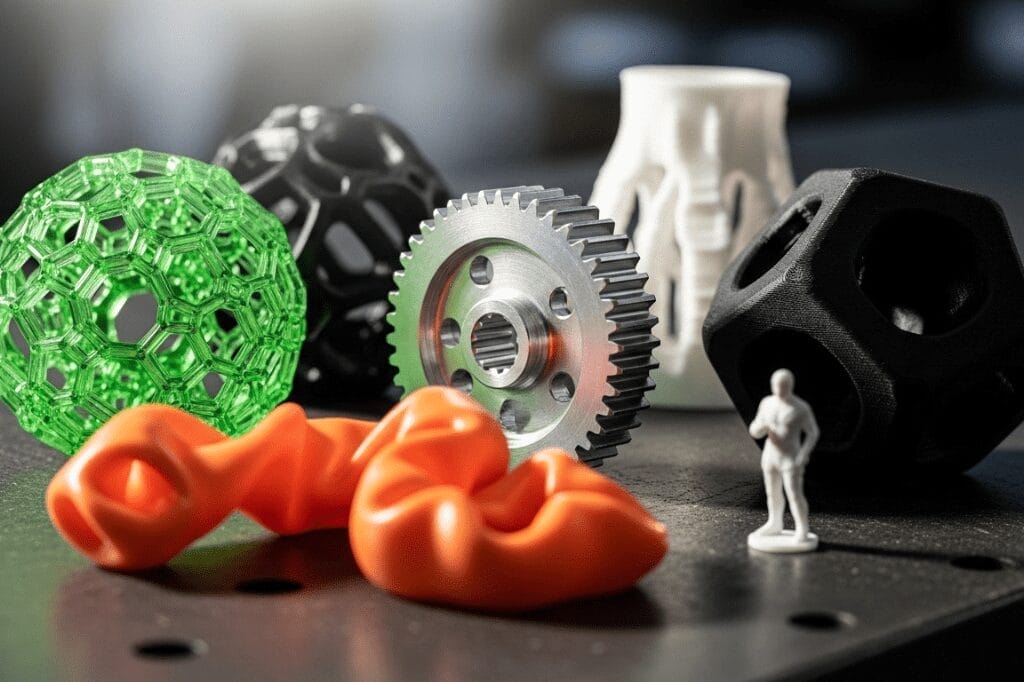
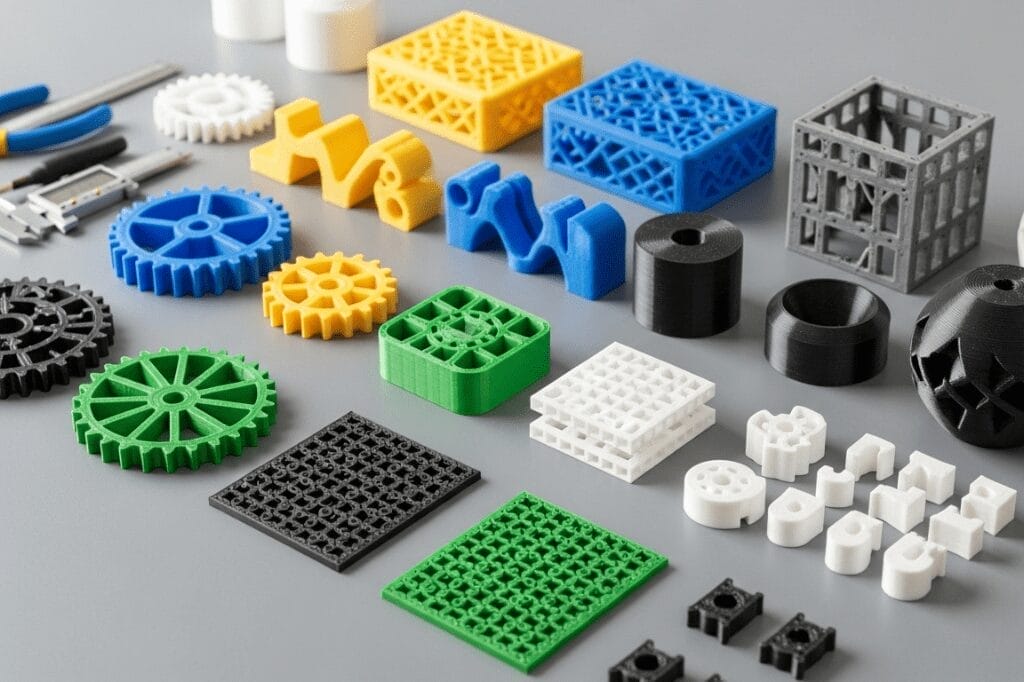
Our 3D printing service offers FDM, SLA, SLS, and MJF systems certified under ISO/ASTM 52901:2017 standards for purchased additive manufacturing parts. Material selection determines performance across tensile strength, heat deflection temperature, impact resistance, and chemical compatibility.
Engineering Thermoplastics (FDM)
| 3D Printing Material | Прочность на разрыв | HDT @ 0.45 MPa | Приложения |
|---|---|---|---|
| ABS | 33 MPa | 98 °C | Functional prototypes, jigs, tooling |
| ULTEM 9085 | 72 MPa | 153 °C | Aerospace components, flame-retardant parts |
| ULTEM 1010 | 85 MPa | 213 °C | Autoclavable medical devices, chemical resistance |
| ASA | 41 MPa | 95 °C | Outdoor applications, UV stability |
Production Nylon (SLS & MJF)
Нейлон 12 delivers 48 MPa tensile strength with elongation at break of 18%, ideal for living hinges, snap-fit assemblies, and custom 3D printing applications. Nylon 12 Flame Retardant meets UL-94 V-0 and FAR 25.853 specifications for aerospace interiors. HP Multi Jet Fusion produces parts with 1,200 MPa flexural modulus and isotropic mechanical properties.
Photopolymer Resins (SLA & SL)
Standard Clear, Tough, Durable, and High-Temperature resins provide 38-55 MPa tensile strength with surface finish of Ra 0.8-1.6 μm. Minimum feature resolution reaches 0.025 mm with 0.05 mm layer heights for precision 3D print prototype production.
Metal 3D Printing (DMLS & SLM)
Алюминий AlSi10Mg, Титан Ti6Al4V, and Нержавеющая сталь 316L comply with ISO/ASTM 52904:2019 standards for metal powder bed fusion. Metal parts achieve 460+ MPa ultimate tensile strength with 99.5%+ density using advanced manufacturing technologies.
Which Industries Use Our Online 3D Printing Service?
Здравоохранение leads additive manufacturing adoption. We produce patient-specific surgical guides, anatomical models, prosthetic components, and hearing aid shells under ISO 13485 quality management systems.
Aerospace & Defense Applications
- FAA-compliant interior components in flame-retardant ULTEM 9085 for аэрокосмическая промышленность
- Titanium structural brackets with topology optimization
- Lightweight ducting and manifolds with internal geometries
- Rapid prototyping for legacy aircraft replacement parts
Automotive & Transportation
Автомобили applications include functional test fixtures, low-volume production brackets, custom interior trim components, and wind tunnel testing models.
Agriculture & Equipment
We manufacture irrigation components, custom mounting brackets, equipment housings, and specialized farming tool adapters.
Consumer Products & Electronics
Our 3D printing online services support product development cycles with design iterations in 1-day turnaround. Production applications include enclosures, connectors, wearable device housings, and multi-material assemblies using PolyJet technology.
How does Rapid Prototyping Speed Product Development?
Rapid prototyping eliminates tooling costs and compresses design validation from weeks to 1-5 business days through direct CAD file-to-part manufacturing.
Custom 3D Prototyping Workflow
- 3D Design Analysis: Engineers review your 3D CAD models for printability issues including wall thickness, overhangs, and clearances
- Material Recommendation: Technical consultation matches 3D printing materials to functional requirements and testing conditions
- Print Orientation Strategy: Part positioning optimizes dimensional accuracy and support structure minimization
- Post-Processing Selection: Specify bead blasting, vapor smoothing, dyeing, or painting for cosmetic requirements
We produce functional prototypes replicating final material properties for mechanical testing, assembly verification, and user feedback. A 3D printing prototype costs less than traditional methods requiring molds or dies.
Can We Manufacture End-Use Production Parts?
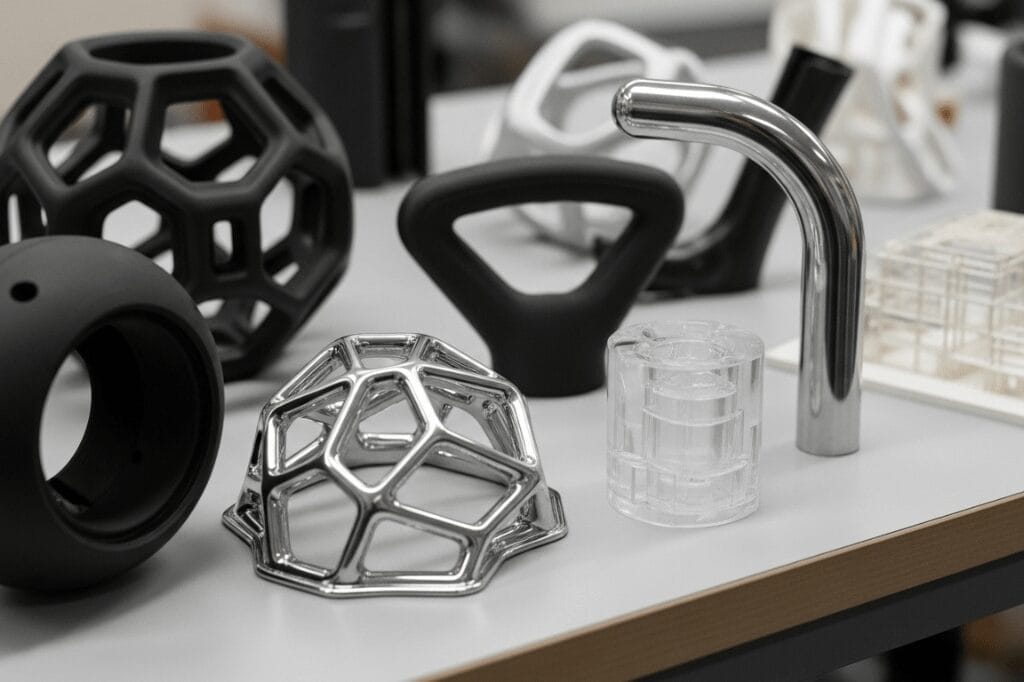
Our professional 3D printing service manufactures serialized end-use parts without tooling investment. We implement batch manufacturing with material certifications, dimensional inspection reports, and traceability documentation with no minimum order requirements.
Quality Assurance Standards
- ISO/ASTM 52901:2017 compliance for purchased AM parts
- ISO/ASTM 52904:2019 adherence for metal powder bed fusion
- First-article dimensional inspection using industrial 3D measurement systems
- Material test certificates documenting lot traceability
- Statistical process control monitoring dimensional variation
Production Applications
Custom 3D printed end-use parts suit low-volume runs under 1,000 units where tooling costs exceed per-part printing expenses, customized products requiring unique configurations, and spare parts for legacy equipment with obsolete tooling. On-demand manufacturing eliminates inventory carrying costs and enables just-in-time delivery to get your parts when needed. Components receive unique serial numbers and compliance documentation supporting regulated industries. General tolerances maintain ±0.030 inches (±0.76 mm), with post-machining achieving ±0.001 inches (±0.025 mm) on critical features using advanced machine tools.
How does Hybrid Manufacturing Optimize Part Production?
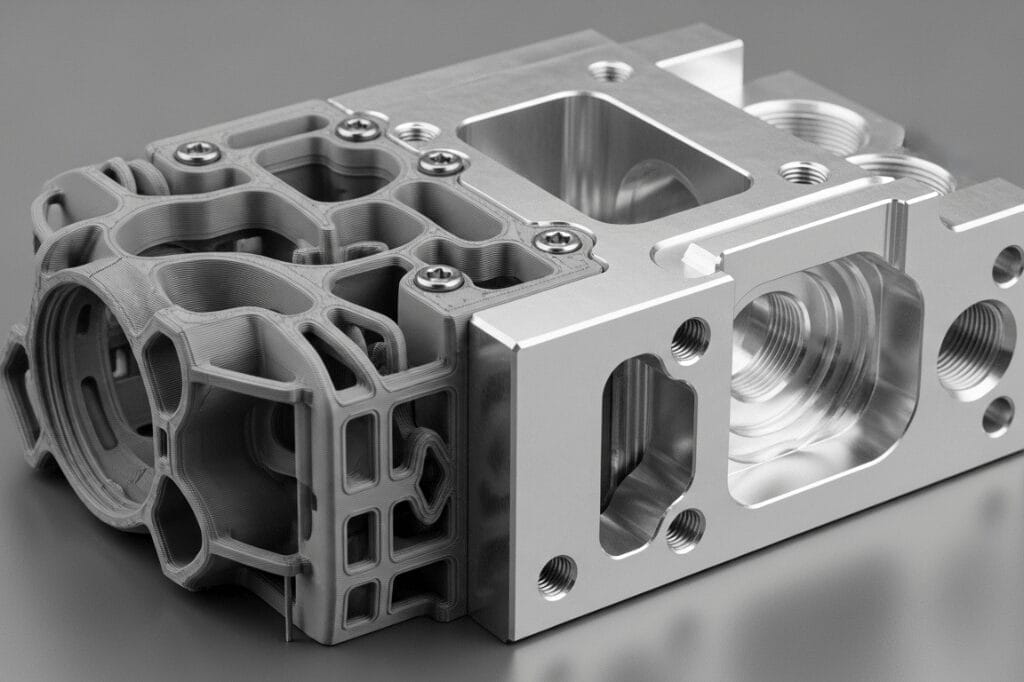
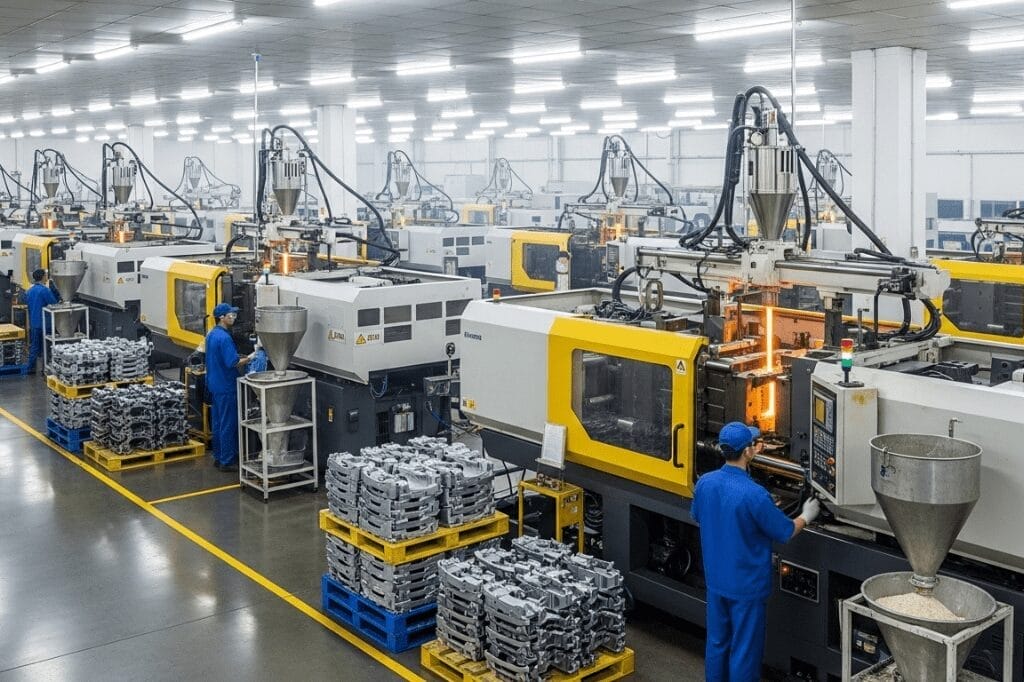
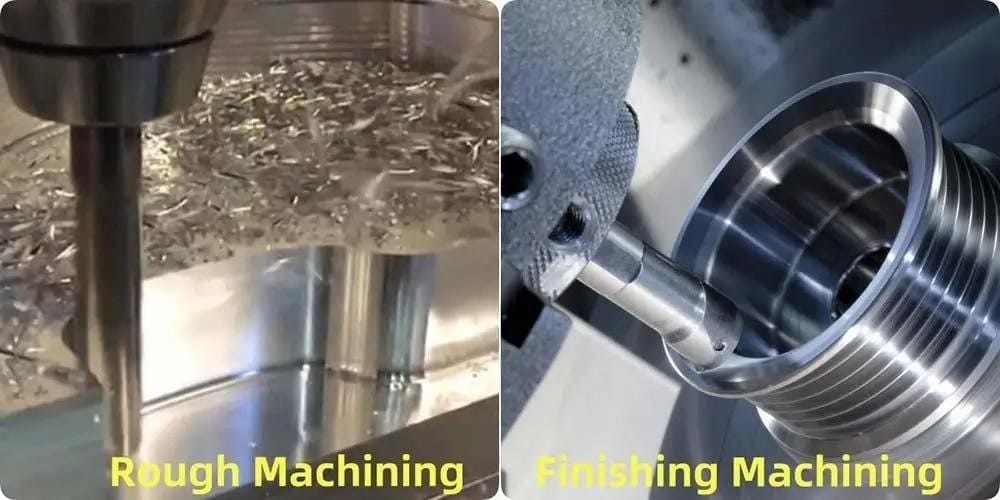
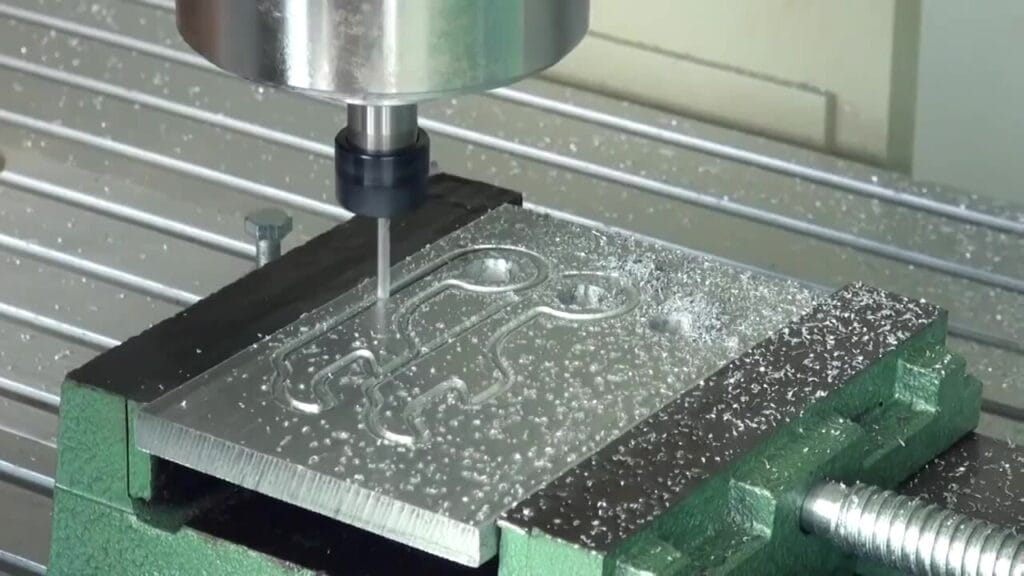
Hybrid manufacturing integrates different 3D printing technologies with subtractive processes to leverage geometric complexity from additive manufacturing with dimensional precision from CNC machining. We print near-net-shape geometries with internal features and organic contours, then machine critical surfaces, threaded holes, and tight-tolerance features to final specifications.
The workflow identifies which features require additive formation—lattice structures, internal passages, undercuts—and which demand machining accuracy including bearing surfaces, sealing faces, and precision bores. Stock allowances of 0.020-0.040 inches (0.5-1.0 mm) on critical dimensions provide material for finish operations. Applications include hydraulic manifolds with internal flow channels printed using Binder Jetting. There are also aerospace brackets with topology-optimized geometries and injection molding inserts with conformal cooling channels for large format tooling.

Why Choose Yijin Hardware for 3D Printing Online Services?
We deliver integrated additive manufacturing solutions combining instant 3D printing with precision CNC machining, sheet metal fabrication, and casting under ISO 9001:2015 certification. Our engineering team provides Design for Additive Manufacturing (DFAM) consultation to optimize part orientation, minimize support structures, and select appropriate materials based on mechanical requirements. Quality assurance protocols include first-article dimensional inspection, material certification documentation, and compliance reporting for regulated industries.
Our 3D printing factory capabilities span industrial FDM systems for parts to 300 × 300 × 300 mm, high-resolution Stereolithography with 0.05 mm layer heights, and production SLS for nylon components with isotropic properties achieving prototypes and end-use parts with the highest precision standards. Direct communication with manufacturing engineers addresses technical questions, design modifications, and expedited delivery requirements throughout production. We support international customers with English-language technical documentation, secure file handling for your files for 3D printing, and reliable logistics partnerships to order 3D parts with confidence.
Что говорят наши клиенты


3D Printing Services FAQs
The seven primary printing processes include Fused Deposition Modeling (FDM) for thermoplastic extrusion, Stereolithography (SLA) for UV-cured photopolymers, Selective Laser Sintering (SLS) for nylon powder fusion, Direct Metal Laser Sintering (DMLS) for aerospace-grade metal components, Multi Jet Fusion (MJF) for production nylon parts, Digital Light Processing (DLP) for rapid resin projection, and Binder Jetting for metal casting molds. Material Jet technologies like PolyJet from 3D Systems enable multi-material builds with varied shore hardness values in single print jobs.
Industrial 3D printing machines manufacture functional prototypes, production-grade components, tooling aids, medical devices, and custom assemblies across materials including engineering plastics and metal alloys (aluminum AlSi10Mg, titanium Ti6Al4V, stainless steel 316L) and elastomers with shore hardness from 27A to 95A. Capabilities extend to complex geometries with internal cooling channels, lattice structures for weight reduction, living hinges requiring flexibility, snap-fit assemblies, and consolidated multipart designs eliminating fasteners.
Print duration ranges from 2 to 48 hours depending on part volume, geometry complexity, layer height selection, and manufacturing process employed for the build cycle. Small prototypes under 50 cm³ complete in 2–6 hours using 0.2 mm layer heights, while components exceeding 1,000 cm³ require 24–48 hours for complete fabrication. FDM systems deposit material at 50-150 mm³/s extrusion rates, SLA builds at 20-40 mm/hour vertical rates, and SLS completes full build chambers in 10–16 hours regardless of part quantity loaded.
Ресурсы ЧПУ
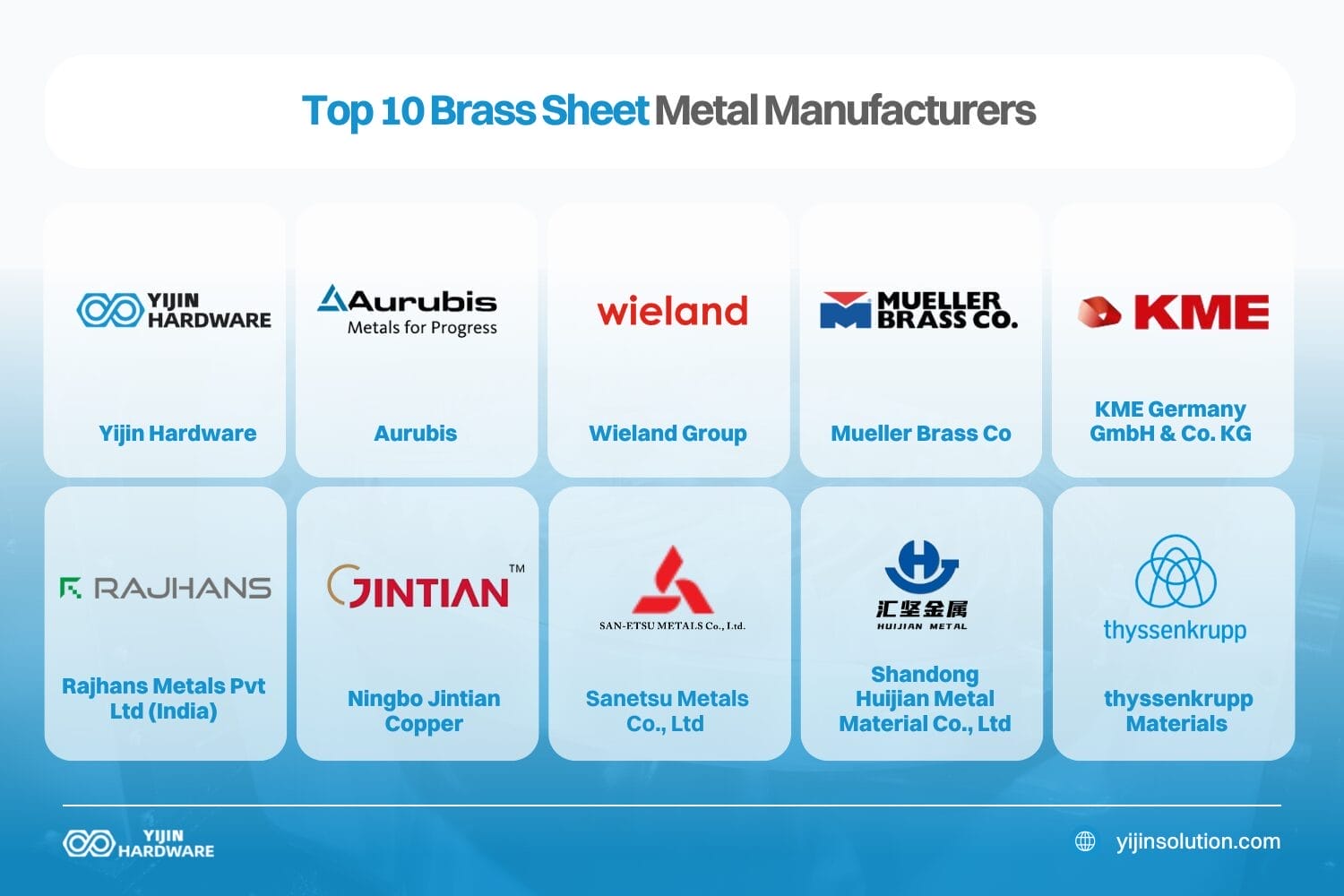
Топ 10 производителей листового металла из латуни
Латунный лист сочетает в себе свойства, которые делают его ценным в различных отраслях промышленности и привлекательным для архитектурного и декоративного использования. Будь то
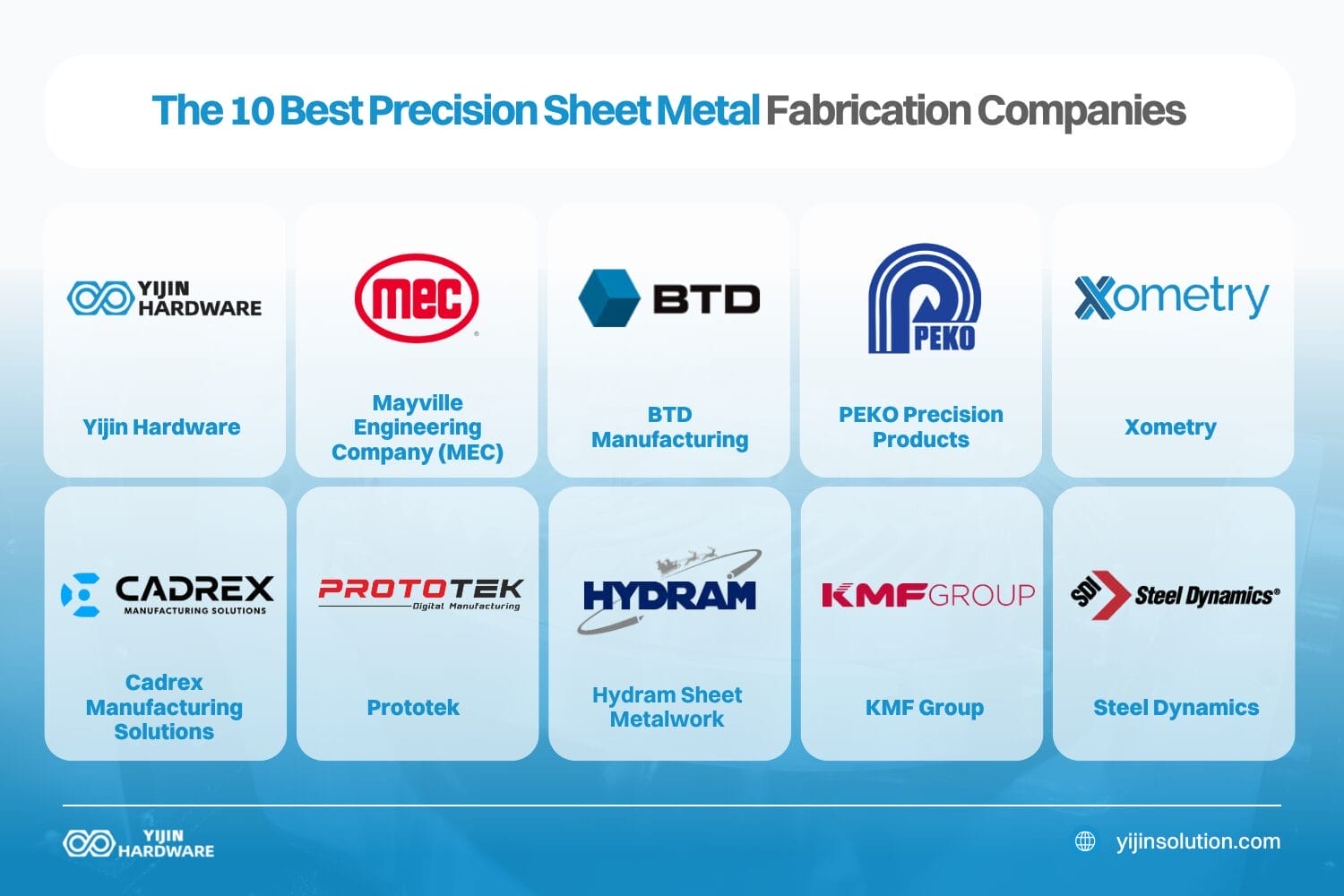
10 лучших компаний по производству прецизионного листового металла (полное руководство)
Прецизионное производство листового металла - это не обычная металлообработка, это производство с допусками, измеряемыми тысячными долями.
10 лучших производителей металлической кровли, о которых вы должны знать
Выбирая производителя металлической кровли, вы не хотите ошибиться, ведь ваша крыша в буквальном смысле защищает все, что находится под ней.
Начните сегодня. Быстрое изготовление деталей.
Бесплатное проектирование механически обработанных деталей для ваших проектов с быстрыми сроками выполнения.
 RU
RU  EN
EN  ES
ES  DE
DE  FR
FR