
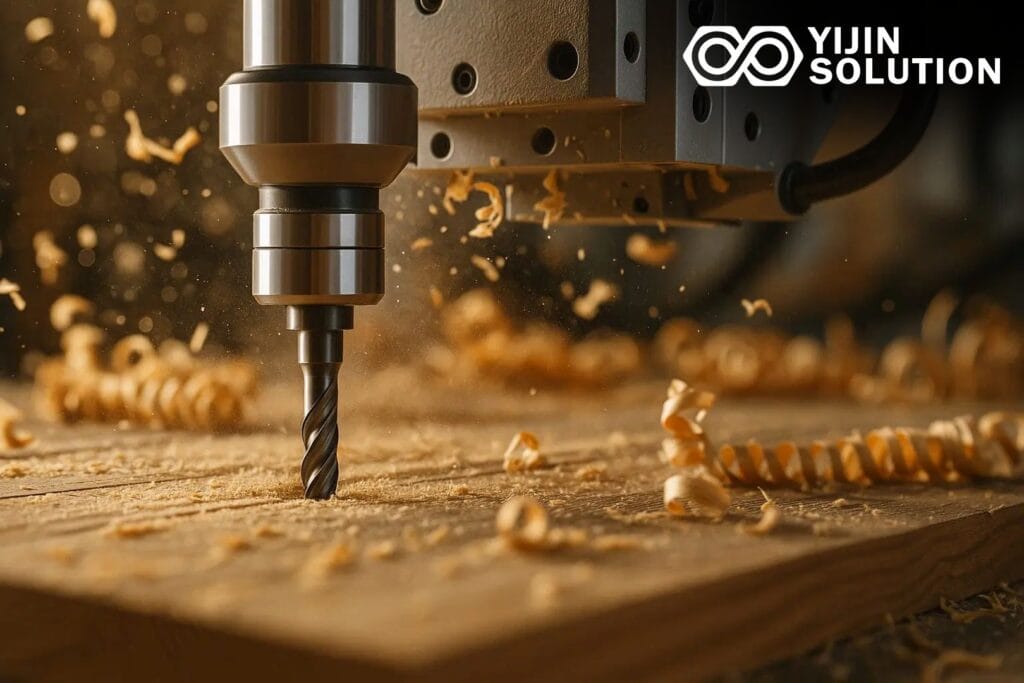
CNC-Holzbearbeitungsdienstleistungen
Precision CNC wood routing for furniture, cabinetry, signage, architectural millwork, and prototype parts. Our 3-axis routing centers handle hardwoods, engineered wood panels, plastics, and composite materials at our Shenzhen facility with full CAD design support and fast turnaround.
Upload your DXF, DWG, SVG, or STEP file to receive a DFM review and instant quote within 24 hours.
- Cuts up to 75 mm thick in hardwood; 100 mm in foam and composite
- Free CAD design support for clients without vector files
- No minimum order. Single-piece prototypes through production panels


CNC Wood Routing with Yijin Solution
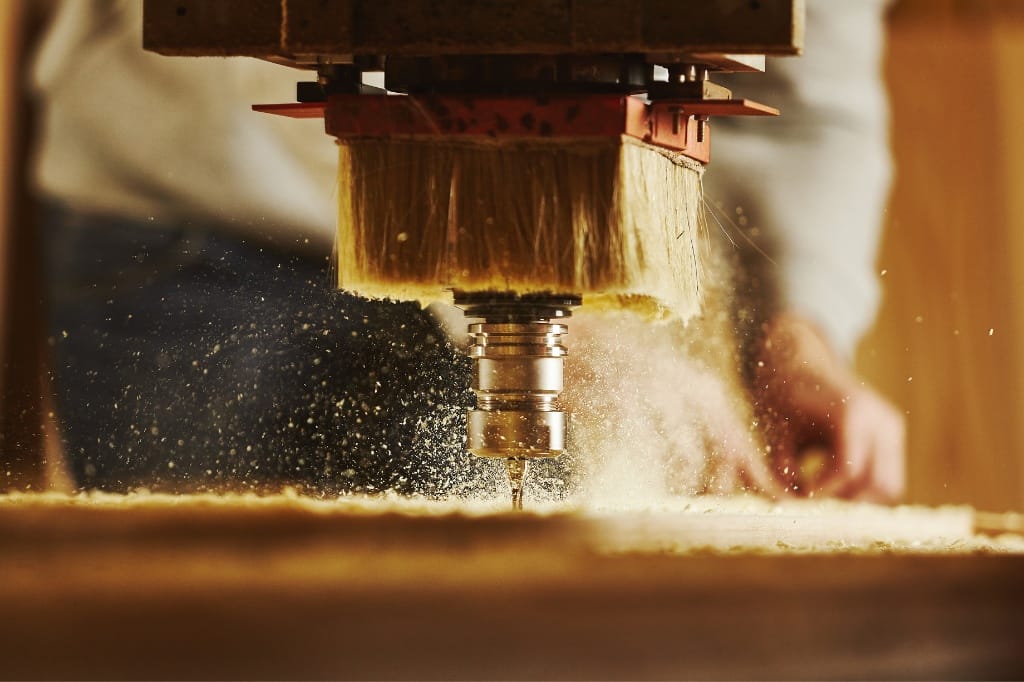
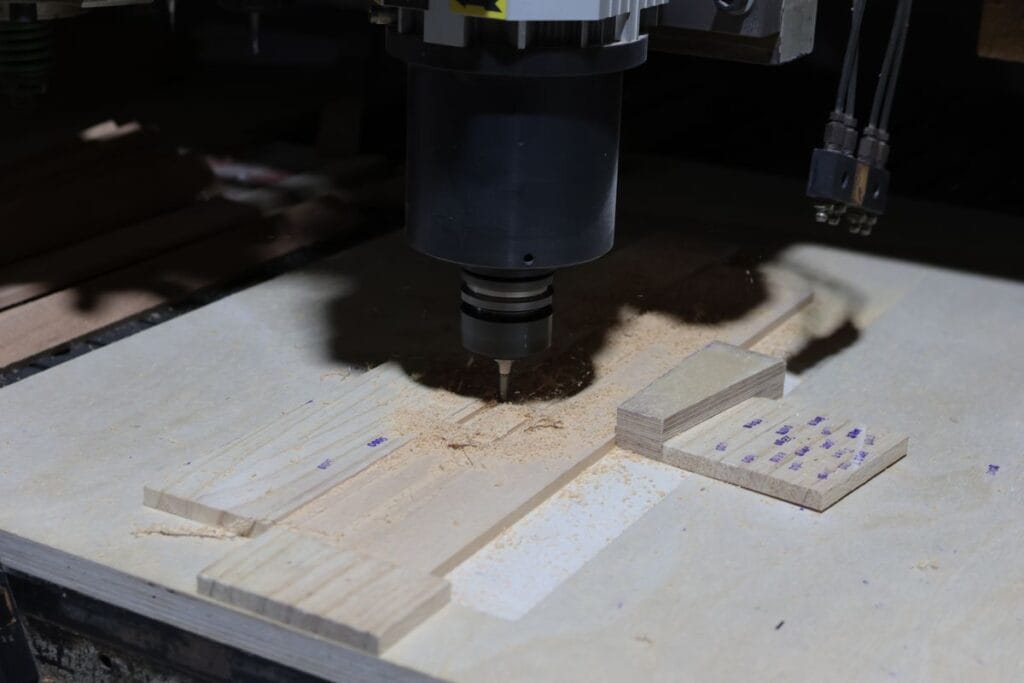
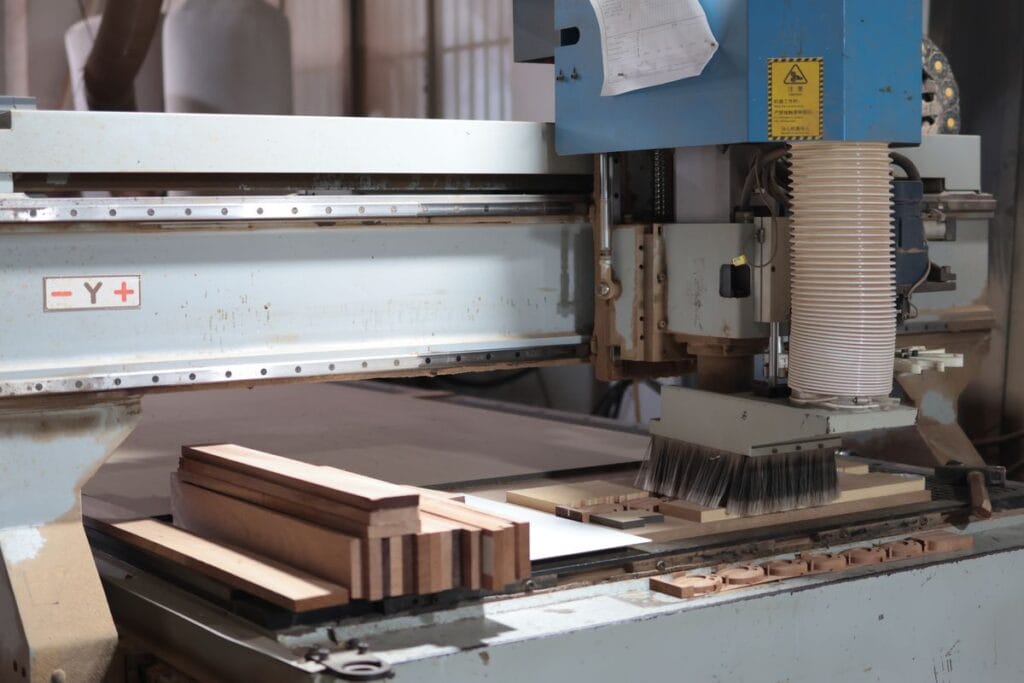
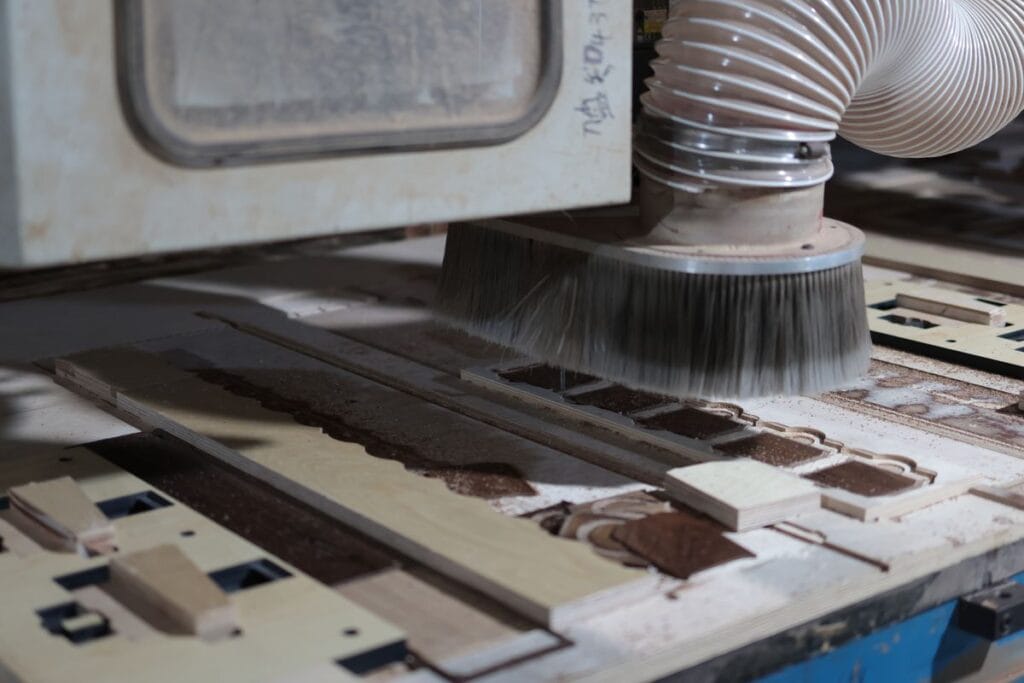
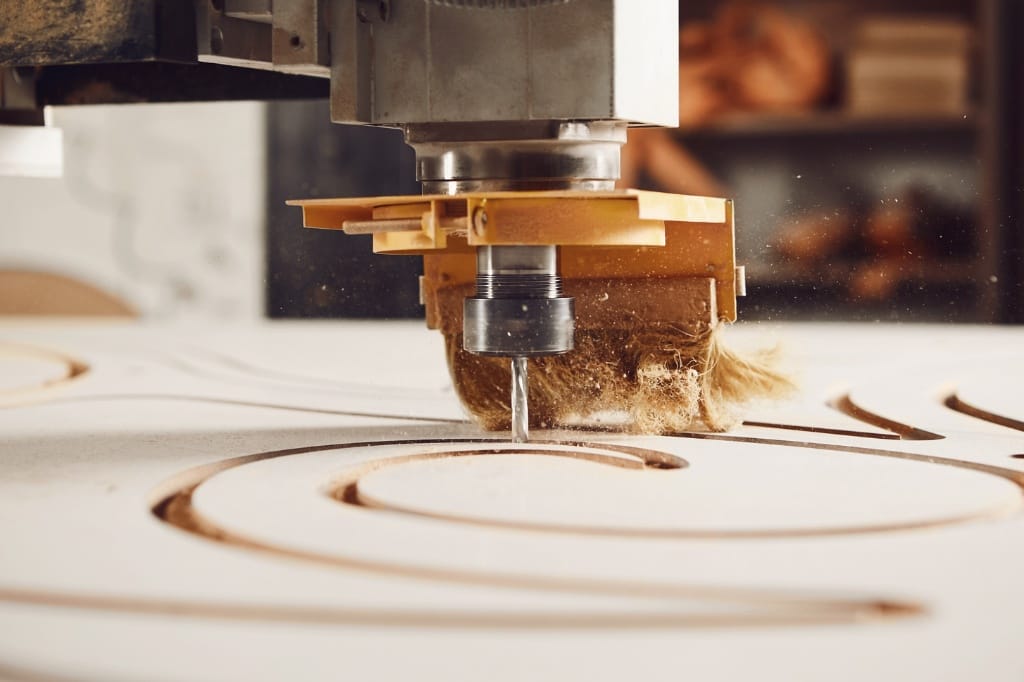
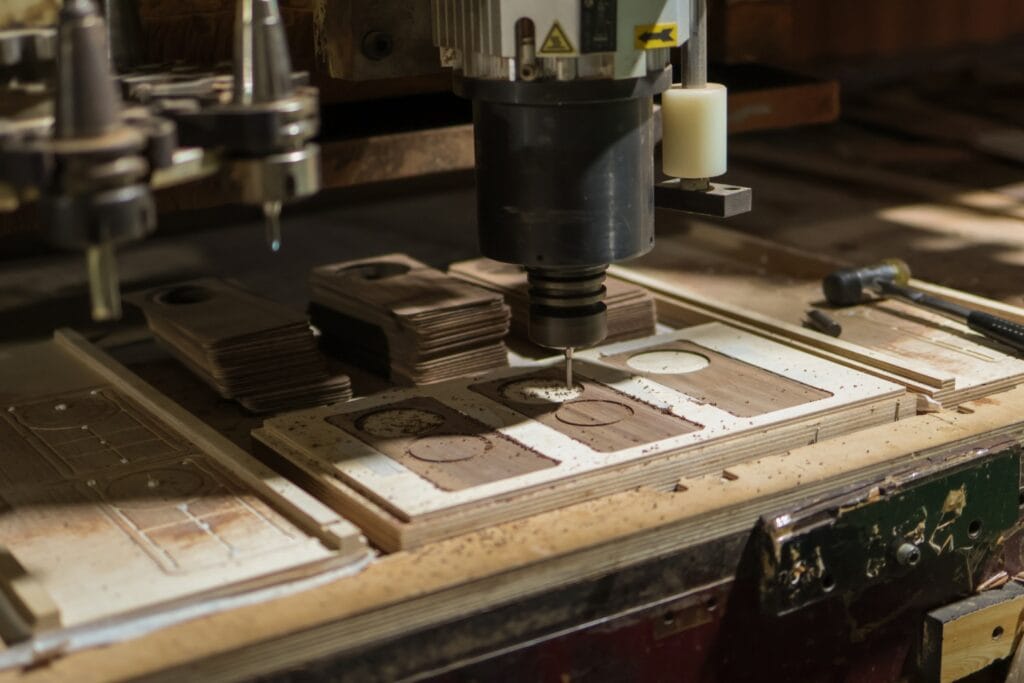
CNC wood routing is a subtractive process. A computer-controlled router spins a cutting bit and moves it along X, Y, and Z axes to cut, shape, and engrave wood and sheet material directly from a CAD file. The process is suited to furniture components, cabinet panels, signage, architectural millwork, and decorative engraving in hardwoods, plywood, MDF, acrylic, foam, and composite panels.
Wood routing sits inside our broader CNC-Bearbeitung service alongside CNC milling and CNC turning. It is the correct choice when the workpiece is sheet material or a profile that a metal-focused machining centre would be uneconomical to run. Yijin Solution handles routing from single-piece prototypes through production-panel nesting runs, with in-house design, edge banding, sanding, staining, and assembly available on request.

CNC Wood Routing Manufacturing Capabilities
| Merkmal | Beschreibung |
|---|---|
| Präzisionstoleranz | ±0,10 mm |
| Standard-Toleranz | ±0.20–±0.30 mm depending on material and thickness |
| Standard-Vorlaufzeit | 5–10 days; expedited orders available in 2–4 days |
| Maximum Part Size | Up to 2500 × 1300 × 100 mm |
CNC Wood Routing Materials
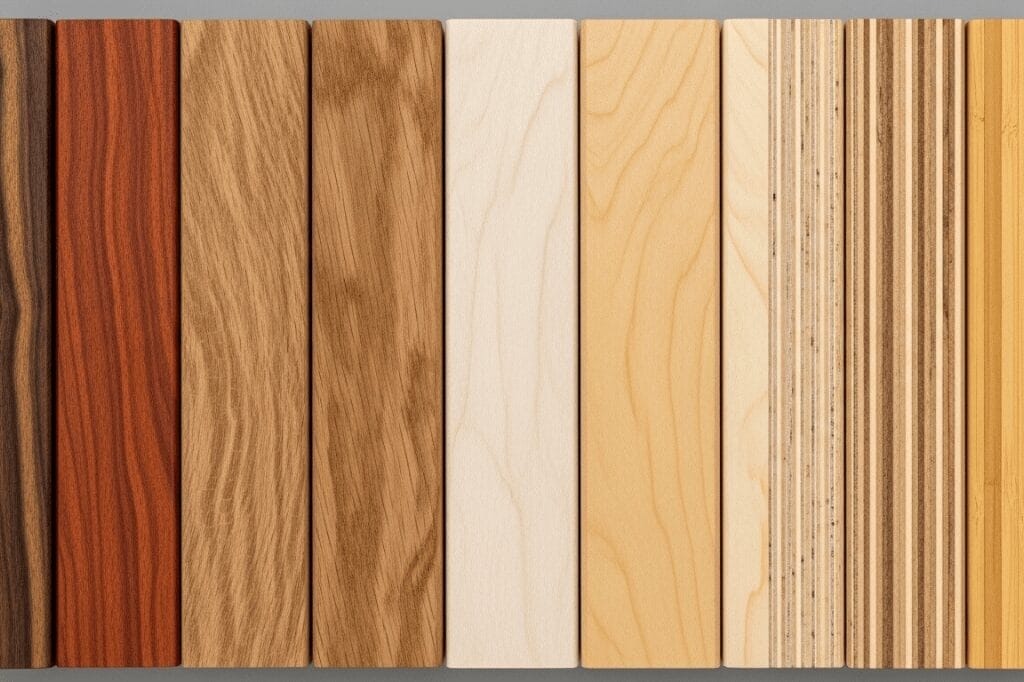
We stock and route wood, engineered panels, plastics, and composite sheet across the material families below. Clients can also ship in their own stock for custom species or premium grades.
Laubhölzer
| Typ | Common Klassen |
| Domestic Hardwoods | Oak (red and white), Maple (hard and soft), Cherry |
| Premium Hardwoods | Walnut (black), Mahogany, Teak |
| Spezialität | Ash, Beech, Hickory, Poplar |
Engineered Wood and Softwoods
| Typ | Common Klassen |
| Sperrholz | Birch, Baltic Birch, Marine Plywood (3 mm to 25 mm) |
| Particle and Fiber Board | MDF, HDF, Melamine, Particleboard |
| Nadelhölzer | Pine (yellow and white), Cedar, Douglas Fir |
Plastics and Composites
| Typ | Common Klassen |
| Acrylic and Polycarbonate | PMMA (cast and extruded), PC, PETG |
| Plastics and Composites | C36000, C26000, C28000, C11000, C12200 |
| Aluminum Composite | Dibond, ACM panel, Trespa |
Foams and Specialty
| Typ | Common Klassen |
| Foam Cores | EPS, Polyurethane (high-density), PVC foam |
| Light Softwoods | Balsa, Basswood |
| Corrugated and Honeycomb | Cardboard, Nomex honeycomb, aluminum honeycomb |

CNC Wood Routing Surface Finishes
We apply wood-appropriate finishes in-house to control quality and lead time. Each finish below protects the wood surface, adjusts appearance, or prepares the part for assembly.
Oberflächenbehandlung
SPEZIFIKATION

As-Routed and Sanded
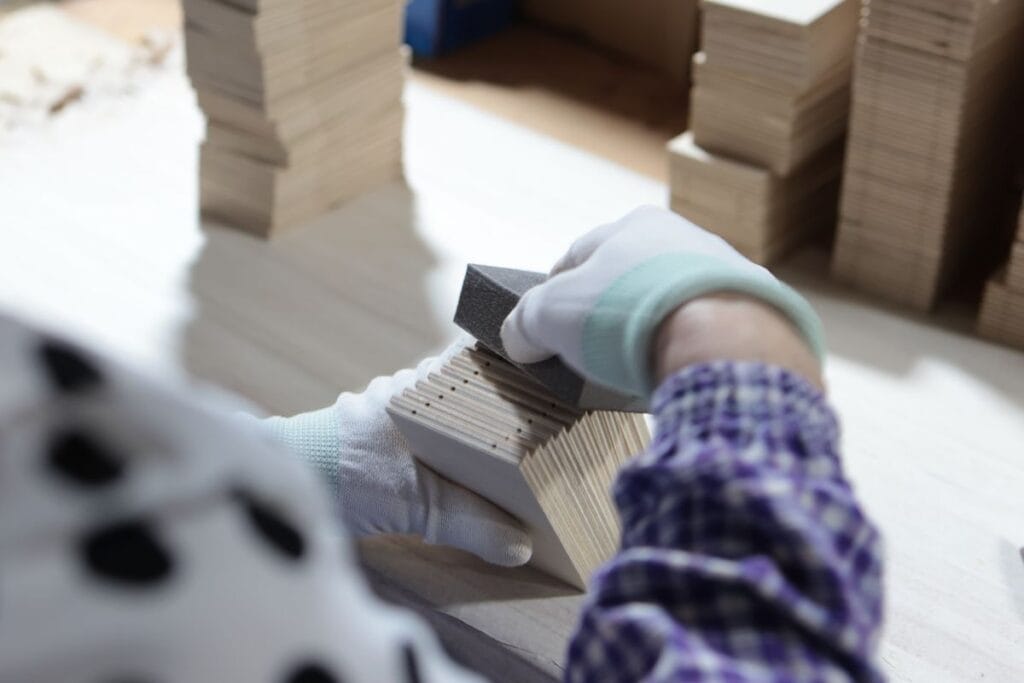
Parts ship directly off the machine with tool marks removed by progressive sanding through 120, 180, 240, and 320 grit. Standard finish for unfinished furniture components, prototypes, and parts that will receive downstream finishing from the buyer.

Clear Sealer and Lacquer
Water-based or solvent-based clear sealer and lacquer topcoat. Preserves the natural wood grain and color while protecting against moisture and UV. Available in matte, satin, and gloss sheens. Typical thickness 80 to 150 μm over two to three coats.

Stain and Oil Finish

Paint and Primer
Sanding sealer plus primer plus painted topcoat for solid-color finishes. Standard on MDF and primed plywood where the grain is meant to be hidden. Available in RAL, Pantone, and custom color matches.

Laser Engraving and V-Carving
Decorative details engraved with CO₂ laser or V-bit carved directly on the CNC router. Used for logos, model numbers, inlay patterns, and signage text. Depth from 0.5 mm for fine detail up to 10 mm for deep relief carving.

Edge Banding and Assembly
Types of Wood Routing Services We Offer
We run end-to-end CNC wood routing with three complementary service lines plus in-house finishing. Each service is suited for different stages of a project.

Custom Wood Routing
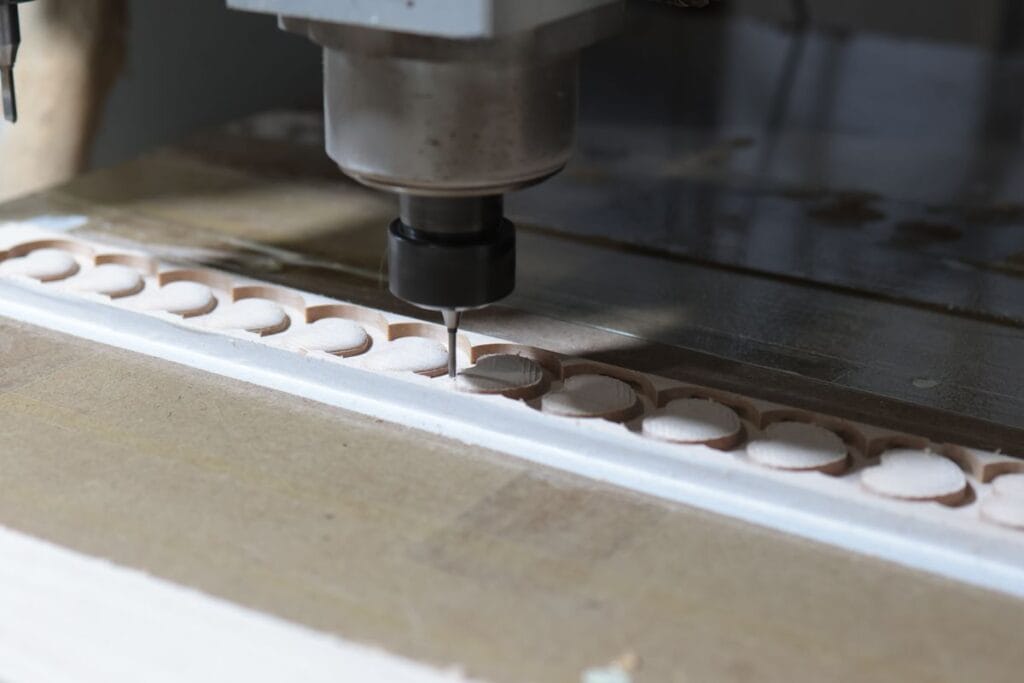
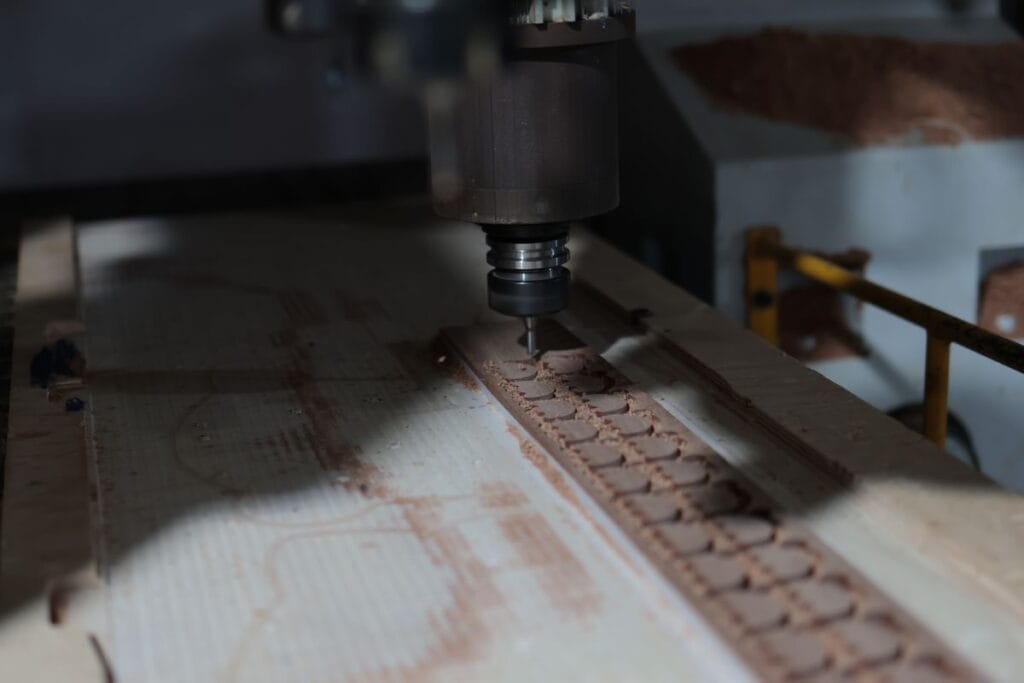
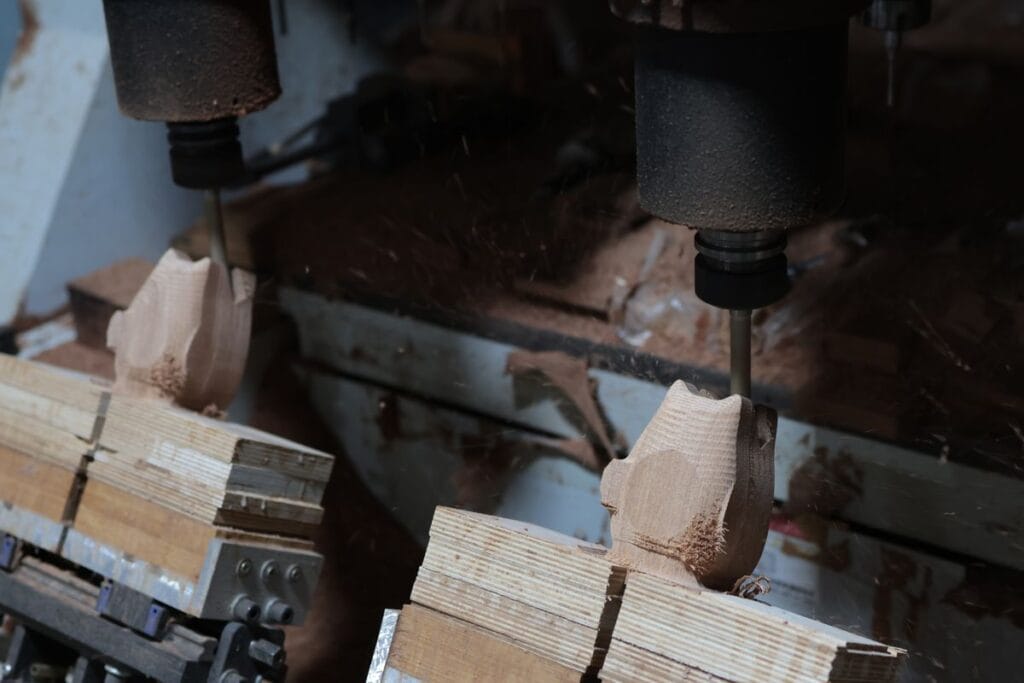
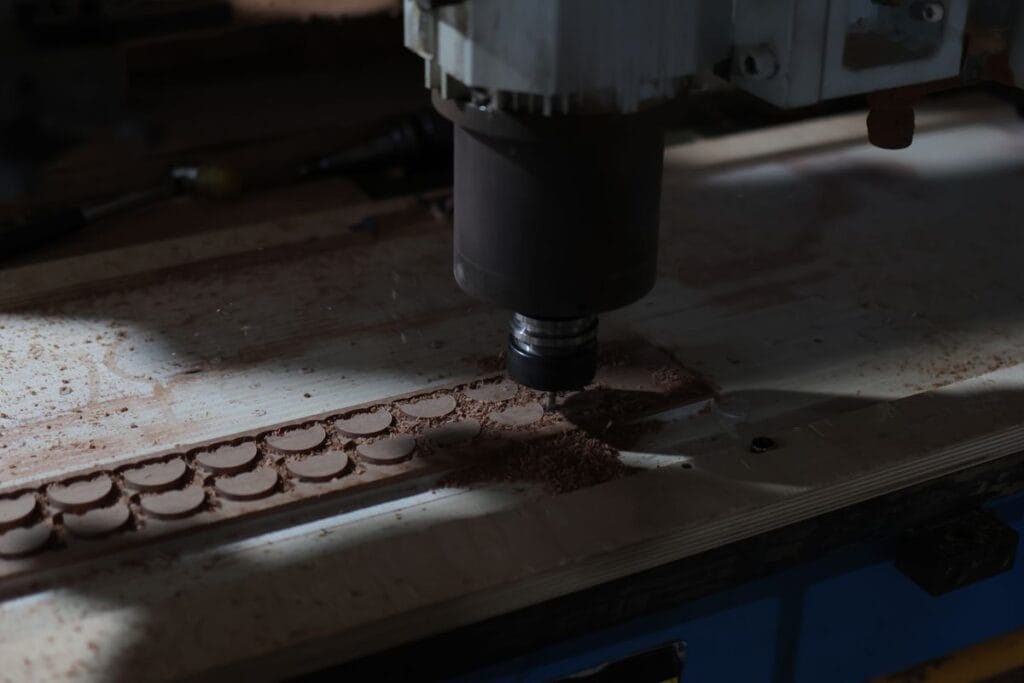
3-axis CNC routers shape, cut, and carve hardwood, plywood, and MDF to your CAD file. Used for furniture components, architectural millwork, signage, and decorative pieces. Cutter sizes from 1 mm V-bits for fine detail up to 25 mm compression cutters for fast stock removal.
CNC Cutting and Nesting
High-volume panel cutting for plywood, MDF, melamine, and aluminum composite sheets. Nesting software packs multiple parts into each sheet to minimize material waste. Production-optimized for cabinet shops, display builders, and OEM kitchen programs.
Custom CNC Design and CAD Support
Our in-house design team creates production-ready CAD files from sketches, photos, or dimensional requirements. Covers DXF, DWG, SVG, and STEP conversion, parametric customization, and joinery detailing. Free for clients who place a routing order.
Applications of CNC Wood Routing
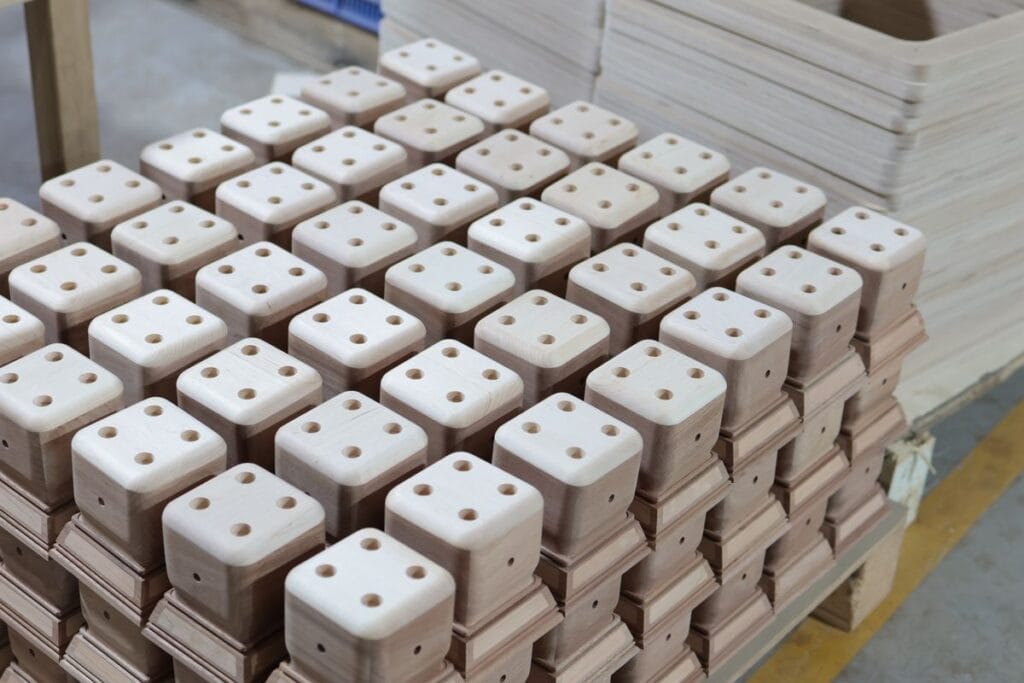
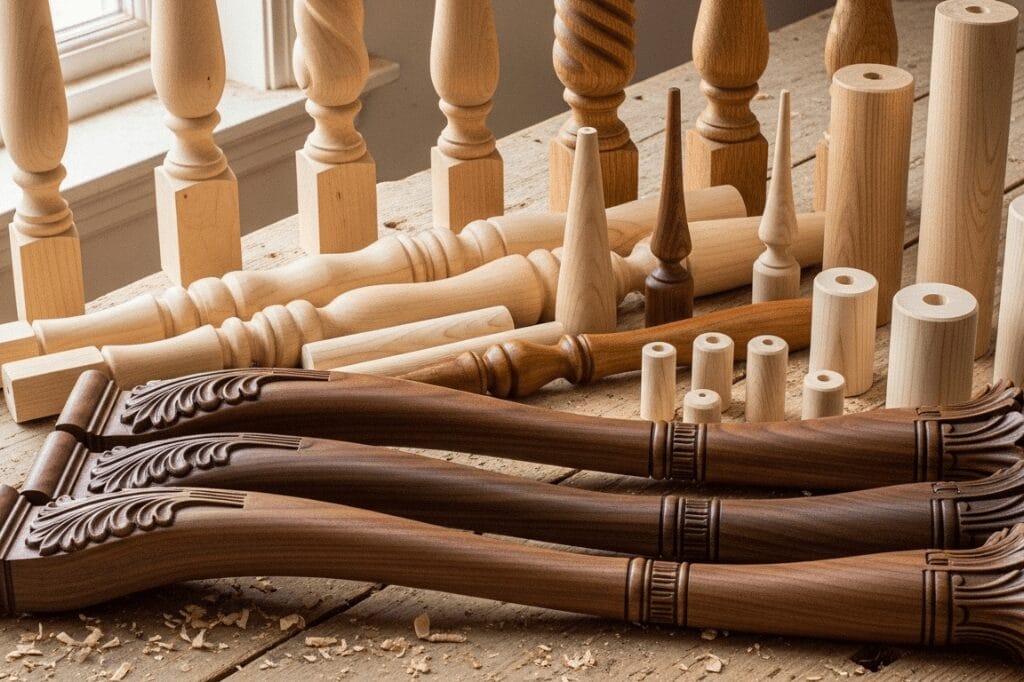
Cabinet components, table tops, chair backs, drawer fronts, and furniture trim in oak, maple, cherry, and walnut. Joinery details such as mortises, dados, and dowel holes cut in the same setup as the outer profile.
Custom kitchen and bath cabinets, built-in bookcases, closet systems, and architectural moldings in plywood, MDF, and melamine. Edge banding and assembly available for ship-ready sub-components.
Dimensional letters, cut-out logos, retail signage, and exhibition display panels in MDF, acrylic, PVC, and aluminum composite. Laser engraving and V-carving available for logos and secondary text.
Physical prototypes and design mockups cut directly from 3D CAD. Useful for design reviews, ergonomic testing, and fit-check samples before investing in metal or plastic tooling.
Wall panels, ceiling treatments, columns, corbels, and custom moldings in hardwoods and MDF. CAD-precise repeat detail across long runs keeps installed work visually consistent.
Guitar bodies, speaker cabinets, drum shells, and instrument cases in tonewoods such as maple, mahogany, and ash. Tight profile tolerance preserves the acoustic geometry the designer intended.
Shelving, product risers, point-of-purchase displays, and brand fixtures in melamine, MDF, and acrylic. Fast turnaround on repeating SKU programs.
Laser-cut kits, wooden puzzles, educational models, and prop replicas in baltic birch plywood and basswood. Small-feature resolution down to 0.5 mm on 3 mm stock.
Marine plywood bulkheads, galley counters, hatch covers, and trim components sealed for moisture resistance. Edge banding and marine-grade topcoats available in-house.
Yijin Solution CNC Wood Routing Factory
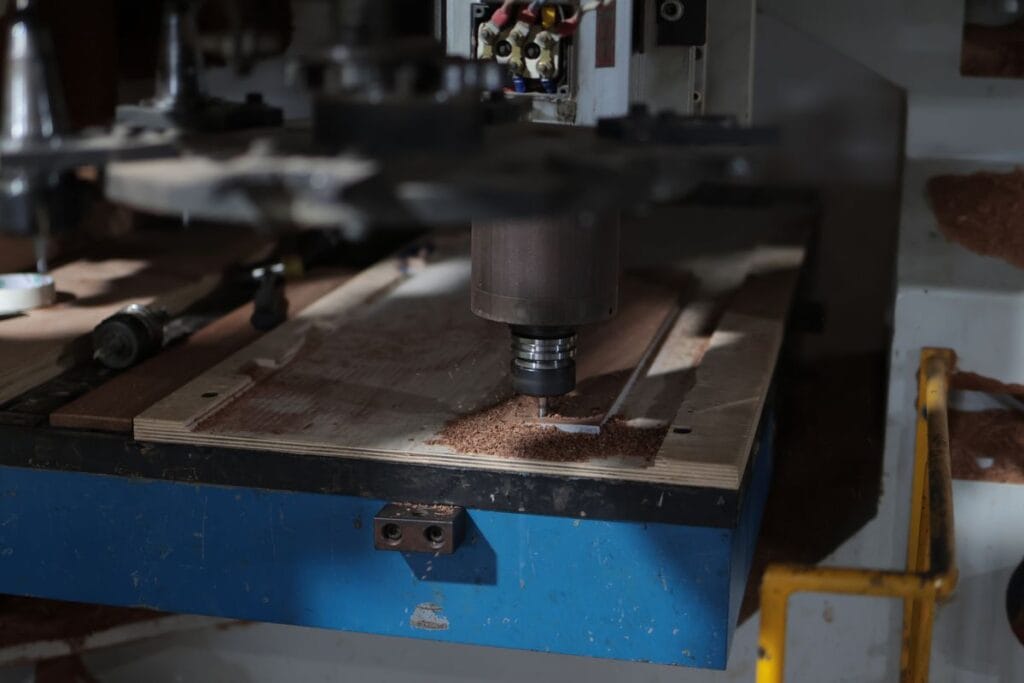
Yijin Solution operates a 25,000+ m² manufacturing facility in Shenzhen, China. Our CNC wood routing cell houses multiple 3-axis router tables with vacuum hold-down, automatic tool changers, and nesting software, plus dedicated lines for sanding, staining, edge banding, and assembly. Parts move from panel stock through routing, finishing, and assembly without leaving the facility.
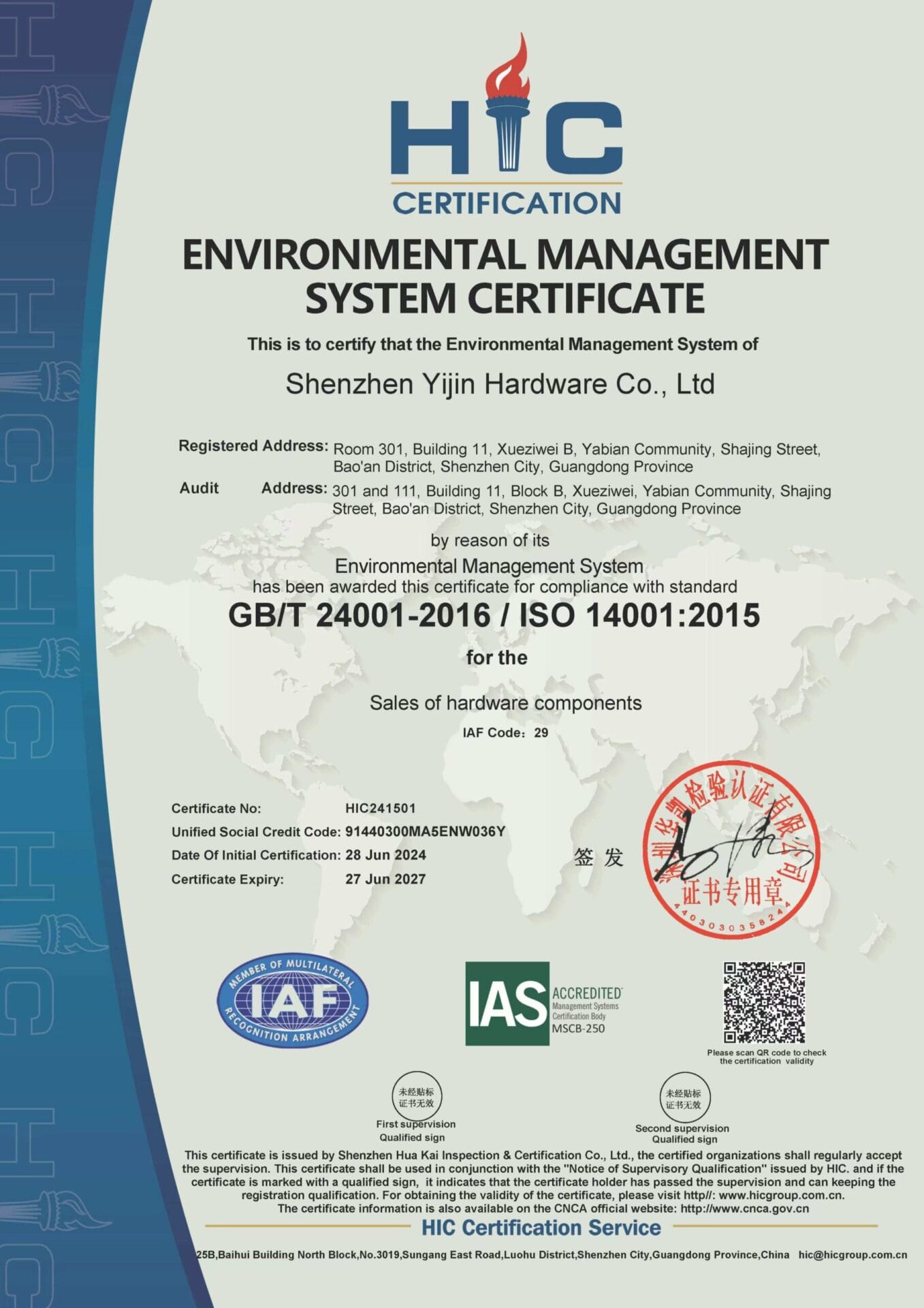
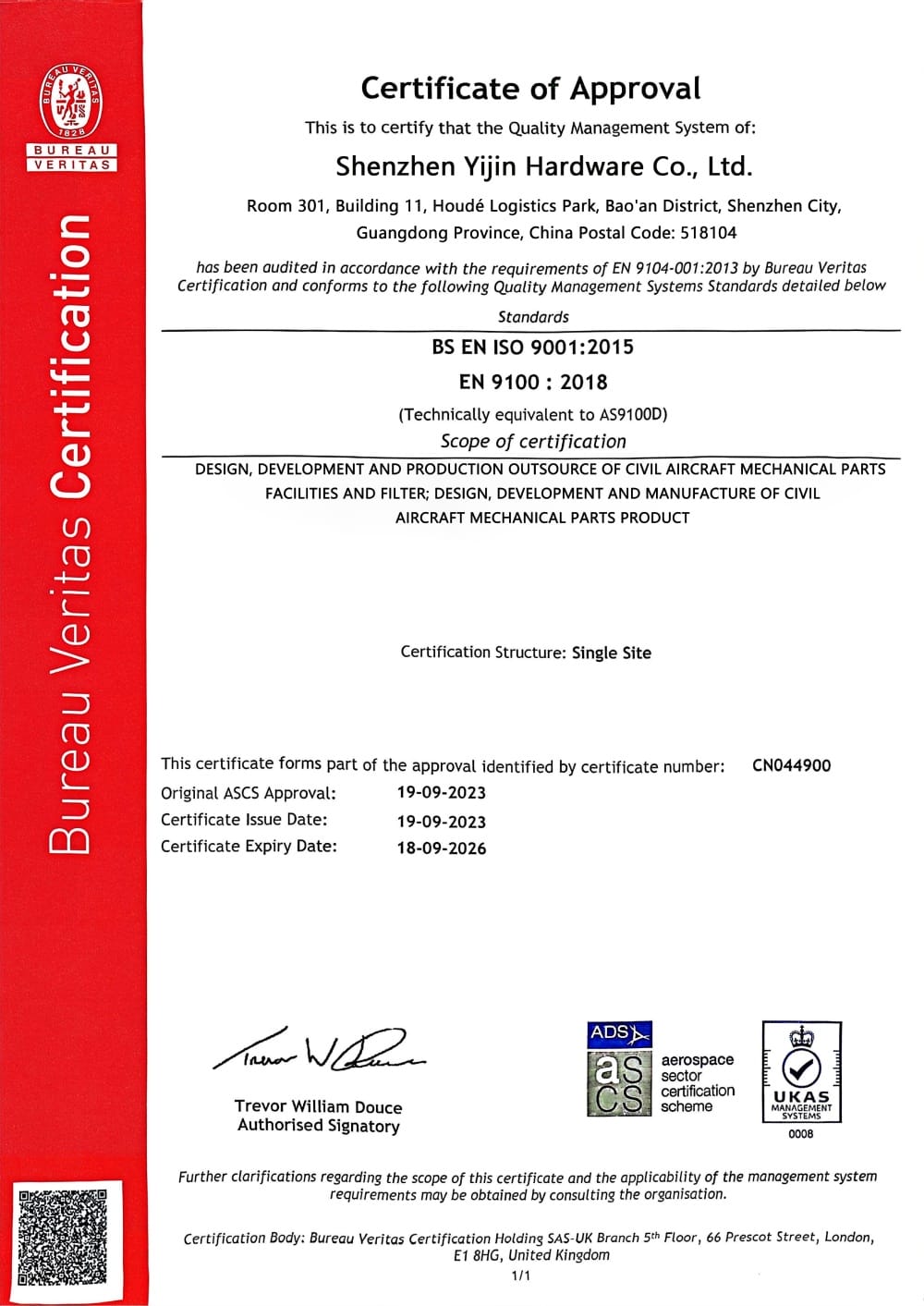
We serve clients across North America, Europe, and Asia-Pacific. Every order ships with dimensional inspection, material certificates where applicable, and photos of finished parts on request. Our factory is ISO 9001 certified, with established processes across cabinet programs, signage runs, and architectural millwork builds.


What's CNC Wood Routing
CNC wood routing is a way to cut and shape wood, sheet stock, and composite panels with a computer-guided router. CNC stands for Computer Numerical Control, which means a computer directs every tool movement instead of a human operator. The result is a part that matches the CAD file the same way every time across one piece or a thousand.
Wood routing handles almost any flat or profile part you can draw, from cabinet panels and signs to furniture components and decorative trim. The same machines cut one-off prototypes and production panels, so you don’t switch suppliers or requalify the process as your volume grows.


How CNC Wood Routing Works
CNC wood routing follows four steps from a digital design to a finished part.
- Design to program. CAM software converts your CAD file (DXF, DWG, SVG, or STEP) into toolpaths that tell the router where to cut, how fast, and how deep.
- Setup. The operator clamps or vacuum-holds the panel to the machine bed, selects the router bits for the job, and loads the program into the controller.
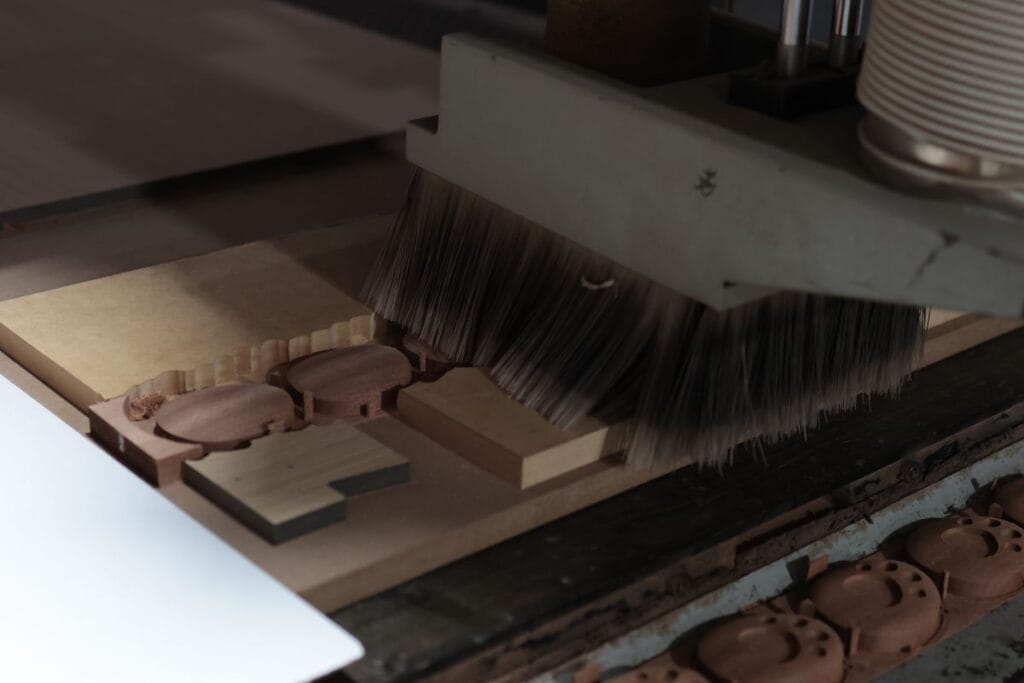
- Cutting. The router runs roughing passes at high feed rates, then finishing passes at slower speeds to deliver the final profile and surface finish. Dust extraction runs throughout.
- Finishing. The operator sands edges, verifies critical dimensions, and applies any specified finish such as clear sealer, stain, or edge banding before shipping.
A typical prototype cycle takes 3 to 7 days. Production batches take 2 to 4 weeks.
Why Choose Yijin Solution for CNC Wood Routing
We control every step of CNC wood routing from CAD through cutting, finishing, and assembly. That vertical integration means shorter lead times, consistent quality across panels, and direct factory pricing without broker margins.

Zeiss CMMs, laser interferometers, and optical comparators verify every critical batch. Parts hold ±0.05 mm typical and ±0.02 mm on 5-axis programs. First Article Inspection and PPAP Level 3 documentation standard on production runs.

Prototypes ship in 3 to 7 business days and production runs in 2 to 4 weeks. In-house design, routing, finishing, and edge banding eliminate supplier handoffs between shops.
Single-piece prototypes and production panels of 10,000+ units run on the same routers with the same inspection standards. No minimum order quantity.

Your prototype and production panels come off the same machines using the same CAD files. Nesting data transfers directly from pilot to volume runs, so there is no re-qualification when you scale.

Hardwoods, plywood, MDF, melamine, acrylic, PVC, HDPE, aluminum composite, and foam cores in sheet thicknesses from 3 mm to 100 mm. Clients can also ship in premium species or specialty stock.

Our in-house designers convert sketches, photos, or napkin drawings into production-ready CAD files at no additional cost when paired with a routing order. Parametric customization, joinery detailing, and nesting optimization included.
FAQs About CNC Wood Routing
Common questions about CNC wood routing, materials, and our production system.
1. How Do I Choose Between 3-Axis, 4-Axis, and Custom CNC Design and CAD Support?
CNC wood routing cost depends on four factors: panel size, material, cutting time, and finish. Hourly rates on production CNC routers typically range from $50 to $150 for the cutting operation alone.
Material cost varies widely. Baltic birch plywood runs about $80 per 4×8 sheet; walnut hardwood can exceed $400 per 4×8 sheet. Cutting time depends on the feature density of your design: a simple flat panel may take 10 minutes, a dimensional sign with V-carving may take two hours.
For a precise quote tailored to your part, upload your CAD file and target material through the quote form. Our engineering team reviews the file within 24 hours and responds with a unit price, material options, and lead time.
2. What File Formats Do You Accept?
We accept DXF, DWG, SVG, AI, STEP, IGES, and PDF drawings. DXF is the preferred format for flat 2D panel work because it preserves vector geometry without rasterization. STEP is preferred for 3D routing with depth features.
If you only have a sketch, photo, or hand drawing, our in-house designers can produce a production-ready CAD file for you at no cost when paired with a routing order. Send the reference along with target dimensions through the quote form.
3. What Materials Can Be CNC Routed?
CNC milling covers the widest material range of any subtractive process.
Aluminum alloys (6061, 7075, 2024, 6063, 5052) are the default for aerospace, electronics, and consumer parts. Machines at 300 to 600 m/min with carbide tools.
Steel alloys (304, 316, 416 stainless; 4140, 4340 tool steels; 1018, 1045, Q235 structural) cover strength, corrosion, and hardness requirements. Work hardening on 316 stainless requires controlled feed rates.
Specialty metals include titanium Grade 5 (Ti-6Al-4V), brass C36000, copper C11000, and nickel superalloys (Inconel 718, Monel 400). Titanium and nickel alloys require slower cutting speeds and specialized tooling due to low thermal conductivity.
Engineering plastics include PEEK, POM (Delrin), Nylon, PC, ABS, PMMA, PVC, and PP. Plastics need controlled feeds to avoid melting from heat buildup.
Material selection should match the part’s mechanical load, operating environment, and cost target. Our DFM review can recommend the best grade before programming starts.
4. What's the Difference Between CNC Routing and CNC Milling?
CNC routing and CNC milling are closely related but differ in the material they target and the machine rigidity required.
CNC routing uses a high-speed spindle (typically 18,000 to 24,000 RPM) optimized for wood, sheet plastic, and composite panel. The gantry is large, the bed is flat, and the spindle cannot push a tool through hardened metal.
CNC milling uses a lower-speed, higher-torque spindle (8,000 to 12,000 RPM) on a rigid machining center with a box-way bed. Optimized for metal removal with carbide tools and coolant.
A CNC router will not machine hardened steel. A CNC mill can cut wood but is much more expensive per hour and usually impractical for large panel work. Choose routing for sheet material and wood; choose milling for metal.
5. How Thick of Wood Can a CNC Router Cut?
Our CNC routers cut up to 75 mm thick in hardwoods like oak and walnut, and up to 100 mm in softer materials like pine, MDF, and foam. Aluminum composite panels up to 4 mm cut in one pass; thicker aluminum requires multiple passes with a specialty bit.
For parts thicker than our cutting depth, the part can be split into two halves, routed separately, and joined with glue and dowels. Engineering review during the DFM check identifies the best split line for appearance and strength.
6. What Is the Main Disadvantage of CNC Routing?
CNC routing has three common trade-offs to plan for.
First, inside corners always carry a radius equal to the cutter diameter. Square inside corners are only possible by adding a relief cut or a secondary operation. Flag this on the drawing.
Second, sheet material is not defect-free. Plywood voids, MDF inconsistency, and wood knots can affect the final part. Premium grades such as Baltic birch reduce but do not eliminate the risk.
Third, the initial setup cost is higher than manual cutting for very small runs of simple parts. CNC routing is cost-effective from around 5 to 10 parts. Below that threshold, hand tools can be cheaper for simple shapes.
7. Can You Help With Design If I Only Have a Sketch?
Yes. Our in-house design team converts sketches, photos, napkin drawings, and dimensional requirements into production-ready CAD files. CAD conversion and parametric customization are free when paired with a routing order.
Typical turnaround on design work is 2 to 5 business days from sketch to first CAD review. The designer sends a preview for your approval before any cutting starts, so you confirm dimensions, joinery, and finish details before production.
8. What's the Typical Lead Time for Wood Routing Projects?
Custom fastener production covers a range of processes that convert wire or bar stock into finished parts. Here are the primary processes available through most full-service fastener manufacturers.
Cold Heading: Progressive dies form the head, shank, and recesses from a wire blank. The most cost-effective process for volumes above 10,000 pieces. Diameter range 1.5 to 25 mm.
CNC Turning: Rotating bar stock is machined by cutting tools. Suitable for fasteners with complex geometries, unusual thread forms, or tolerances tighter than cold heading allows.
Swiss Machining: A variant of CNC turning for small-diameter, long, or precision parts. Used for miniature fasteners and medical screws with tolerances to ±0.01 mm.
Thread Rolling: Hardened dies form threads by cold displacement rather than cutting. Rolled threads are stronger than cut threads and produce no chips. Standard process for high-strength fasteners.
Wärmebehandlung: Quenching, tempering, carburizing, or induction hardening produces fasteners to specified strength grades (Grade 5, 8, Class 8.8, 10.9, 12.9).
Plating and Coating: Zinc, hot-dip galvanizing, electroless nickel, black oxide, Dacromet, and chrome plating applied after threading. Provides corrosion resistance and appearance.
Inspection and Testing: Dimensional inspection with CMM and thread gauges. Mechanical testing includes tensile, hardness, and torque-tension. Salt spray testing for plated fasteners.
A full-service manufacturer combines these processes under one roof, reducing lead times and eliminating the coordination overhead of managing multiple suppliers.
CNC Wood Routing Guides

Arten von mechanischen Gewinden
Gewinde sind im Grunde schraubenförmige Rippen, die auf zylindrische oder konische Oberflächen gefräst werden. Sie sind ziemlich genial - sie wandeln Drehbewegungen
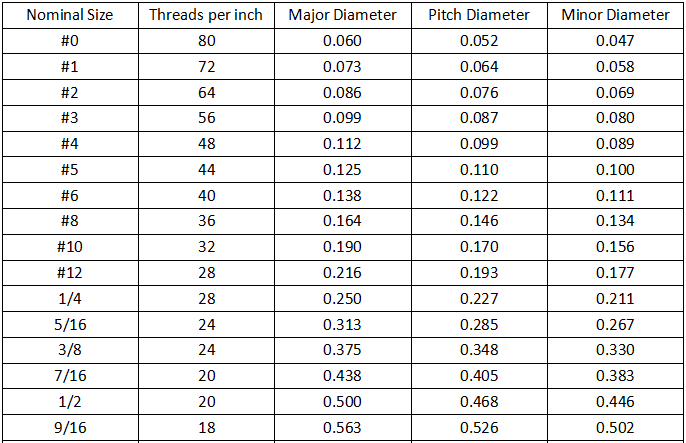
Vollständiger Leitfaden für Gewindegrößen: Alle Normen und Anwendungen verstehen
Gewindekomponenten haben genaue Spezifikationen für die Integrität und Leistung der Montage. Wir haben diese Tabelle für Gewindegrößen zusammengestellt, um Ihnen zu helfen
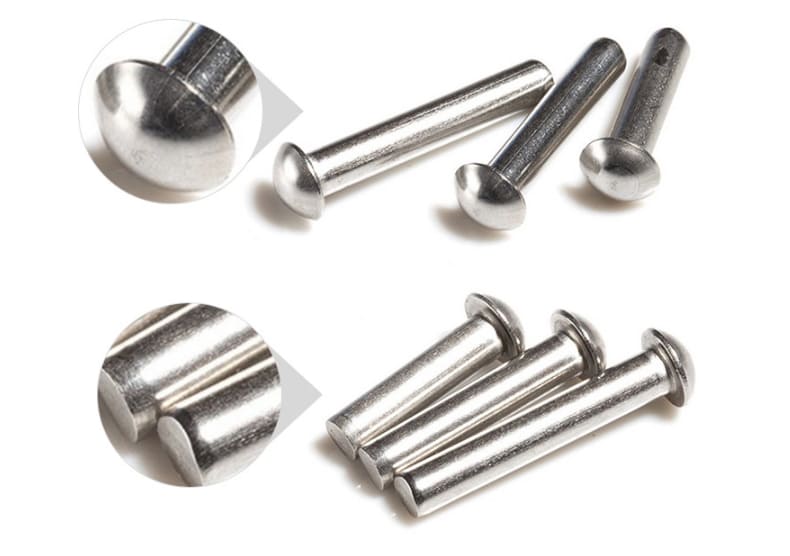
Arten von Nieten und ihre Anwendungen
Nieten sind dauerhafte mechanische Verbindungselemente, die zum Verbinden von Materialien verwendet werden. Zu den gängigen Typen gehören Vollnieten, Blindnieten, Rohrnieten, Spaltnieten, Schulternieten, Treibnieten, selbststanzende Nieten und
Beginnen Sie noch heute. Teile schnell herstellen lassen.
Free Machined Parts Design to Your Projects with Reduced Lead Times Times.