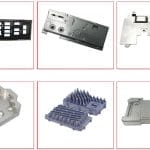

Sheet Metal Stamping Services
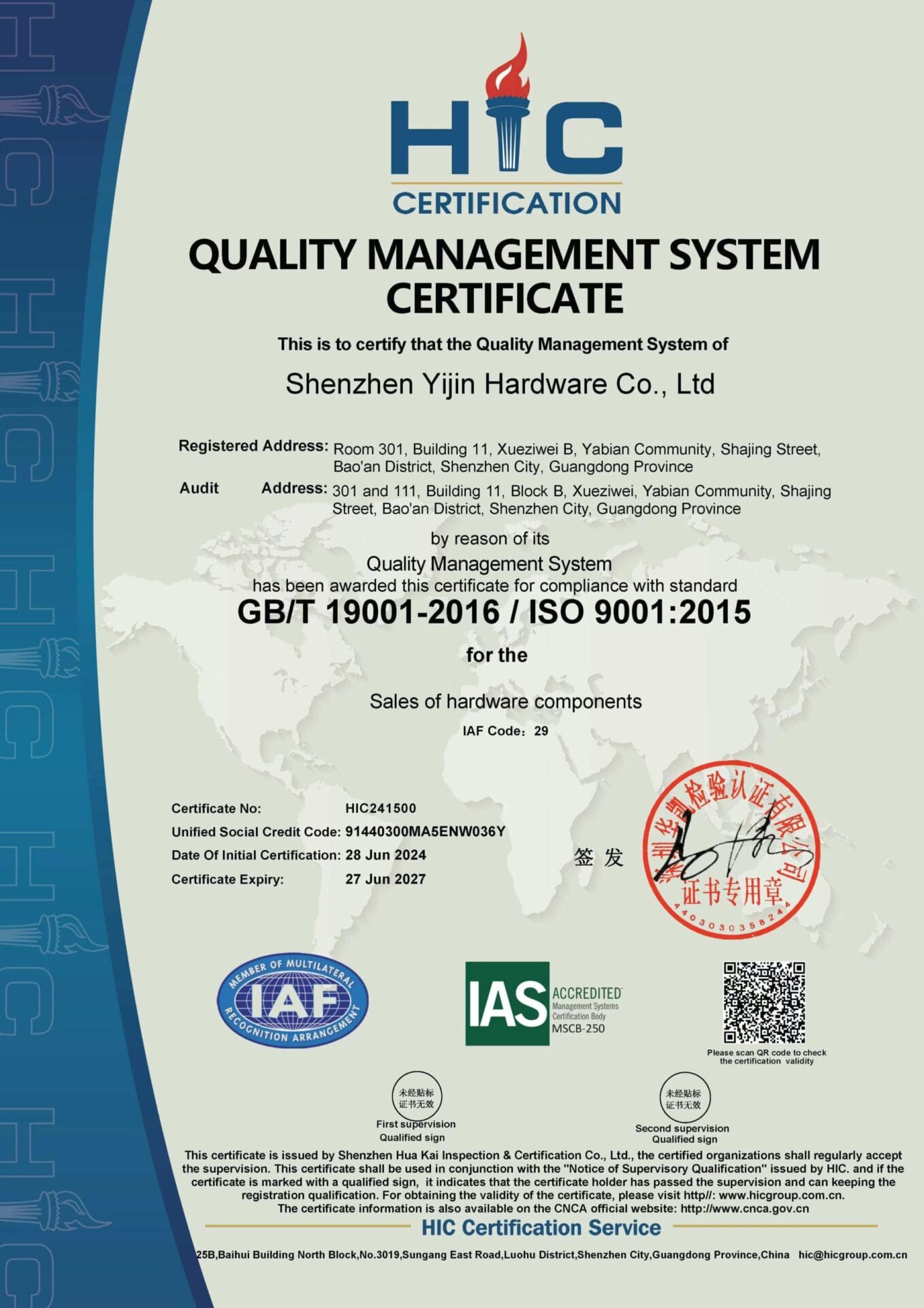
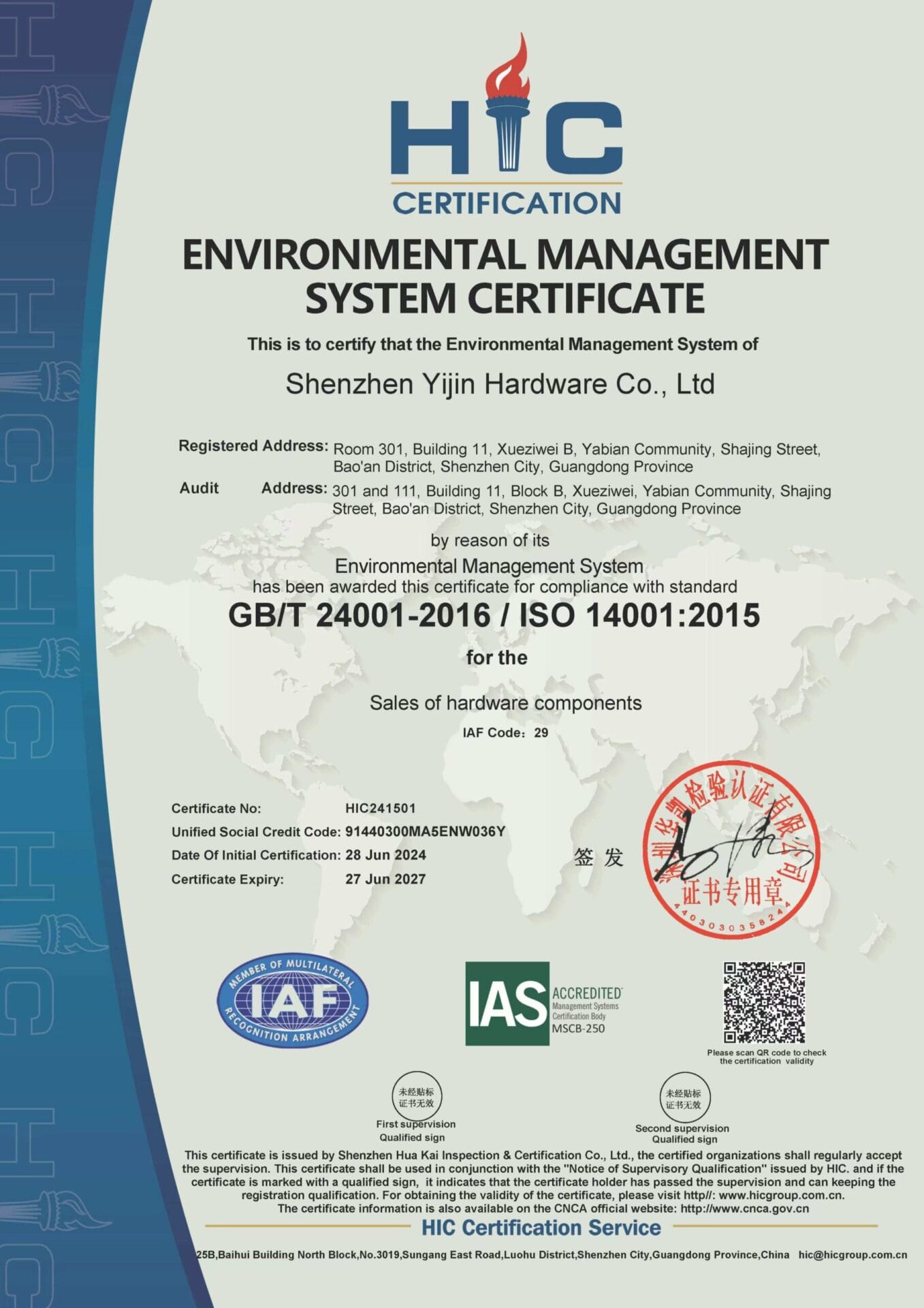
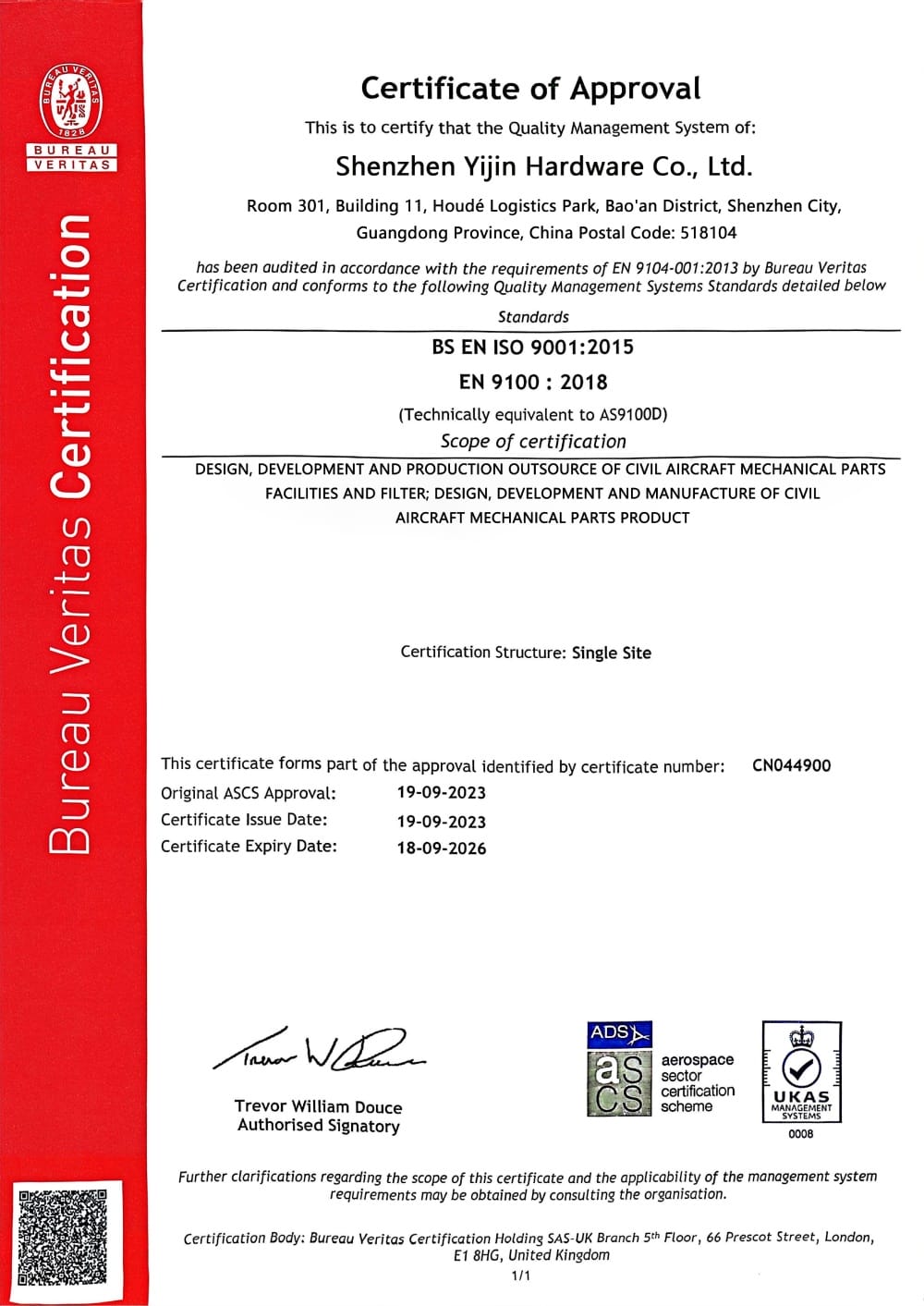
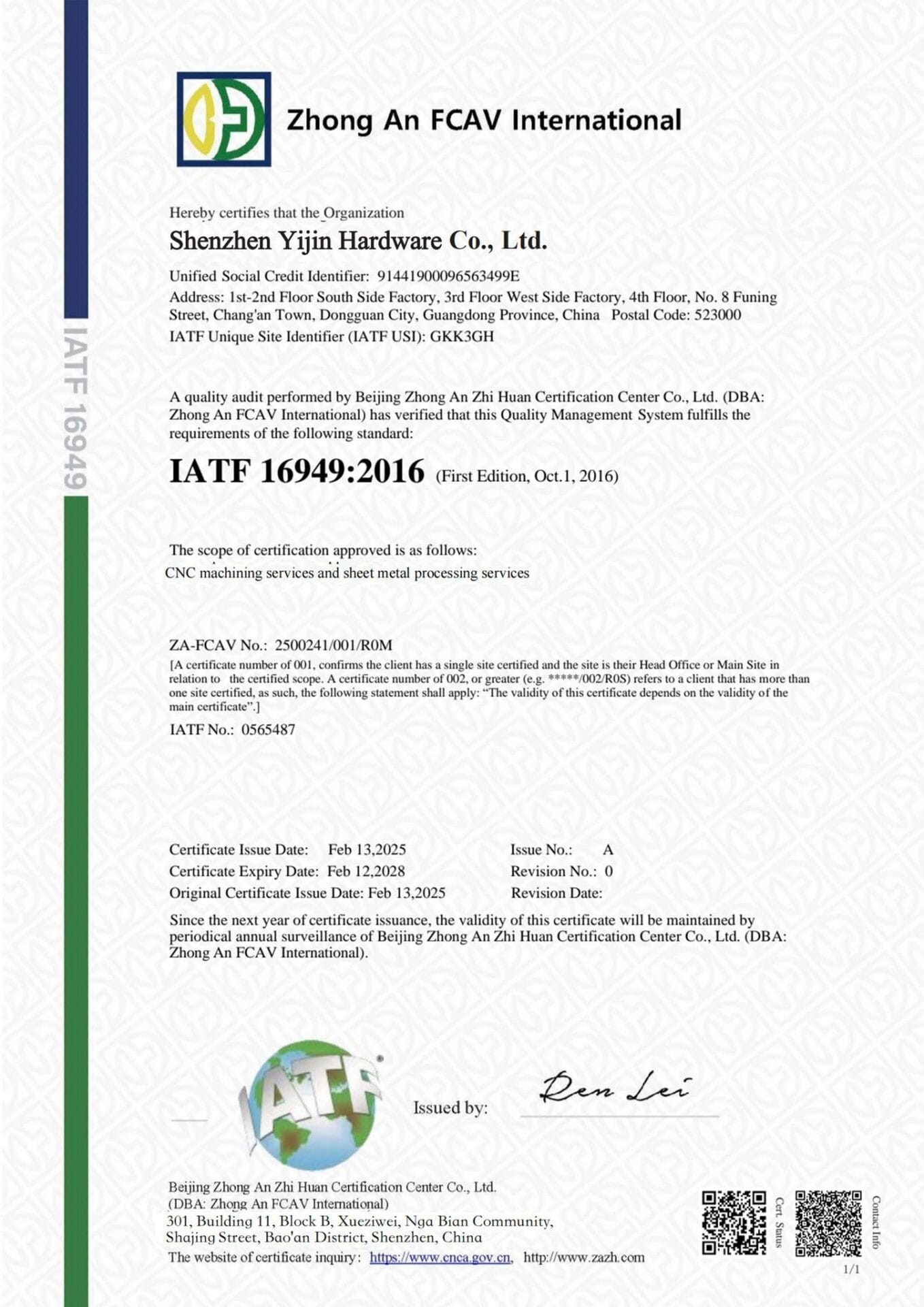
High-volume sheet metal stamping with progressive die, compound die, and deep drawing capabilities. In-house tooling design and build, plus 30 to 1,500 ton presses at our 25,000 m² facility in Shenzhen, operating under ISO 9001, IATF 16949, and ISO 14001 quality systems.
Upload your STEP, DWG, or PDF drawing to receive a tooling and unit-price quote within 24 hours.
- Tolerances ±0.05 mm standard; ±0.025 mm with precision progressive dies
- Sheet 0.1 to 6 mm; press tonnage 30 to 1,500 tons; up to 1,000 strokes per minute
- Production from 1,000 to 1,000,000+ parts per year on the same dies


Custom Sheet Metal Stamping Services with Yijin Solution
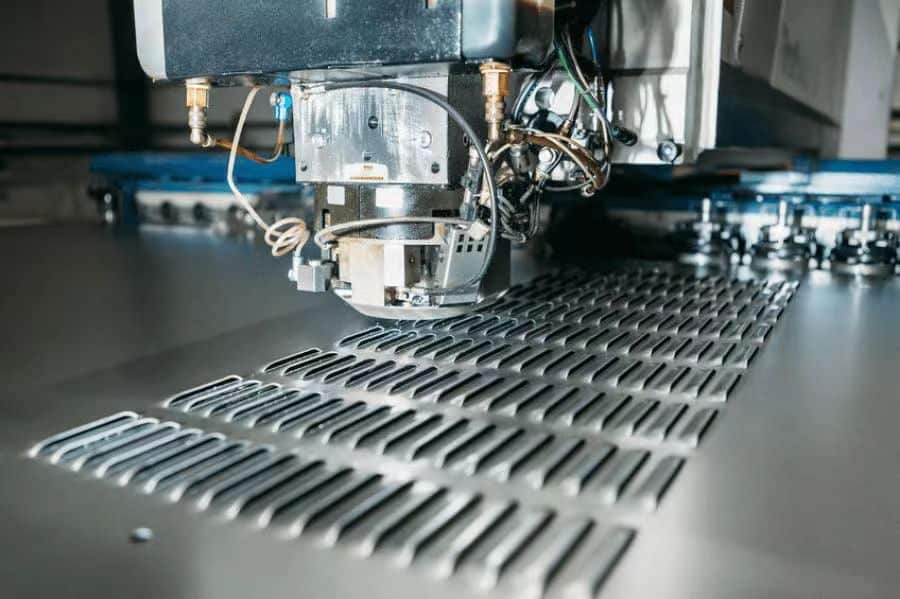
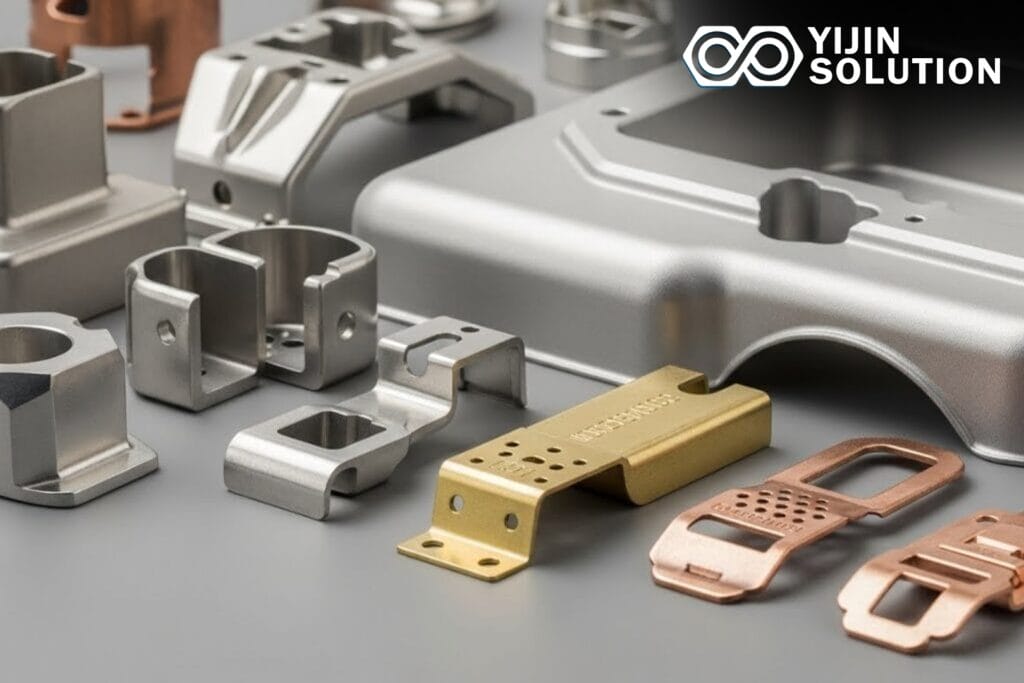
Sheet metal stamping shapes flat blanks into finished parts in one or more press strokes, using hardened tool steel dies. Progressive die stamping advances the strip through multiple stations in a single press, performing blanking, piercing, forming, and trimming in sequence so a finished part exits the die on every stroke. Compound and single-station dies handle simpler geometry at lower tooling cost. Deep drawing forms cups, cans, and shells from blanks by drawing material into a die cavity through one or more reduction stages.
Sheet metal stamping sits inside our broader Fabricación de chapas metálicas service alongside laser cutting, plasma cutting, bending, and welding. Stamping is the cost leader once volume passes 5,000 to 10,000 pieces per year, because per-part time drops to seconds while tooling amortizes across the run. Tooling is designed and built in-house, which keeps tool changes and revisions on a tight cycle.
Sheet Metal Stamping Manufacturing Capabilities
| Característica | Descripción |
|---|---|
| Precision & Tolerance | ±0.05 mm standard; ±0.025 mm achievable with precision progressive dies |
| Material Grosor | 0.1–6 mm across coil and sheet stock |
| Press Capacity | 30–1,500 tons; up to 1,000 strokes per minute depending on process |
| Maximum Capacity | Blank size up to 1500 × 600 mm (progressive); up to 800 × 800 mm (deep drawing) |
| Plazos de entrega | Tooling: 4–8 weeks; sampling: 3–7 days; production: 2–4 weeks |
Sheet Metal Stamping Materials
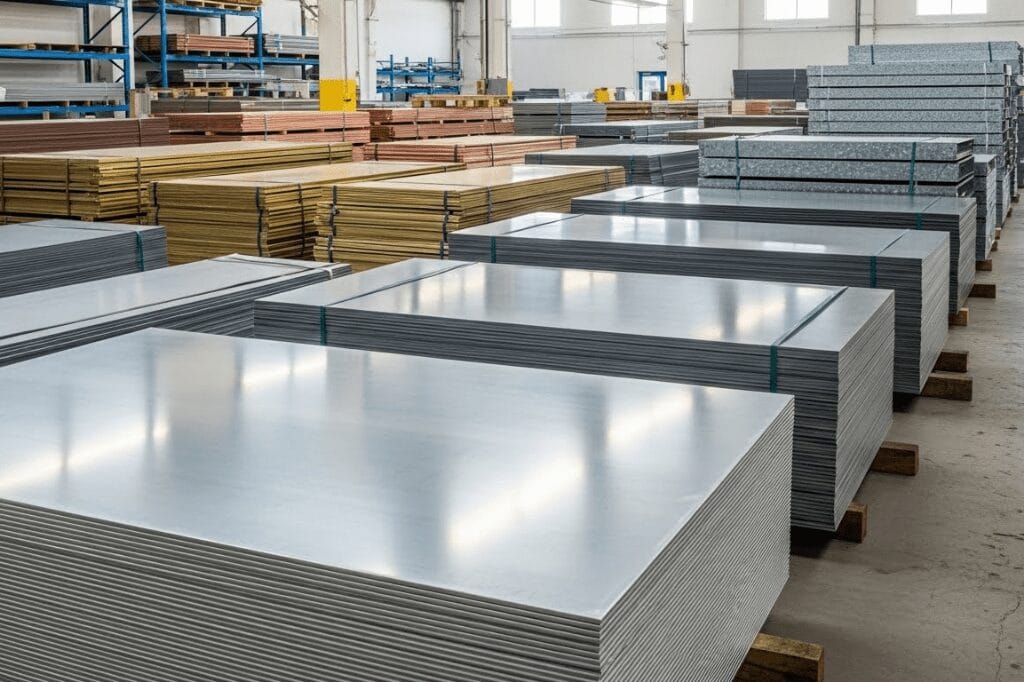
We stamp sheet, coil, and pre-coated stock across carbon steel, stainless, aluminum, copper, and brass. Material selection drives die life, lubrication strategy, and forming limits, so material grade is reviewed alongside the drawing during DFM analysis.
Carbon and Mild Steel
| Tipo | Common Grados |
| Cold-Rolled Sheet | SPCC, CR4, DC01, DC03 |
| Hot-Rolled and Structural | SPHC, A36, S235JR, Q235 |
| High-Strength and Coated | DP590, DP780, galvanized SGCC, electro-galvanized |
Acero inoxidable
| Tipo | Common Grados |
| Austenítico | 304, 304L, 316, 316L, 321 |
| Ferritic and Martensitic | 430, 410, 420 |
| Spring and Specialty | 301 (1/2 hard, full hard), 17-7 PH, 410 stainless spring |
Aluminio
| Tipo | Common Grados |
| General Purpose | 1050, 1060, 1100, 3003 |
| Aluminio | C36000, C26000, C28000, C11000, C12200 |
| Hard and Aerospace | 6061-T6, 7075-O (formed in O-temper, then heat treated) |
Copper, Brass, and Specialty
| Tipo | Common Grados |
| Cobre | C1100 (T2), C1020 (TU1) |
| Latón | C26000 (H65), C2680 (H62), C2801 (H59) |
| Especialidad | Phosphor bronze C5191, beryllium copper C1720, silicon bronze, nickel silver |
Sheet Metal Stamping Surface Finishes
Stamped parts ship with the surface of the incoming coil or sheet, plus any in-die coining or burnishing. The finishes below add corrosion resistance, color, or cosmetic appearance after stamping. Most are applied on completed parts before final inspection and packaging.
Acabado superficial
ESPECIFICACIÓN

Mill Finish (As-Stamped)
Parts ship with the original mill surface from the coil supplier, plus any tooling marks from punches and dies. Standard for hidden stamped components, internal frames, and parts that will be coated downstream. No additional surface processing applied.

Tumbling and Deburring
Vibratory bowl tumbling, centrifugal disc finishing, or media blasting removes burrs from blanked edges and pierced holes. Required on any part handled by end users or moving into an assembly. Holds Ra 1.6 to 3.2 μm on cut edges.

Anodizing (Aluminum)

Recubrimiento en polvo
Electrostatic powder application baked at 180 to 200 °C for steel and aluminum stampings. Coating thickness 60 to 120 μm. RAL and Pantone color matches available. Delivers 500 to 1,000 hours of salt spray resistance.

Plating and E-Coat
Bright zinc per ASTM B633 (5 to 25 μm) for corrosion protection on steel stampings. Nickel, chrome, and tin plating available for cosmetic and electrical applications. E-coat (electrophoretic deposition) applies a uniform 15 to 35 μm primer-grade coating in recesses and complex geometries.

Passivation and Heat Treatment
Types of Sheet Metal Stamping We Offer
We run three stamping configurations under one roof, each suited to a different volume range and part geometry. Below are the main variants and where each is the correct choice.
Progressive Die Stamping
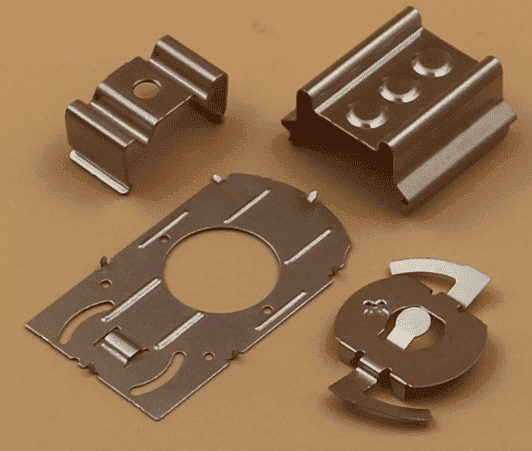
Coil stock advances through a multi-station hardened tool steel die in a single press, with each station performing blanking, piercing, forming, or trimming. A finished part exits the die on every press stroke at speeds up to 1,000 strokes per minute. The cost leader for production runs above 50,000 pieces per year. Tooling lead time 6 to 12 weeks; per-part cost drops sharply with volume.
Compound and Single-Station Die Stamping
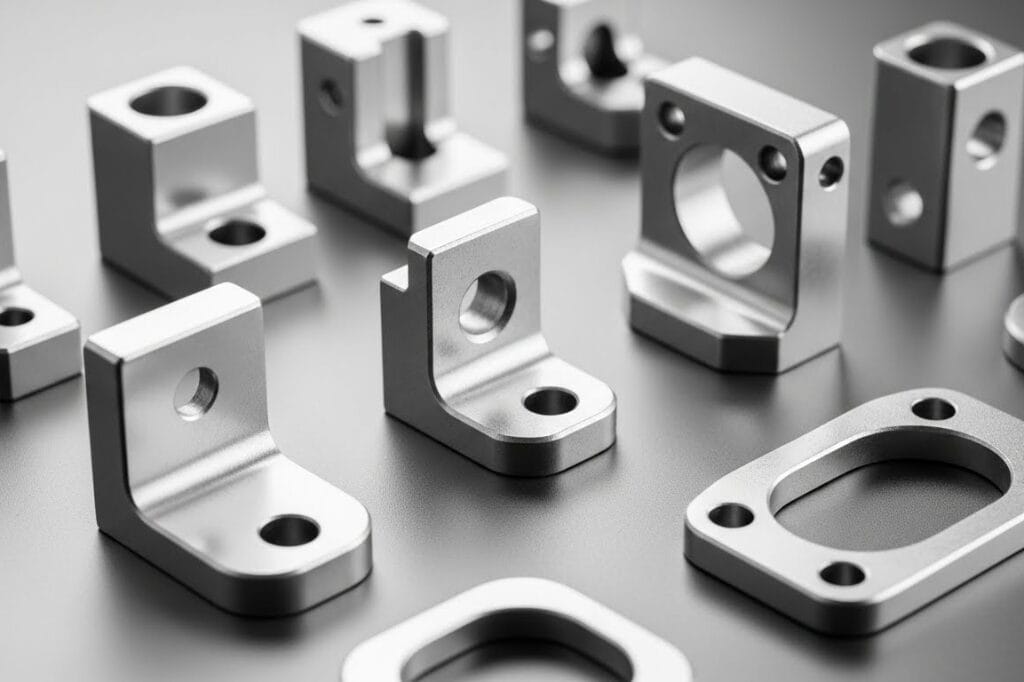
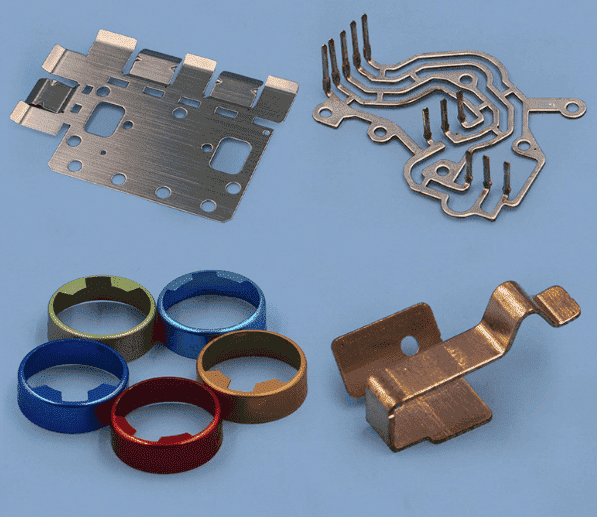
Single-action presses with compound dies that perform two or three operations in one stroke (blank-and-pierce, form-and-coin), or sequential single-station dies for parts with limited geometry. Lower tooling cost than progressive dies, suited to production runs of 5,000 to 100,000 pieces. Standard for brackets, washers, terminals, and simple flat parts.
Deep Drawing and Forming
Multi-stage drawing presses pull a flat blank into a die cavity through one or more reduction steps, producing cups, cans, shells, and deep cavities. Used for battery housings, sensor enclosures, lighting reflectors, kitchenware, and pressure-vessel components. Reduction ratios up to 0.6 per draw on deep parts; multi-stage drawing on cups deeper than the diameter.
Applications of Sheet Metal Stamping
Stamped brackets, mounting plates, structural reinforcements, and assembly hardware for downstream welding, bending, and finishing. Stamping covers high-volume parts that laser cutting cannot match on cost.
Body panels, brackets, reinforcements, exhaust components, and structural stampings in DP590 and DP780 dual-phase steels. Produced under IATF 16949 with PPAP Level 3 documentation, formal APQP gate reviews, and SPC process monitoring.
Heat exchanger fins, blower housings, motor mounts, and appliance bezels in galvanized steel and aluminum. Progressive dies handle the high-volume programs that drive HVAC and white-goods cost economics.
Lead frames, terminals, contacts, spring fingers, EMI shielding cans, and connector shells in beryllium copper, phosphor bronze, and brass. High-precision progressive dies hold ±0.025 mm on contact geometry critical to electrical performance.
Stamped clips, channels, brackets, and structural reinforcements in 7075-T6 aluminum and stainless. AS9100-aligned production with First Article Inspection, PPAP, and full material traceability per AMS specifications.
Battery cell housings, busbar assemblies, motor laminations, and inverter chassis components for EV and stationary storage. Progressive die stamping holds the tight burr and dimensional control required for battery safety and performance.
Pump components, valve plates, bearing cages, machine guards, and chassis brackets in carbon and stainless steel. Long-life hardened dies handle the multi-million-unit programs that legacy industrial equipment demands.
Kitchen utensils, hand tools, lighting fixtures, hinges, latches, and decorative hardware in stainless, brass, and aluminum. Brushed, polished, and plated finishes for visible consumer-facing parts.
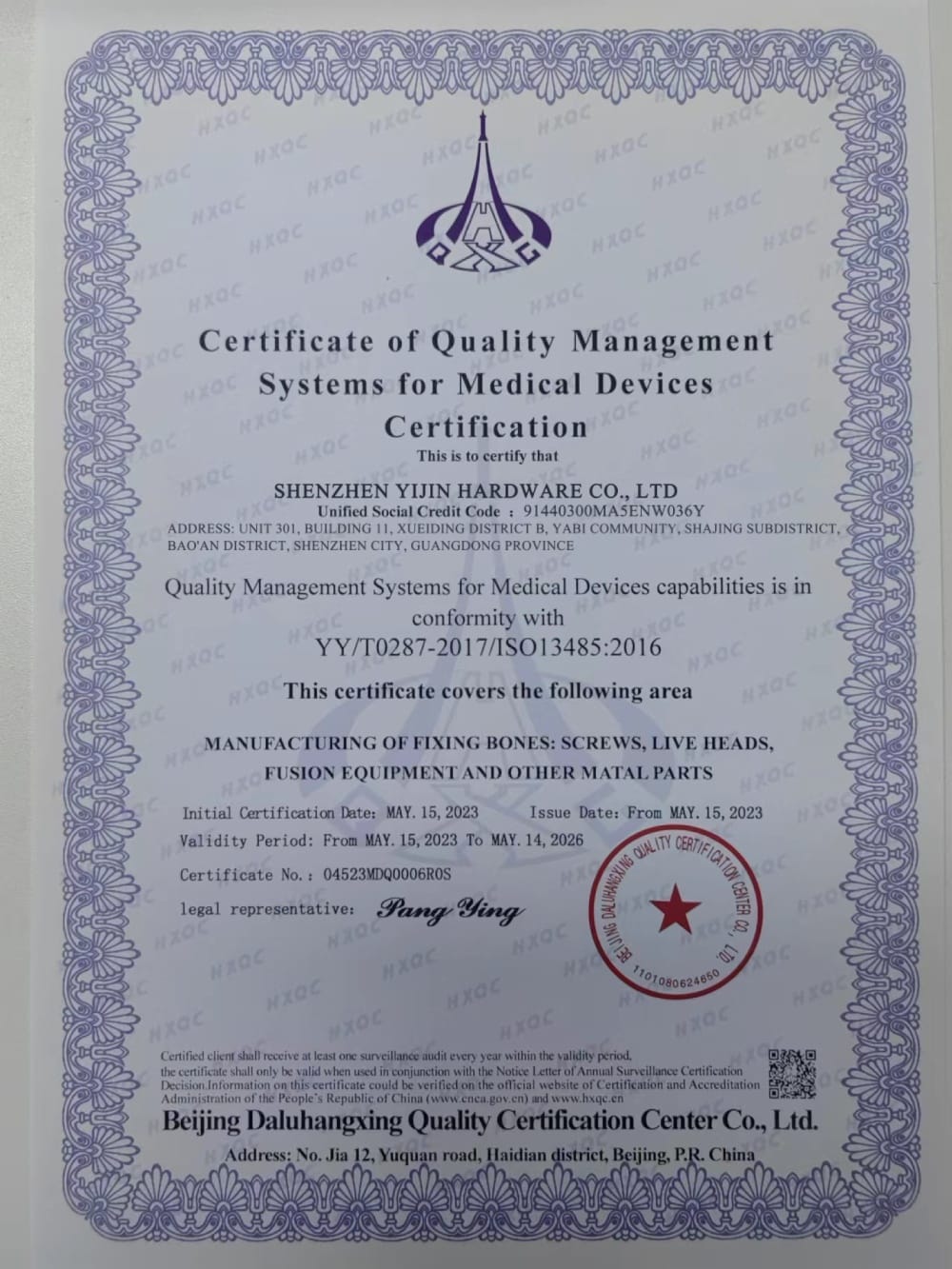
Surgical instrument blanks, equipment housings, syringe components, and disposable device bodies in 316L stainless and medical-grade aluminum. Produced under ISO 13485 with passivated finishes and lot-level traceability.
Yijin Solution Sheet Metal Stamping Factory
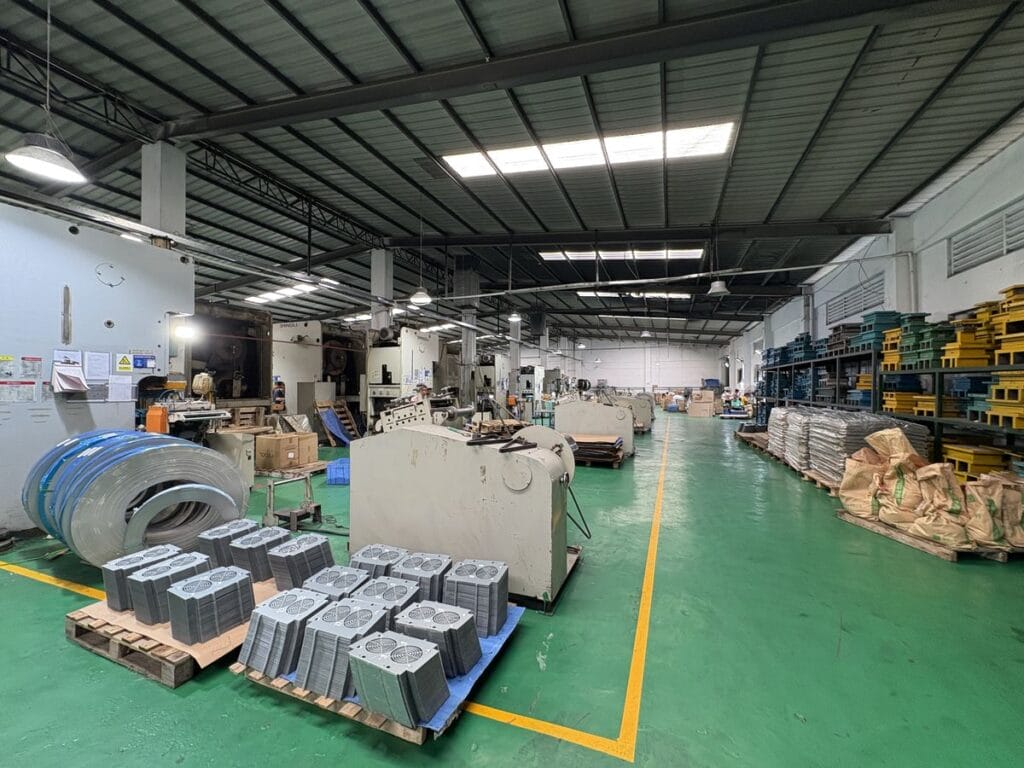
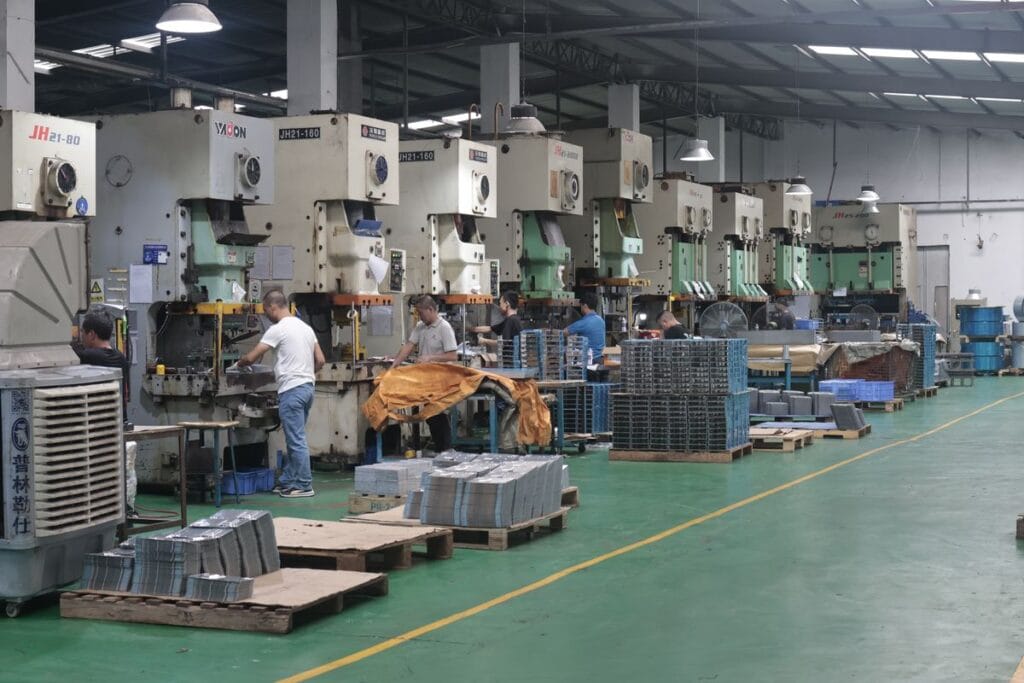
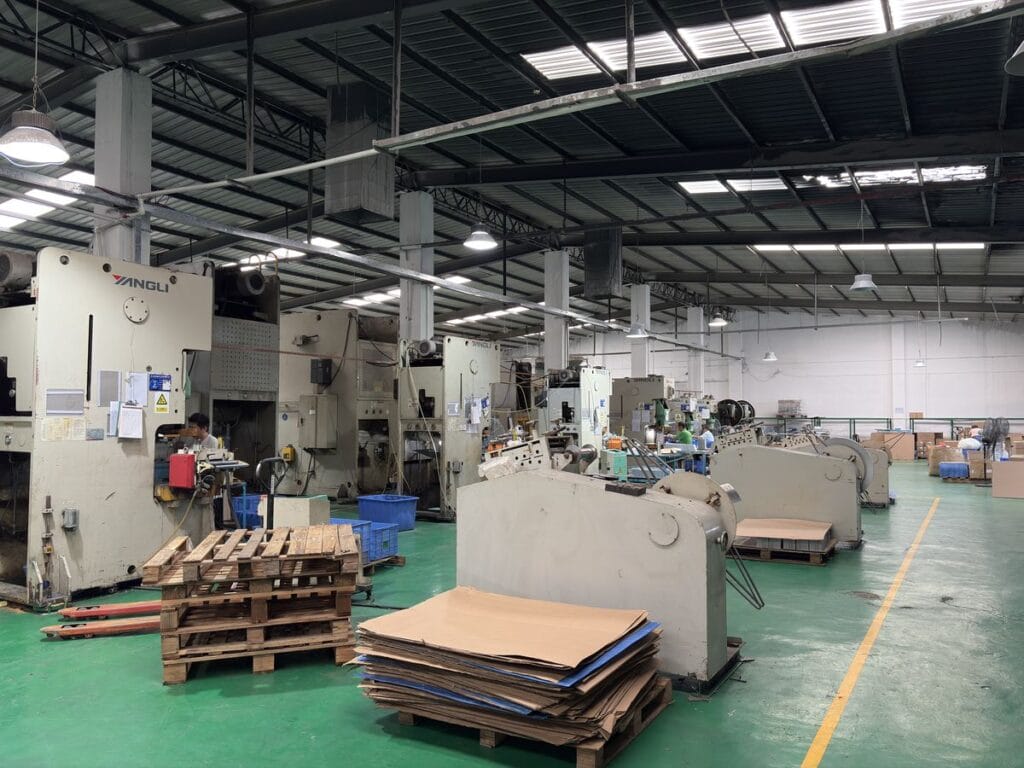
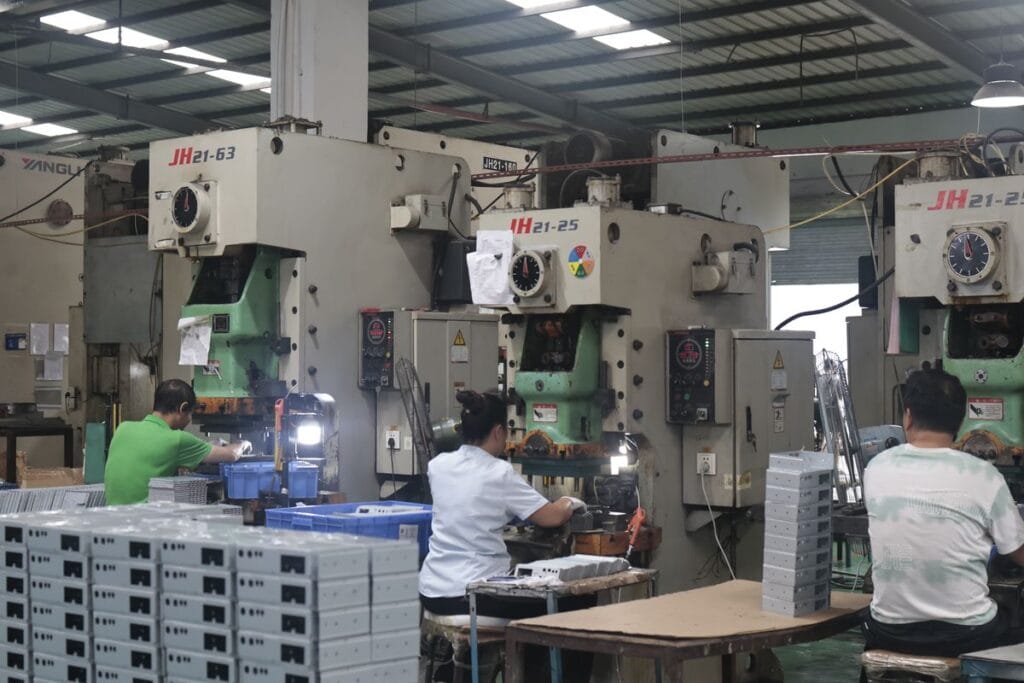
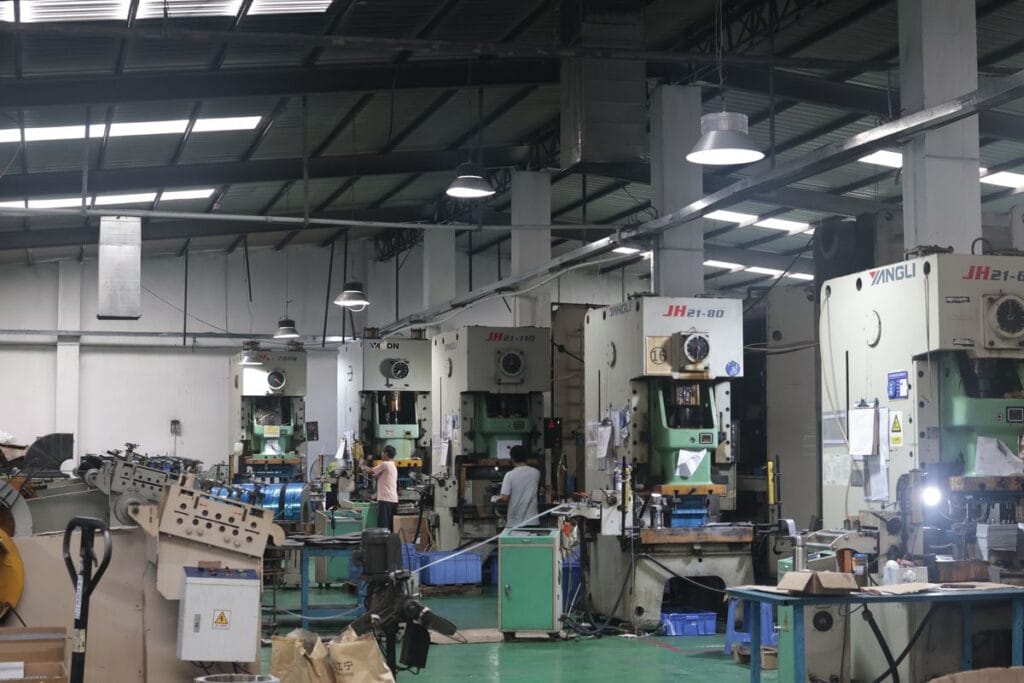
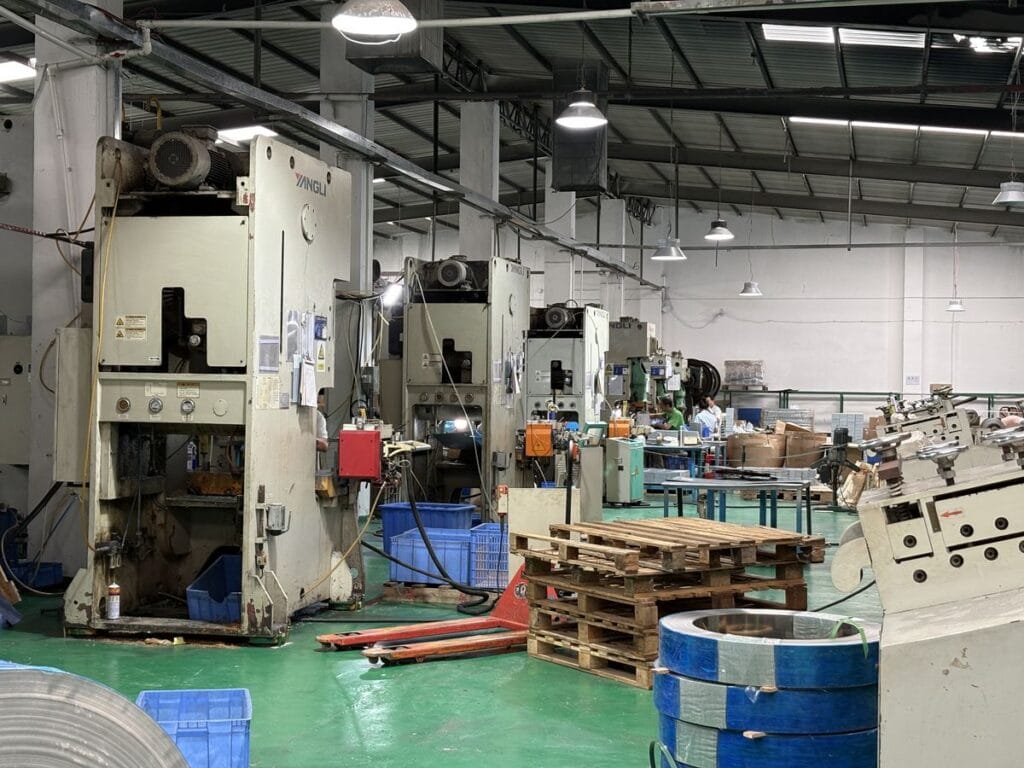
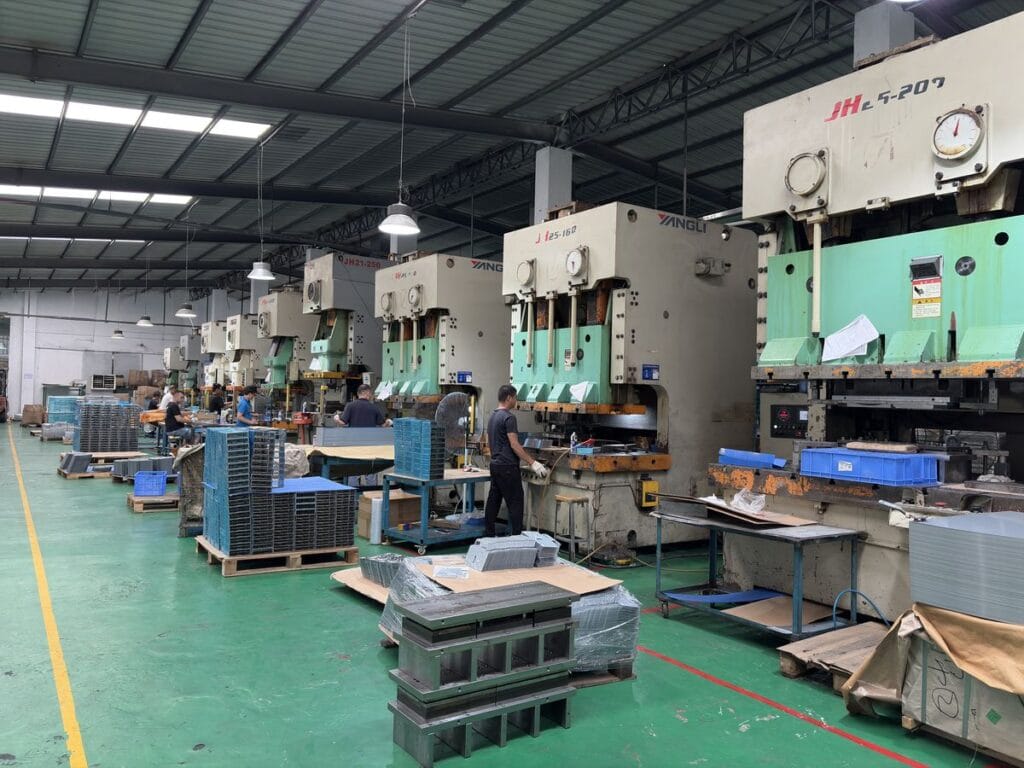
Yijin Solution operates a 25,000+ m² manufacturing facility in Shenzhen, China. The stamping cell houses mechanical and servo presses from 30 to 1,500 ton capacity, in-house tool steel die shop with CNC milling, EDM, and grinding, plus 281 inspection instruments including Zeiss CMMs, profile projectors, and burr gauges. Coil, sheet, and tooling move from die design through stamping, deburring, finishing, and inspection without leaving the facility.
We serve clients across North America, Europe, and Asia-Pacific. Every order ships with full dimensional inspection reports, material certifications, and where applicable, mechanical test data and FAI documentation. For aerospace and medical programs, production runs under AS9100 and ISO 13485 quality management systems.


What's Sheet Metal Stamping
Sheet metal stamping is a high-volume forming process that uses hardened tool steel dies and presses to convert flat sheet or coil stock into finished parts in one or more strokes. A blank is placed in the die, the press drives the upper die into the lower die, and the metal is sheared, formed, drawn, or coined depending on the die design. Progressive dies feed coil through multiple stations in a single press so a finished part exits on every stroke at speeds up to 1,000 strokes per minute.
Stamping is the cost leader on production volumes above 5,000 to 10,000 pieces per year. The trade-off is upfront tooling cost (typically $5,000 to $100,000+ per die) and lead time (4 to 12 weeks to design, build, and validate the tool). Below 5,000 pieces, laser cutting plus bending is usually cheaper. Above 50,000 pieces, progressive die stamping pulls per-part cost down to a few cents per piece for simple geometry.


How Sheet Metal Stamping Works
Sheet metal stamping follows five steps from a digital design to a finished part.
- DFM and die design. Your STEP file plus 2D drawing is reviewed for stamping feasibility (forming limits, draw ratios, burr direction, tab and gate placement). The mold-flow team designs the die strip layout, station sequence, and tooling.
- Tool build. CNC milling, EDM, and grinding cut the die plates, punches, and inserts from hardened tool steel (D2, A2, S7) or carbide for long runs. Tool build typically takes 4 to 12 weeks depending on station count.
- T1 sampling and production stamping. First parts off the die are inspected against your drawing, with burr direction, dimensional accuracy, and forming behavior verified. After T1 approval, coil feeds through the die at programmed stroke rate. SPC monitoring tracks key dimensions across the run, and in-die sensors detect missed pierces or fed-strip errors.
- Finishing and inspection. Parts are deburred, surface-finished if required, inspected against your drawing using CMM, optical comparators, or in-line vision systems, and packaged for shipment.
A typical prototype cycle takes 3 to 7 days. Production batches take 2 to 4 weeks.
Why Choose Yijin Solution for Sheet Metal Stamping
We control every step of stamping from die design through tooling, stamping, finishing, and inspection. That vertical integration means shorter tooling cycles, consistent part quality, and direct factory pricing without broker margins.

Zeiss CMMs, laser interferometers, and optical comparators verify every critical batch. Parts hold ±0.05 mm typical and ±0.02 mm on 5-axis programs. First Article Inspection and PPAP Level 3 documentation standard on production runs.

Tooling lead time 4 to 8 weeks for compound dies and 6 to 12 weeks for progressive dies. T1 samples within 3 to 7 days of die completion. Production shipments within 2 to 4 weeks. In-house die shop, stamping presses, and finishing all under one roof.

Pilot runs of 1,000 parts on prototype tooling and production programs of 1,000,000+ units per year on hardened progressive dies go through the same quality gates. Volume does not change inspection standards.

Aluminum prototype dies validate part design at 500 to 5,000 parts. Process data and learnings transfer directly to hardened production tooling, eliminating re-qualification when you scale to volume.

Die design, CNC milling, EDM, grinding, and try-out happen in one building. Tool revisions take days, not weeks. No supplier handoffs between tool design and stamping.

Direct factory pricing without broker margins. Our engineering team reviews your drawing before tool design begins to identify station consolidation, blank optimization, and burr-direction changes that reduce tooling cost and per-part price.
FAQs About Sheet Metal Stamping
Common questions about sheet metal stamping processes, tooling, and our production system.
1. How Do I Choose Between 3-Axis, 4-Axis, and Deep Drawing and Forming?
The choice depends on annual volume, part geometry, and tooling budget.
Progressive die stamping is the cost leader above 50,000 pieces per year. Coil feeds through a multi-station die at up to 1,000 strokes per minute, producing a finished part on every stroke. Tooling is expensive ($30,000 to $200,000+) but per-part cost drops to a few cents at high volume.
Compound and single-station die stamping is the right choice for 5,000 to 100,000 pieces. Tooling cost is lower ($5,000 to $30,000) and the die does fewer operations. Used for brackets, washers, terminals, and simple flat parts.
Deep drawing produces cups, cans, and shells by pulling material into a cavity through one or more reduction stages. Tooling cost is moderate to high; the process is the only economical way to make parts with depth-to-diameter ratios above 1:1 on metal.
Our engineering team can recommend the right configuration during DFM review based on your part geometry and target volume.
2. What Tolerances Can Sheet Metal Stamping Achieve?
Tolerance depends on die class, material, and feature type.
General stamped tolerance holds ±0.05 mm on linear features up to 50 mm. This covers most commercial parts.
Precision progressive dies hold ±0.025 mm on critical features through carbide inserts, station consolidation, and SPC process control. Standard for connector terminals, electronic contacts, and battery components.
Hole position relative to features outside the die is held to ±0.1 mm, looser than within-die positioning because the strip indexes between stations.
Edge burr height runs 5 to 10 percent of material thickness on standard tooling and below 3 percent with precision dies and frequent sharpening.
Flag critical dimensions on your drawing during DFM review so they can be reviewed for achievable tolerance before tool design begins.
3. What Materials Can Be Stamped?
Sheet metal stamping works on most ductile metals in coil or sheet form.
Mild and carbon steel from 0.1 to 6 mm including SPCC, CR4, DC01, A36, and Q235. Galvanized SGCC and electro-galvanized stock are common for outdoor parts.
High-strength steels including DP590 and DP780 dual-phase grades for automotive structural stampings. Higher tonnage and harder dies required.
Stainless steel from 0.1 to 4 mm including 304, 316L, 430, and spring grades 301 (1/2 hard, full hard). Stainless work-hardens during forming, so progressive dies need annealing stations on multi-stage parts.
Aluminum from 0.2 to 6 mm including 1050, 3003, 5052-H32, and 6061-O. Aerospace 7075-O is formed in O-temper then heat treated.
Copper, brass, and specialty alloys for electrical contacts. Beryllium copper (C1720) and phosphor bronze (C5191) are standard for connector and spring stampings.
4. How Much Does Stamping Tooling Cost?
Tooling cost depends on die class, station count, and material.
Aluminum prototype dies for 500 to 5,000 parts cost $2,000 to $10,000 per die. Build time 2 to 4 weeks. The right choice for design validation before committing to hardened tooling.
Single-station and compound dies in pre-hardened P20 steel cost $5,000 to $30,000 for runs of 5,000 to 100,000 parts. Build time 4 to 8 weeks.
Hardened progressive dies in D2 or A2 tool steel cost $30,000 to $200,000+ for 100,000 to 1,000,000+ parts. Build time 6 to 12 weeks. Carbide insert versions extend tool life past 5 million parts at higher upfront cost.
Deep drawing transfer dies cost $20,000 to $150,000 depending on draw ratio and station count. Build time 8 to 12 weeks.
Our DFM review includes tooling cost estimates so you can make an informed decision before committing to a die class.
5. What Is the Maximum Part Size and Press Tonnage Available?
Our press cell covers a wide range of stamping work.
Press tonnage from 30 tons (small electronic terminals on high-speed progressive lines) to 1,500 tons (large automotive body stampings and deep drawing). Servo presses on critical lines for precise depth control on coining and embossing.
Maximum blank size on the largest progressive press is 1,500 × 600 mm. Deep drawing cell handles blanks up to 800 × 800 mm. Larger parts are split and welded if the application allows, with welding handled in our in-house cell.
Maximum stroke rate is 1,000 strokes per minute on small-part progressive lines. Deep drawing runs slower at 30 to 100 SPM due to the multi-stage forming sequence.
Press tonnage is matched to material thickness, blank area, and forming complexity during DFM review. Over-specifying press tonnage wastes capacity; under-specifying causes incomplete forming and tool damage.
6. When Should I Use Stamping Instead of Laser Cutting Plus Bending?
The break-even is roughly 5,000 to 10,000 pieces per year for simple parts and 50,000+ for complex parts.
Choose laser cutting plus bending below the break-even. No tooling cost, fast prototyping, and easy design changes. Per-part cost is higher but you avoid the upfront tooling investment.
Choose stamping above the break-even. Per-part cost drops to a fraction of laser cutting (often 5 to 10× cheaper) once tooling amortizes. Cycle time drops to seconds per part. The trade-off is tooling cost, lead time, and reduced flexibility for design changes.
Some programs use both: laser cutting for prototype validation and pilot runs, then stamping for serialized production once the design is locked. Our engineering team can recommend the right transition point during DFM review.
7. Can Stamped Parts Be Welded, Plated, or Heat Treated In-House?
Yes. Most production programs include at least one post-machining operation.
Anodizing is standard on aluminum parts for corrosion and wear resistance. Type II anodizing adds 5 to 25 μm; Type III hardcoat adds 25 to 75 μm for abrasion-heavy applications.
Powder coating is standard on steel parts for outdoor or high-salt environments. Powder coat delivers 500 to 1,000 hours of salt spray resistance in 60 to 120 μm coatings.
Passivation is required on stainless steel medical and food-grade parts to remove free iron and restore the chromium oxide layer (ASTM A967).
Plating and E-Coat adds bright chrome, nickel, zinc, or tin for cosmetic and functional finishes on steel and brass. Plating adds 5 to 30 μm to part dimensions.
Polishing to Ra 0.2 to 0.8 μm is available for optical surfaces, sealing faces, and mirror finishes. Specify on the drawing which surfaces require polishing since it is a manual operation.
Decide on finish requirements during the DFM review because they often influence material selection and dimensional tolerance.
8. What File Formats Do You Accept and What Does the Quoting Process Look Like?
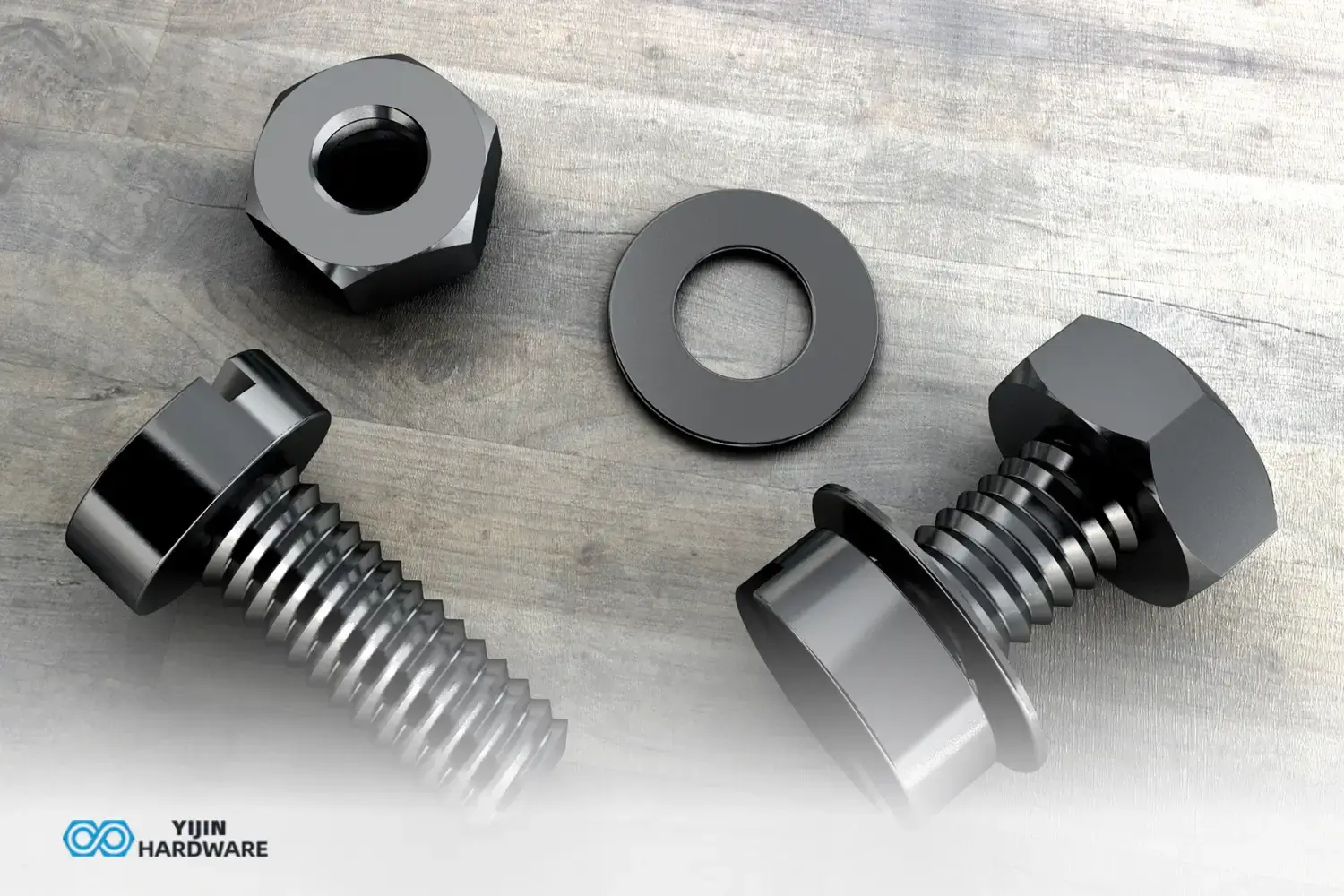
Custom fastener production covers a range of processes that convert wire or bar stock into finished parts. Here are the primary processes available through most full-service fastener manufacturers.
Cold Heading: Progressive dies form the head, shank, and recesses from a wire blank. The most cost-effective process for volumes above 10,000 pieces. Diameter range 1.5 to 25 mm.
CNC Turning: Rotating bar stock is machined by cutting tools. Suitable for fasteners with complex geometries, unusual thread forms, or tolerances tighter than cold heading allows.
Swiss Machining: A variant of CNC turning for small-diameter, long, or precision parts. Used for miniature fasteners and medical screws with tolerances to ±0.01 mm.
Thread Rolling: Hardened dies form threads by cold displacement rather than cutting. Rolled threads are stronger than cut threads and produce no chips. Standard process for high-strength fasteners.
Tratamiento térmico: Quenching, tempering, carburizing, or induction hardening produces fasteners to specified strength grades (Grade 5, 8, Class 8.8, 10.9, 12.9).
Plating and Coating: Zinc, hot-dip galvanizing, electroless nickel, black oxide, Dacromet, and chrome plating applied after threading. Provides corrosion resistance and appearance.
Inspection and Testing: Dimensional inspection with CMM and thread gauges. Mechanical testing includes tensile, hardness, and torque-tension. Salt spray testing for plated fasteners.
A full-service manufacturer combines these processes under one roof, reducing lead times and eliminating the coordination overhead of managing multiple suppliers.
Sheet Metal Stamping Guides
Tipos de roscas mecánicas
Las roscas son básicamente crestas helicoidales que se mecanizan en superficies cilíndricas o cónicas. Son bastante ingeniosas: convierten la rotación...
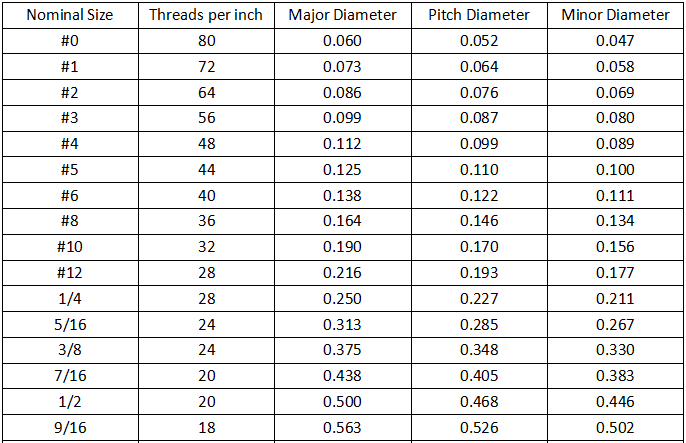
Guía completa de tablas de tamaños de roscas: Comprensión de todas las normas y aplicaciones
Los componentes roscados tienen especificaciones precisas para la integridad y el rendimiento del montaje. Hemos elaborado esta tabla de tamaños de rosca para ayudar a
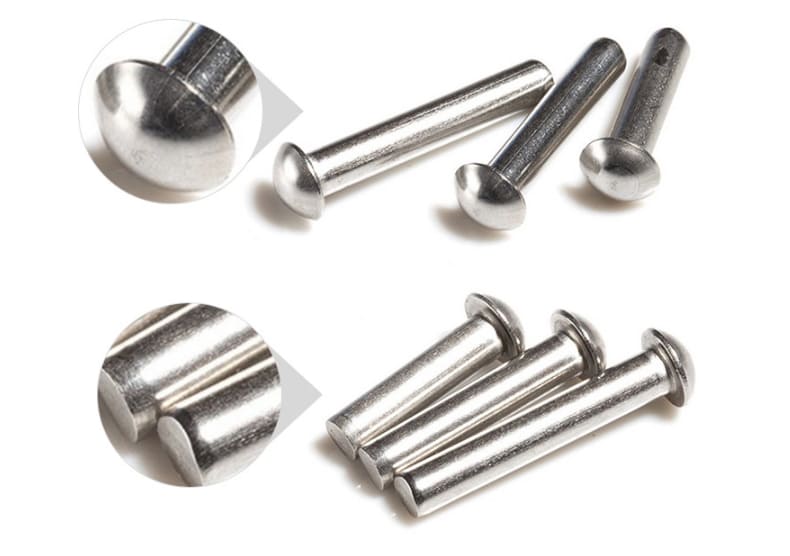
Tipos de remaches y sus aplicaciones
Los remaches son fijaciones mecánicas permanentes que se utilizan para unir materiales. Entre los tipos más comunes se incluyen los macizos, ciegos, tubulares, partidos, con resalte, de arrastre, autoperforantes y
Empiece hoy mismo. Consiga piezas rápidamente.
Free Machined Parts Design to Your Projects with Reduced Lead Times Times.