




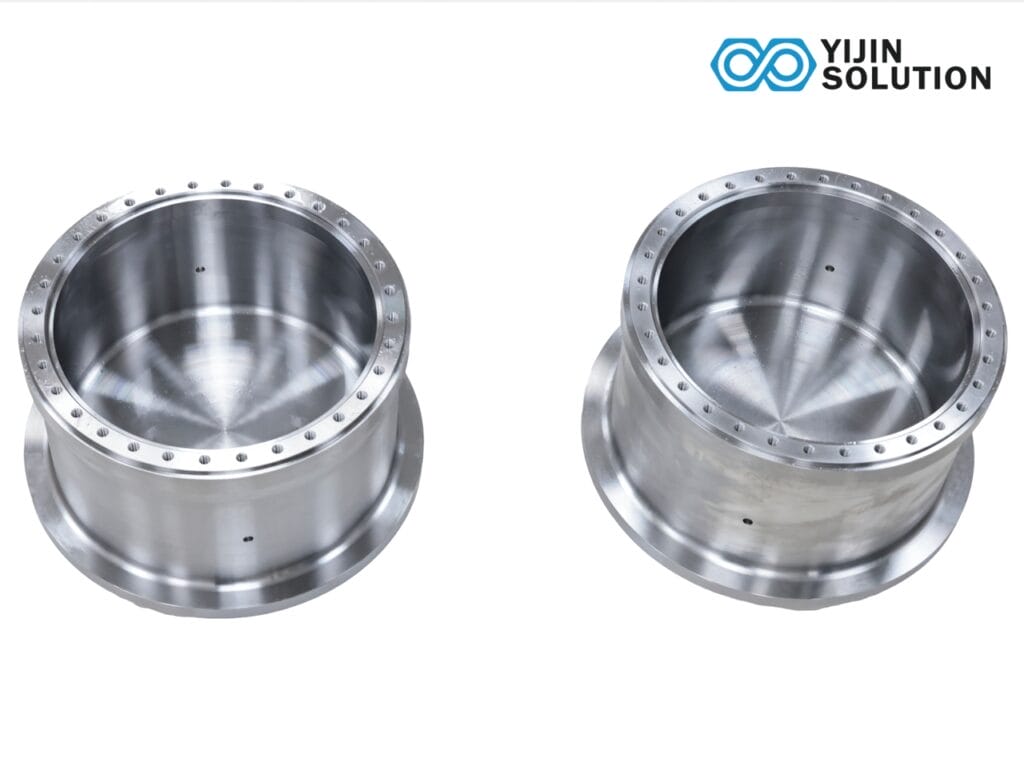
Rapid Prototyping with Yijin Solution
Yijin Solution turns your design into a working prototype in days, not weeks. We run rapid CNC machining, sheet metal fabrication, 3D printing, and injection molding under one roof, so you can mix processes within the same project and move from first prototype to production without changing suppliers.
- Fast turnaround: 3–7 day prototypes, 2–4 week production
- ISO 9001:2015 | ISO 13485:2016 | AS9100D
- Technical support and project coordination from start to finish


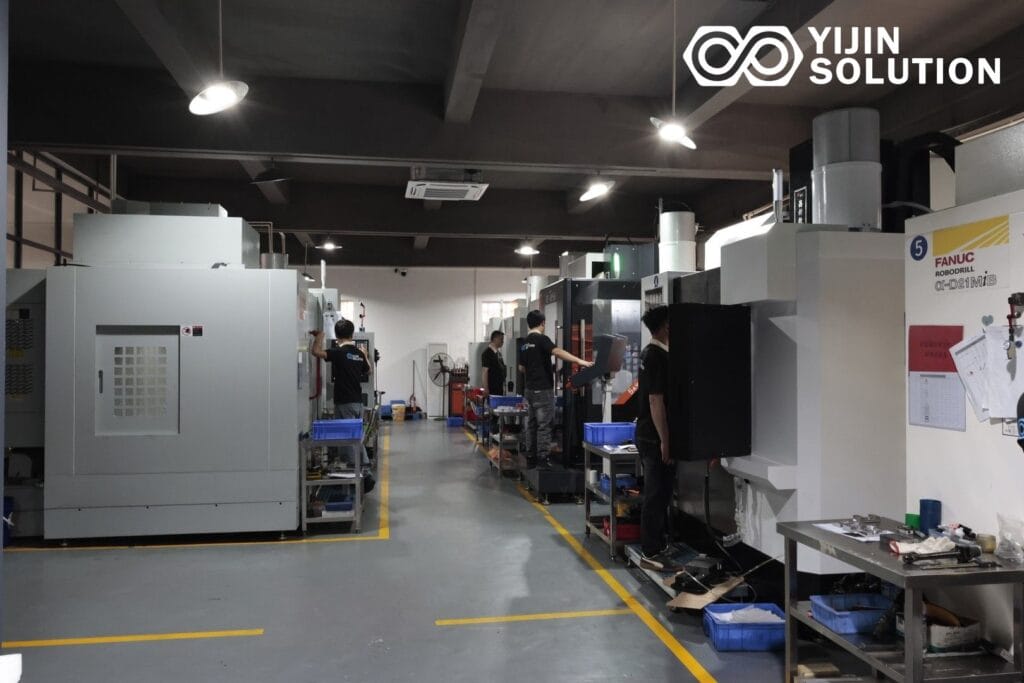
Rapid CNC Machining Services
Best for tight-tolerance functional prototypes that need to behave like the production part.
- 3-axis through 5-axis machining centers
- Aluminum, stainless steel, brass, copper, titanium, and engineering plastics
- Tolerances down to ±0.02 mm
- Use for: functional testing, fit-up checks, bench validation


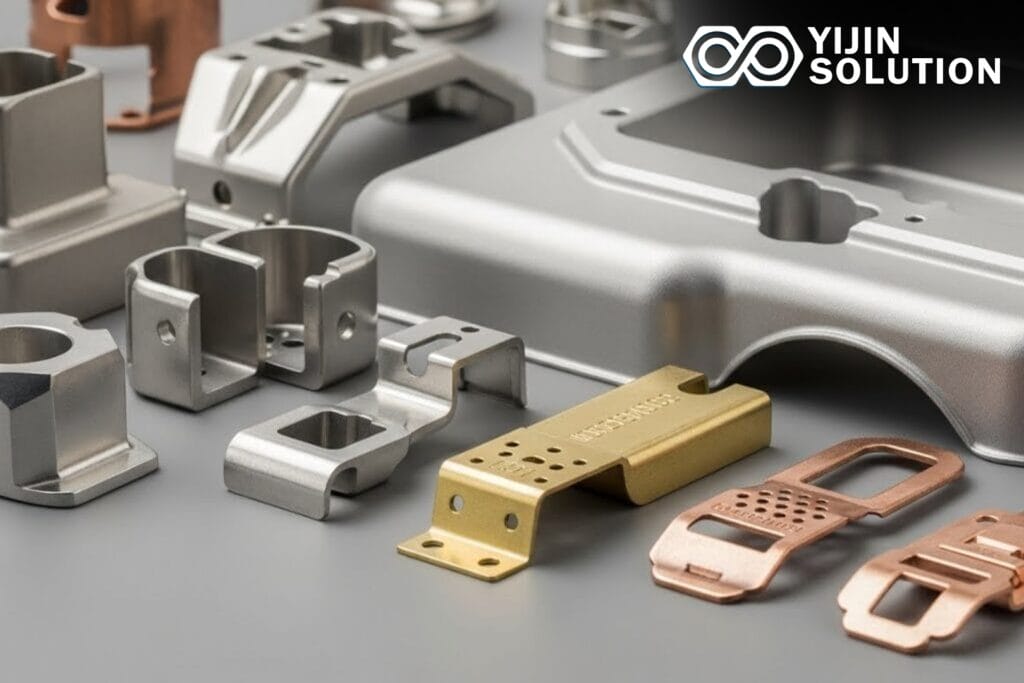
Rapid Sheet Metal Fabrication Services
Best for enclosures, brackets, panels, and any prototype built from flat stock.
- Laser cutting, punching, bending, welding, and finishing
- Aluminum, stainless steel, mild steel, brass, and copper from 0.5 to 12 mm
- Same forming and weld behavior as your production part
- Use for: enclosures, brackets, chassis, sheet panels
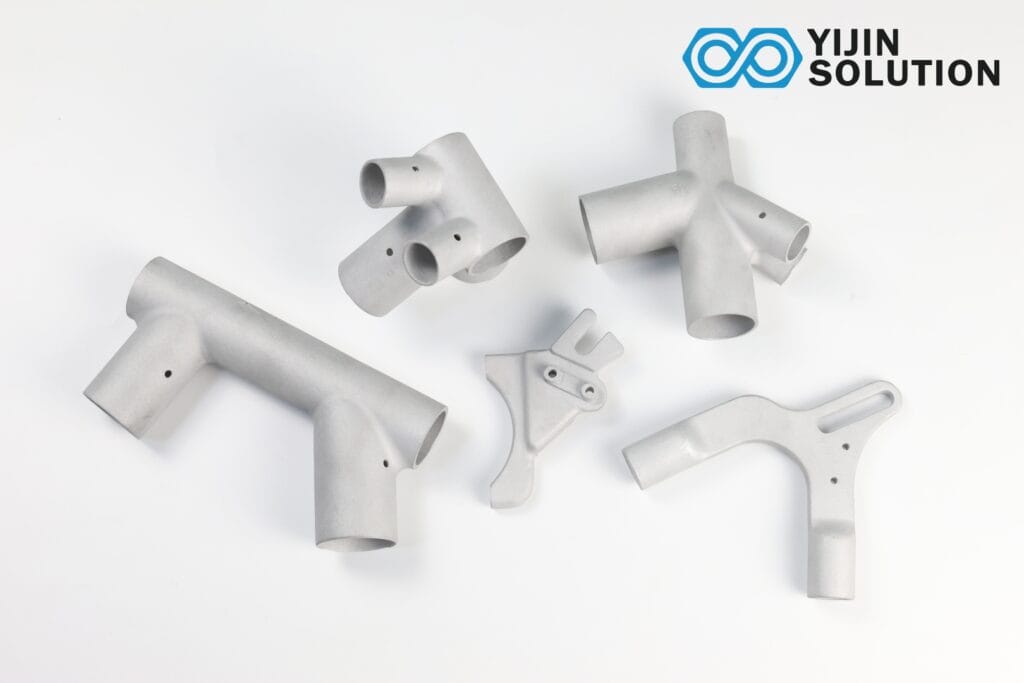
Rapid 3D Printing Services
Best for visual concept models, complex internal geometry, and rapid design iteration.
- FDM, SLA, SLS, MJF, and metal printing
- PLA, ABS, PA, resin, and stainless steel
- Geometry too complex to machine, or iteration speed over material strength
- Use for: form-and-fit checks, concept models, low-cost early validation


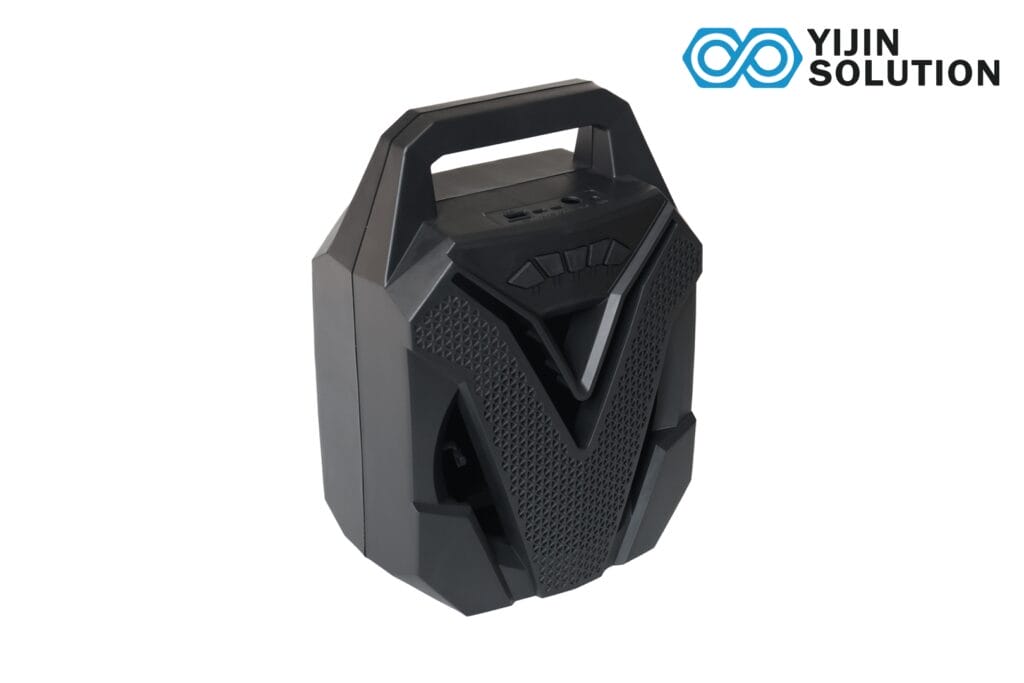
Rapid Injection Molding Services
Best for validating molding behavior before committing to hard production tooling.
- Aluminum prototype tooling
- 50 to 10,000 parts per run
- PA, PC, ABS, PP, POM, and TPU
- Use for: gating and shrink validation, bridge runs before production scales

Estudio de caso
Yijin Solution’s precision machining capabilities solved our bottleneck of the past six months. The tolerance stability of ±0.001 mm and a delivery cycle of 2.4 weeks increased our etching equipment capacity by 30%, and the consistency of the DLC coating directly extended the electrode’s lifespan.
Yijin’s ±0.003 mm precision control and low-temperature stress relief technology completely resolved our challenges. Nearly 800 delivered parts have a 100% inspection pass rate and show zero deformation in the simulated space environment of -180 °C to +150 °C.
Working with Yijin Solution on the CNC machining of these robot parts exceeded our expectations. They achieved tight dimensional tolerances and delivered 20% faster than we anticipated, significantly improving the assembly compatibility of our robot products.
Extensive Material Options
We run rapid prototypes across the same material range we run in production. Aluminum and steel alloys for machined and bent parts, specialty metals for high-performance applications, and engineering plastics for both machined and molded prototypes. Every order ships with mill certificates and heat-lot traceability.
Aleaciones de aluminio
| Tipo | Common Grados |
| Structural and Aerospace | 6061-T6, 7075-T6, 2024-T4 |
| Architectural and Extrusion | 6063-T5, 5052-H32 |
| Cast and Specialty | Cast Al 356, Al-Bronze |
Steel Alloys
| Tipo | Common Grados |
| Acero inoxidable | 303, 304, 316, 416, 17-4 PH |
| Tool and Alloy Steel | 4140, 4340, A2, D2, H13 |
| Carbon and Structural Steel | 1018, 1045, Q235, Q345 |
Specialty Metals
| Tipo | Common Grados |
| Titanio | Grade 2 (CP), Grade 5 (Ti-6Al-4V) |
| Specialty Metals | C36000, C26000, C28000, C11000, C12200 |
| Nickel Superalloys | Inconel 718, Monel 400, Hastelloy C276 |
Plásticos técnicos
| Tipo | Common Grados |
| High-Performance | PEEK, PEI (ULTEM), PPS |
| Termoplásticos técnicos | POM (Delrin), Nylon (PA6, PA66), PC |
| Commodity and Sheet | PMMA (Acrylic), ABS, PVC, PP |

Our Surface Finishes
Common surface finishing options we use on prototype parts. Each finish below is selected based on the material, the visual or functional requirement, and whether the prototype is going into bench testing, customer review, or pre-production validation.
Acabado superficial
ESPECIFICACIÓN

As-Machined
Parts ship directly off the machine with deburred edges and clean tool-path marks. Standard finish for functional prototypes and internal fixtures where appearance is secondary. Surface finish 1.6 to 3.2 μm Ra.

Bead Blasting and Sandblasting
Media blasting with fine glass beads or aluminum oxide produces a uniform matte finish. Standard anodizing prep and default finish on non-cosmetic aluminum and stainless parts. Surface finish near 1.6 μm Ra.

Anodizing (Aluminum)
Sulfuric Type II (5 to 25 μm) for general corrosion protection and color dyeing. Hardcoat Type III (25 to 75 μm) for wear and abrasion resistance on aerospace and industrial parts. Processed to MIL-A-8625. Standard colors include black, clear, red, blue, and gold.

Recubrimiento en polvo
Electrostatic powder application baked at 356–392 °F. Coating thickness 60–120 μm. RAL and Pantone color matches are available. Common on steel brackets, enclosures, and consumer housings. Delivers 500–1,000 hours of salt spray resistance.

Galvanoplastia
Bright chrome, satin nickel, zinc, copper, and tin plating for cosmetic and functional finishes on steel and brass. Plating thickness 5 to 30 μm. Supports ASTM B633 zinc and ASTM B456 decorative chrome standards.

Polishing and Passivation
Why Choose Yijin Solution Rapid Prototyping Services
Yijin Solution runs prototyping the same way we run production. Same machines, same engineers, same QC. That continuity is why customers stay with us from first prototype through to volume production, and why their parts behave consistently when the design moves into manufacturing.

Every critical batch is verified using Zeiss CMMs, laser interferometers, and optical comparators. Parts typically hold ±0.05 mm, with ±0.02 mm on 5-axis programs. First Article Inspection and PPAP Level 3 documentation are standard on production runs.
Prototypes ship in 3 to 7 business days and production shipments in 2 to 4 weeks. 136+ machining centers, in-house finishing, and automated tool changers keep parts moving without supplier handoffs.
Single-piece prototypes and production runs of 100,000+ parts go through the same machining centers and the same inspection standards. No minimum order quantity. Volume does not change quality gates.
Your prototype and production parts come off the same machines with the same programming. No re-qualification, no new vendor onboarding, and no process variation when you scale from validation to volume.

Aluminum, stainless steel, tool steels, titanium, brass, copper, nickel superalloys, and engineering plastics in 50+ grades. Every order ships with mill certificates and heat-lot traceability.

Direct factory pricing without broker margins. Our engineering team reviews your drawing before programming starts to identify material and tolerance changes that reduce cycle time and per-part cost.

Start Your Rapid Prototyping Project
Send your CAD file across and our engineering team will return a manufacturability review and a quote within 24 hours. Approved orders go to the floor the same day, with prototypes shipping in 3 to 7 days.

Get a quote
Upload your CAD file, select your lead time, and receive a quote within 24 hours.

Producción
Our engineering team reviews your design for manufacturability, then schedules production on the appropriate line.
Control de calidad
Every part is inspected against your drawing specifications through CMM inspection, optical measurement, and visual inspection before packaging.
Entrega
Parts ship with dimensional inspection reports and material certifications. Express shipping is available for time-sensitive orders, with tracking provided on all shipments.
Rapid Prototyping FAQs
1. Which prototyping process should I choose for my part?
Pick by what the prototype needs to prove. CNC machining is the choice when the prototype must behave like the production part under load, fit, or tolerance test. Sheet metal fabrication fits any part the production version will be cut, bent, or welded from flat stock. 3D printing is best when geometry is too complex to machine, or when iteration speed matters more than final material properties. Injection molding is the right call when you need to validate gating, shrink, or wall-flow behavior before cutting hard production tooling.
If you are not sure which one fits, send the CAD file across. Our engineering team picks the route based on the part geometry, the material requirement, and whether the prototype is for visual review, functional testing, or production validation.
2. How fast can I get a prototype?
Most prototypes ship within 3 to 7 business days from quote approval. 3D printed parts in standard materials can ship in 1 to 3 days. CNC machined and sheet metal prototypes ship in 3 to 7 days. Injection molded prototypes take 2 to 4 weeks because the timeline includes cutting aluminum prototype tooling before parts can run.
Quotes themselves come back within 24 hours of CAD file upload. Express options are available for time-critical work, with shipping tracking provided on every order.
3. What materials do you offer for rapid prototyping?
Across the four processes we cover most production-grade engineering materials.
CNC machining runs aluminum (6061, 7075, 2024), stainless steel (303, 304, 316, 17-4 PH), tool and carbon steel, titanium (Grade 2, Ti-6Al-4V), brass, copper, nickel superalloys, and engineering plastics like POM, PA, PC, PEEK, and PMMA. Sheet metal fabrication covers aluminum, stainless, mild steel, brass, and copper from 0.5 to 12 mm thick. 3D printing supports PLA, ABS, PA, photopolymer resins, and metal alloys including stainless. Injection molding runs PA, PC, ABS, PP, POM, and TPU.
Every order ships with mill certificates and heat-lot traceability.
4. What tolerances can I expect on prototype parts?
Tolerance varies by process. CNC machining holds ±0.05 mm as standard, with ±0.02 mm achievable on 5-axis programs and Swiss-type lathe work. Sheet metal fabrication holds ±0.1 mm on cuts and ±0.5° on bend angles. 3D printed parts hold ±0.1 mm to ±0.3 mm depending on the technology and material. Injection molded prototypes match production tolerances for the chosen resin, typically ±0.05 to ±0.1 mm.
We provide First Article Inspection reports on request. Critical batches are verified using Zeiss CMMs, laser interferometers, and optical comparators.
5. What is the difference between rapid prototyping and rapid manufacturing?
Rapid prototyping covers the small-batch parts you need to validate a design. Quantities range from a single piece to a few hundred. The focus is on speed of iteration and proving the part will work.
Rapid manufacturing is the production version of the same part, run in larger quantities once the design is locked. At Yijin Solution both happen on the same shop floor with the same engineering team, so the prototype and the production part come off the same machines with the same programming. There is no re-qualification step when you scale.
6. Can I scale from prototype to production with the same supplier?
Yes. Your prototype is built on the same CNC centers, press brakes, stamping lines, or molding presses we use for production runs. The programming, tooling, and inspection routines carry forward when you move to volume.
That continuity removes the most common scale-up risks: process variation between vendors, re-qualification cycles, and supply chain handoffs. Customers typically stay with us from the first prototype through to production volumes ranging from hundreds to over a million parts per year.
7. What file formats do you accept and how does the quoting process work?
We accept STEP (.step, .stp) y STL (.stl) files for 3D models. Please include critical dimensions, tolerances, and surface finish requirements where applicable.
Upload your file through the contact form or email it to us. Our engineering team will review your design and provide a DFM assessment and quote within 24 hours, including pricing, lead time, and recommendations to optimize cost and manufacturability.
8. Is there a minimum order quantity for prototypes?
No. We run single-piece prototypes through the same machining centers as production batches of 100,000 or more parts. The same QC standards apply at every quantity.
For low-volume bridge runs between prototype and full production, we typically run 50 to 10,000 parts on aluminum prototype tooling for injection molding, or unlimited counts on CNC and sheet metal lines.
Empiece hoy mismo. Consiga piezas rápidamente.
Get production-ready prototypes in days. Send your drawing and start cutting weeks off your timeline.