


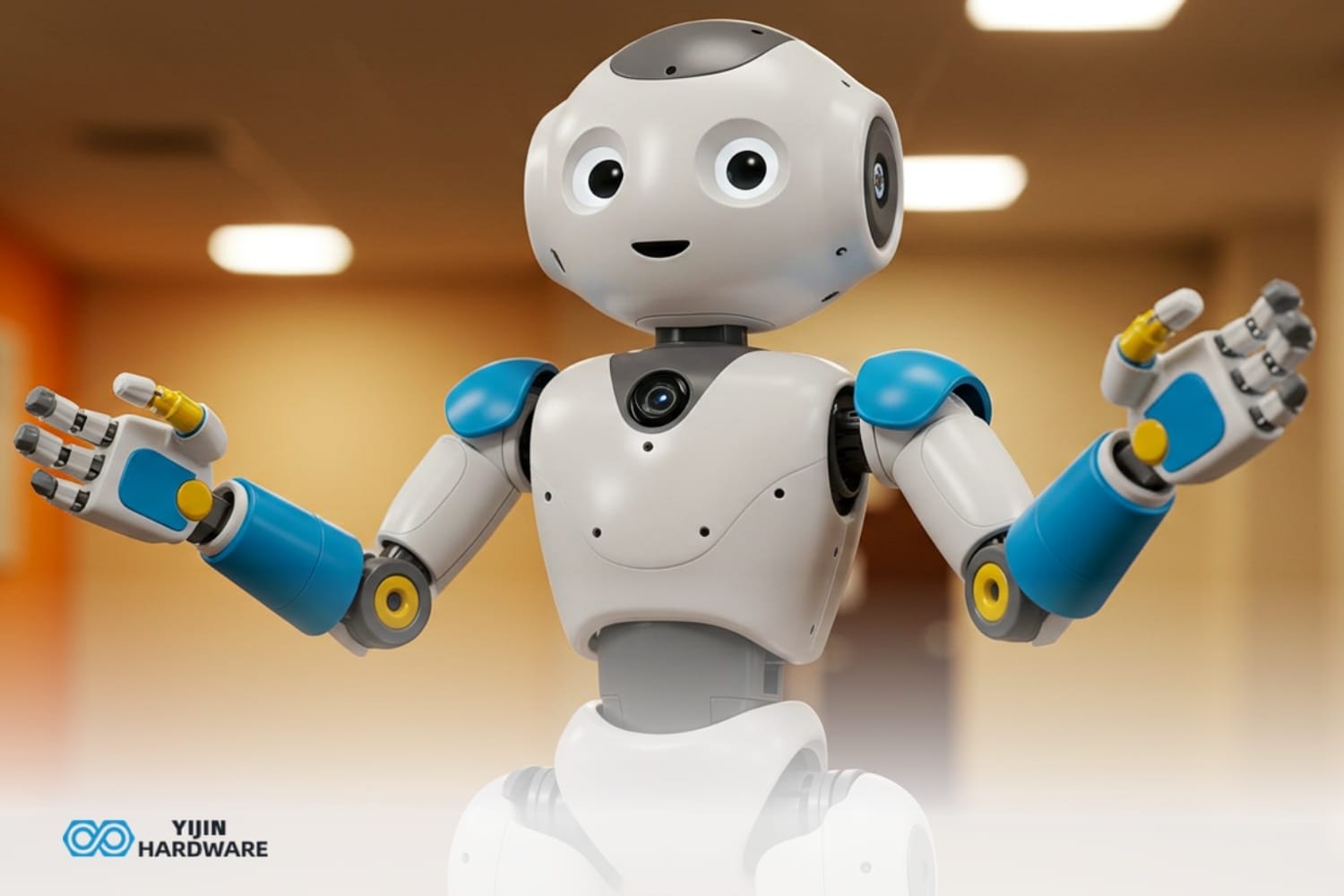
Manufacturing faces three big problems today: fewer people want fewer blue-collar jobs in factories, safety regulations are stricter every year, and companies need higher productivity without compromising their profit margins. Sounds like an impossible compromise? It would be if not for the rising prevalence of humanoid robots in manufacturing roles.
Human/robot collaboration is a fix to the big three problems. Robots are able to handle dangerous and repetitive kinds of work without strain or inconsistency, while humans take on the macro decisions and final quality control. This makes safe workplaces, bettering productivity along the way.
We’ll be discussing what human/robot collaboration is, models to consider for your factors, and the role Mecanizado CNC at Ferretería Yijin has when manufacturing humanoid robotics. Let’s dive right into the heart of this discussion.
Principales conclusiones
- Humanoid robots enable safe, efficient human-robot collaboration in manufacturing by handling repetitive and dangerous tasks while humans oversee quality and decision-making.
- Advanced AI and machine learning allow humanoid robots to learn tasks through demonstration, adapt to part variations, and perform high-precision operations like CNC machining.
- Digital twins and professional integration services reduce deployment time, ensure safety compliance, and optimize factory performance in Industry 5.0 environments.
What is Human Robot Collaboration in Manufacturing?
Human robot collaboration means people and robots working together within the same industrial area. While modern industrial robots are separated from human workers by fences to keep them safe from powerful robots, humanoid robots aren’t constrained this way. This setup mixes human thinking skills with robotic strength and exact movements.
Collaborative robots, often called cobots, work right next to people safely. They can tell when a person gets way too close to them. This helps factories make much more products while keeping workers safe.
What is the Difference between Traditional and Collaborative Robots?
Old industrial robots stay behind safety walls because they move too fast and strong for people. Cobots use special sensors to feel when people are near and stop immediately.
Collaborative robots are part of Industry 5.0 and puts people first in manufacturing rather than replacing them. This new way focuses on lasting production that mixes artificial intelligence with human creativity and agility.
Según Market.us Scoop, collaborative robots made up around $815.4 million in market size in 2022. Sales are projected to reach 735,000 units by 2025.
What are the Core Technologies Enabling Human-Robot Collaboration?
- Large Language Models let workers talk to robots using everyday language
- Neural networks help robots understand what they see, hear, and feel
- Smart reasoning helps robots figure out what people want to do
- Digital twin programs make computer copies for testing and improving robot work
How do Collaborative Robots Transform CNC Machining Operations?
Collaborative robots enable continuous CNC operation by handling material loading, unloading, and part transfer between operations. CNC machines run unmanned during breaks, shifts, and overnight periods while maintaining consistent cycle times.
Machine Tending Applications
Machine tending represents the most valuable cobot application for CNC environments. Robots handle parts weighing up to 35 kg with positioning accuracy within 0.1 mm. Force sensors prevent damage to delicate parts or expensive tooling during handling operations.
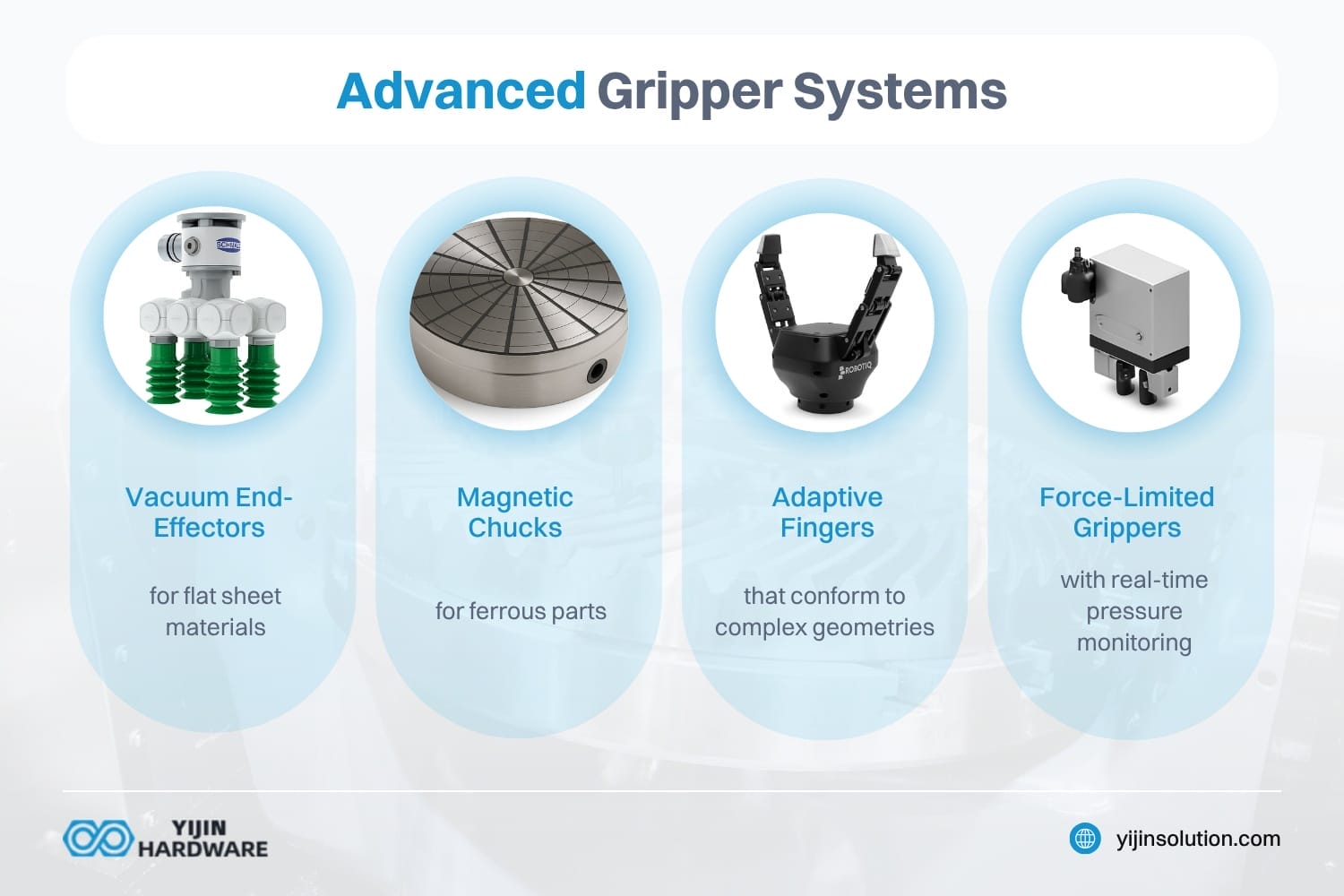
Advanced gripper systems include:
- Vacuum end-effectors for flat sheet materials
- Magnetic chucks for ferrous parts
- Adaptive fingers that conform to complex geometries
- Force-limited grippers with real-time pressure monitoring
AI Integration for Adaptive Manufacturing
Neural network models enable robots to learn part handling techniques through human demonstration. End-to-end AI systems process visual input to determine optimal grip points and orientation for varying part geometries. This eliminates manual programming for new part introductions.
| Technology Component | Capacidad | Implementation Benefit |
|---|---|---|
| Vision Processing | Part recognition, pose estimation | Reduces programming time by 60% |
| Force Control | Adaptive gripping, compliance | Prevents part damage, improves yield |
| Neural Networks | Learning from demonstration | Handles part variations automatically |
| Digital I/O Integration | CNC synchronization | Enables lights-out operation |
What Safety Standards Apply to Human Robot Collaboration?
ISO 10218 establishes fundamental safety requirements for industrial robots, including collaborative applications. This standard defines four collaborative operation modes: safety-rated monitored stop, hand guiding, speed and separation monitoring, and power and force limiting.
Biomechanical Safety Limits
ISO/TS 15066 specifies maximum contact forces for different body regions. Head and neck areas limit contact to 65 newtons maximum. Arms and hands allow up to 150 newtons before triggering emergency stops. These limits ensure contact causes only transient pain without permanent injury.
Advanced Safety Systems
Power and Force Limiting (PFL) technology monitors joint torques and end-effector forces continuously. Safety systems stop robot motion within 1–3 milliseconds when contact forces exceed thresholds. This intrinsic safety eliminates external devices like light curtains in many applications.
Critical Safety Components:
- Safety-rated joint torque sensors in each axis
- Dual-channel safety controllers with SIL 2/PLd rating
- Emergency stop circuits with Category 0 stop functionality
- Collision detection algorithms with adjustable sensitivity
Regulatory Compliance Requirements
OSHA regulations require risk assessments before implementing collaborative systems. Documentation must identify hazards, evaluate risks, and specify protective measures including training and maintenance procedures. CE marking in Europe mandates third-party safety certification and technical documentation.
Which Humanoid Robot Models Will Transform Manufacturing?
Humanoid robots in manufacturing bring advanced AI capabilities and human-like dexterity to production environments. These AI-powered humanoid robots integrate large language models, computer vision, and neural networks for complex task execution beyond traditional cobot capabilities.
Next-Generation Humanoid Platforms
Figure 02 incorporates end-to-end neural networks for real-world task learning. The humanoid robot processes visual and tactile feedback to perform sheet metal insertion with millimeter accuracy. OpenAI integration enables natural language programming and task modification through generative AI.
Argon One specializes in precision manufacturing with multi-tool capabilities including laser engraving, milling, and 3D printing. This advanced humanoid addresses high-precision tasks that traditional cobots cannot perform. Twelve interchangeable tool heads enable robots to perform a wide range of tasks.
Boston Dynamics Atlas demonstrates advanced mobility and manipulation for complex environments. Dynamic balance and parkour capabilities enable operation in constrained spaces typical of manufacturing facilities and factory floor environments.
Tesla’s entry into the humanoid market with Optimus represents a significant development of humanoid robots for automotive manufacturing. Elon Musk has indicated these robots could accelerate production processes while addressing the labor shortage in manufacturing jobs.
AI-Powered Capabilities in Production
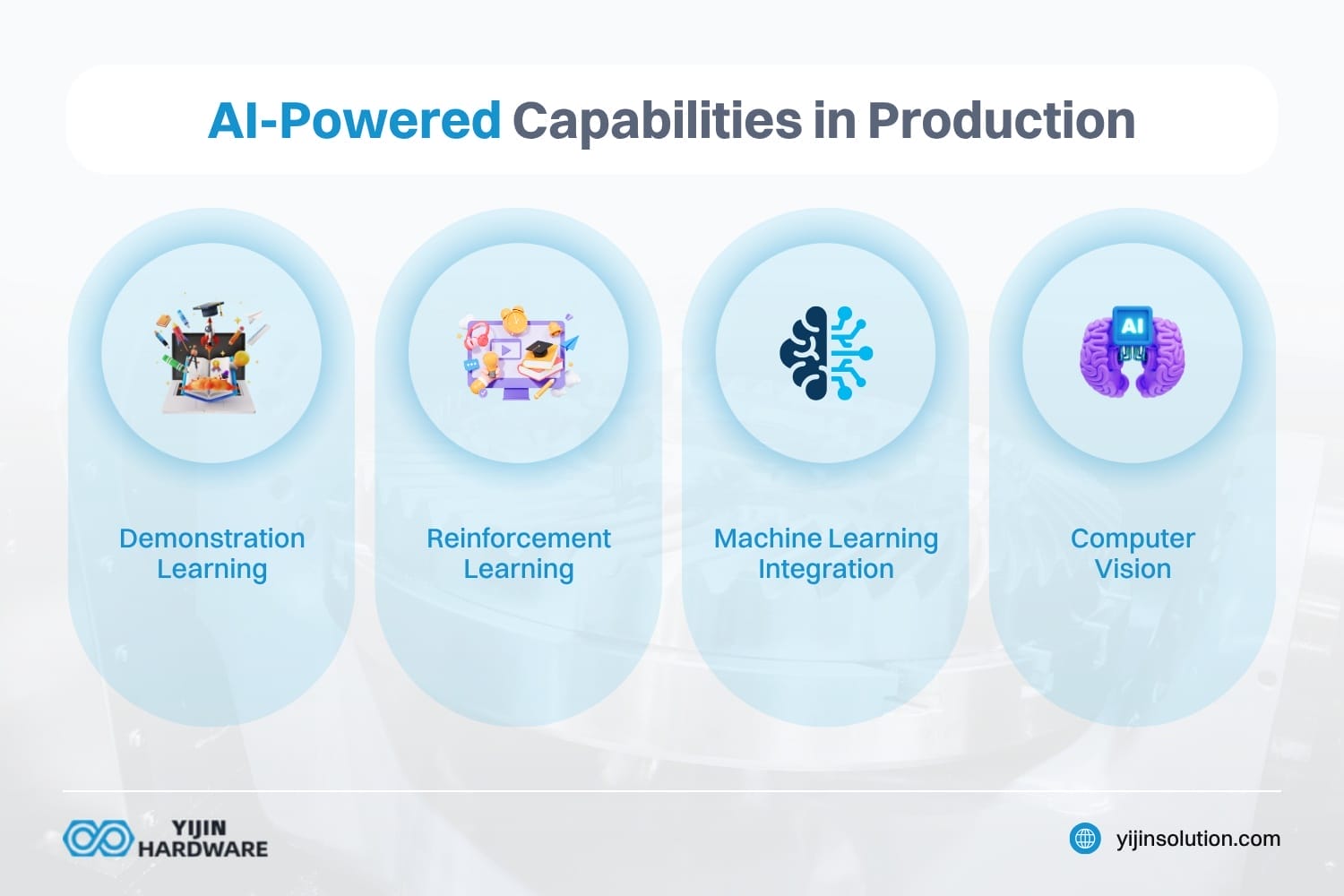
Modern humanoid robots are designed with foundation models that process multimodal inputs for comprehensive environmental understanding. The development of humanoid robots focuses on systems equipped with advanced sensors that can adapt to production needs. These systems learn through:
- Demonstration learning from human operators
- Reinforcement learning for task optimization
- Machine learning integration for natural communication
- Computer vision for real-time scene understanding
| Humanoid Model | AI Integration | Primary Capability | Manufacturing Application |
|---|---|---|---|
| Figure 02 | OpenAI, neural networks | Learning from demonstration | Assembly line, material handling |
| Argon One | Multi-tool AI control | Precision manufacturing | Laser processing, milling |
| Atlas | Dynamic mobility AI | Complex environment navigation | Facility maintenance, logistics |
| Tesla Optimus | Neural networks | Automotive production | Assembly, quality inspection |
How do Digital Twins Optimize Robot Implementation?
Digital twin technology creates virtual manufacturing environments that simulate robot behavior before physical installation. Simulation software models kinematics, workspace constraints, cycle times, and collision detection for optimal programming and layout design in factory automation.
Virtual Commissioning Process
Robot path planning algorithms optimize motion sequences to minimize cycle time while avoiding obstacles. Simulation identifies joint limits, singularities, and interference with fixtures or workpieces. Engineers test multiple scenarios and compare performance metrics before hardware installation.
Key Simulation Capabilities:
- Accurate collision detection with CAD model integration
- Cycle time optimization with motion planning algorithms
- Safety zone validation and risk assessment
- Communication protocol testing with virtual PLCs
Offline Programming Benefits
Automatic code generation from simulation models reduces setup time on production floors. Programs tested in virtual environments require minimal modification for physical robots. This capability enables rapid deployment of new part programs without production interruption in flexible manufacturing systems.
Integration with CAD models of CNC machines, fixtures, and workpieces enables precise reach analysis and workspace optimization. Virtual validation prevents costly modifications during the deployment of these robots.
What Integration Steps are Required for CNC Robot Implementation?
Setting up robots with CNC machines needs careful planning and safety checks. Each step must follow strict rules to keep workers safe and machines running properly.
Risk Assessment and Documentation
Safety analysis follows EN ISO 12100 methodology to evaluate risk levels and specify protective measures. Documentation includes safety system specifications, operator training requirements, and maintenance procedures for regulatory compliance in the manufacturing industry.
Required Documentation:
- Hazard identification and risk assessment matrices
- Safety system validation reports
- Operator training curricula and certification records
- Preventive maintenance schedules and procedures
Control System Integration
Communication between robot controllers and CNC systems uses discrete I/O signals or industrial Ethernet protocols like EtherCAT and PROFINET. Safety circuits ensure coordinated operation with proper interlocking to prevent equipment damage in existing production systems.
Programming includes fault handling for common conditions like part presence detection failures or communication timeouts. Diagnostic systems provide real-time status monitoring and error identification across the supply chain.
Advanced Programming Methodologies
Neural Network Integration: Modern systems incorporate learning algorithms that adapt to part variations without manual reprogramming. Vision-guided programming enables automatic path generation based on part geometry recognition for intelligent humanoid robots.
Multimodal Sensor Fusion: Integration of force, vision, and proximity sensors provides comprehensive environmental awareness. Sensor data feeds neural networks for real-time decision-making and adaptive behavior in industrial and commercial environments.
The future of humanoid robots in the manufacturing sector involves ai-driven automation that can perform tasks across multiple production line operations. Humanoids could revolutionize how factories and warehouses operate by working autonomously while maintaining the flexibility that human labor provides.
Why Choose Professional Integration Services?
CNC robot integration requires specialized expertise in safety standards, control systems, and precision manufacturing requirements. Professional services ensure regulatory compliance, optimal performance, and reliable operation from day one in automotive manufacturing and other sectors.
Comprehensive Service Package:
- Complete risk assessment and safety documentation
- Custom end-effector design and manufacturing
- Control system integration and programming
- Operator training and certification programs
- Ongoing maintenance and technical support
Expert integration reduces implementation time from months to weeks, while ensuring safety compliance and optimal performance. Professional programming incorporates best practices for cycle time optimization and error handling in manufacturing processes.
The wave of humanoid robots entering factories represents the future of robotics, where humans and robots collaborate rather than compete. This transformation will create a future where robots can help address production challenges while maintaining the creativity and problem-solving abilities that only human workers provide.
Ready to Transform Your CNC Operations with Collaborative Robotics?
Yijin Hardware combines precision CNC machining expertise with advanced automation solutions. Our engineering team specializes in collaborative robot integration for manufacturing environments, ensuring safety compliance and optimal productivity across diverse production processes.
We provide complete turnkey solutions including risk assessment, custom programming, safety system design, and operator training. The integration of humanoid robots and AI and robotics technologies enables our clients to achieve superior manufacturing and logistics efficiency. Contact our automation specialists today for a detailed analysis of how collaborative robotics can enhance your manufacturing capabilities and reduce operational costs.
Humanoid Robots in Manufacturing FAQs
How do humanoid robots differ from traditional collaborative robots in CNC applications?
Humanoid robots integrate advanced AI including large language models and neural networks for complex task learning and natural communication. They offer multi-tool capabilities like laser processing and milling that traditional cobots cannot perform. Programming uses demonstration learning rather than traditional teach pendant methods for bipedal robots and other advanced configurations.
What neural network capabilities enable robots to adapt to new CNC parts automatically?
End-to-end neural networks process visual input to determine optimal grip points and handling sequences for varying part geometries. Computer vision systems recognize part features and generate motion plans without manual programming. Learning algorithms help robots can adapt to part variations through reinforcement learning and human demonstration across a wide range of tasks.
How do safety systems handle unexpected contact during high-precision CNC operations?
Force sensors monitor contact forces continuously and trigger emergency stops within 1–3 milliseconds when thresholds exceed 150 newtons. Safety-rated controllers implement Category 0 stops that remove power from all drives simultaneously. Operators must manually investigate and restart systems after contact events to ensure proper safety protocols in the production environment.
Volver arriba: Human Robots in Manufacturing




 ES
ES  EN
EN  RU
RU  DE
DE  FR
FR