


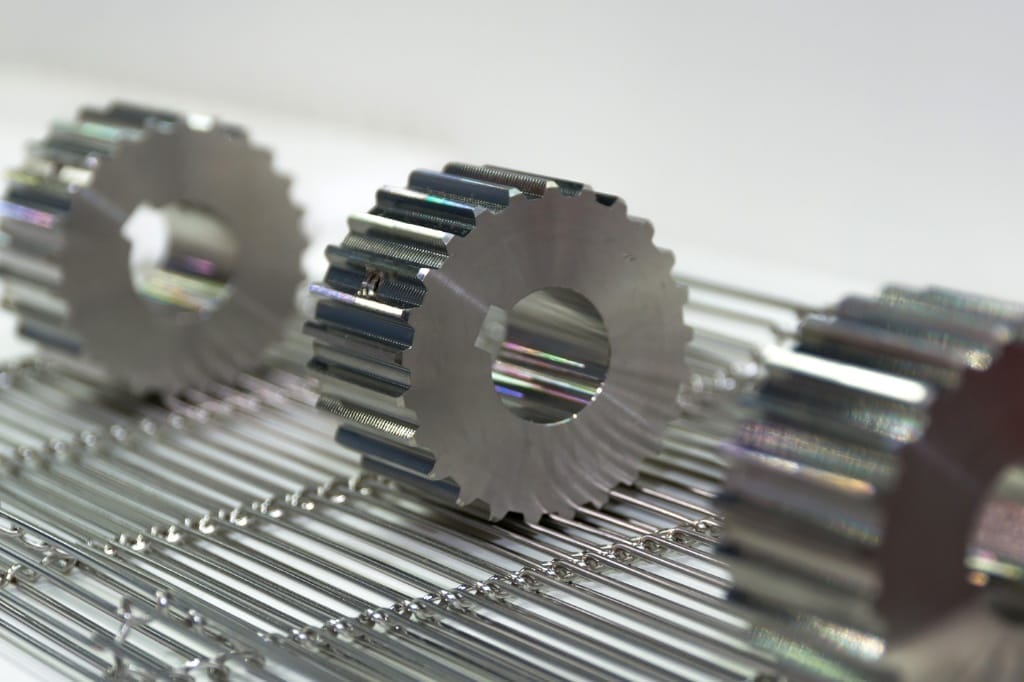
Both titanium and aluminum are lightweight and have pretty fantastic strength-to-weight ratios. On the other hand, there are big differences in performance, processing needs, and cost. At Yijin Hardware, our Mecanizado CNC knowledge of these top metals helps you make the right choice.
Principales conclusiones
- Titanium is 60% heavier but is stronger and has better corrosion resistance.
- Aluminum has more than 10x better thermal conductivity and costs 3-10x less than titanium
- Titanium maintains its strength at temperatures up to 550 °C while aluminum is limited to 250 °C.
- Aluminum is easier to machine, requiring less specialized equipment and processing techniques.
- Material selection should be application-driven, considering environmental conditions, performance needs, and budget constraints.
What are the Key Property Differences Between Titanium and Aluminum?
The differences between aluminio y titanio begin with their fundamentally different physical and mechanical properties that determine their suitability for various applications. Aluminum vs. titanium density reveals that titanium has approximately 60% higher density (4.5 g/cm³) than aluminum (2.7 g/cm³), making titanium denser than aluminum but also significantly stronger. The low density of aluminum, while lighter, offers excellent thermal conductivity and easier machinability.
The following table highlights the critical differences between these versatile metals:
| Propiedad | Titanio | Aluminio |
|---|---|---|
| Densidad | 4,5 g/cm³ | 2,7 g/cm³ |
| Resistencia a la tracción | 230-1400 MPa | 90-690 MPa |
| Punto de fusión | 1668 °C | 660 °C |
| Conductividad térmica | 17-22 W/m·K | 205-235 W/m·K |
| Conductividad eléctrica | 3.1% of copper | 64% of copper |
| Resistencia a la corrosión | Excelente | Bien |
| Maquinabilidad | Desafío | Excelente |
Atomic and Crystalline Structure
Titanium features a hexagonal close-packed (HCP) crystal structure below 882 °C, transitioning to body-centered cubic above this temperature. This unique crystalline arrangement contributes to titanium’s exceptional strength-to-weight ratio and resistance to deformation.
Aluminum possesses a face-centered cubic (FCC) crystal structure that provides excellent formability and ductility. This atomic arrangement allows for easier dislocation movement within the crystal lattice, explaining aluminum’s superior machinability.
Both aluminum and titanium form protective oxide layers when exposed to oxygen, but titanium dioxide (TiO₂) creates a more robust, self-healing barrier than aluminum oxide (Al₂O₃).
How does the Strength-to-Weight Ratio Compare Between Titanium and Aluminum?
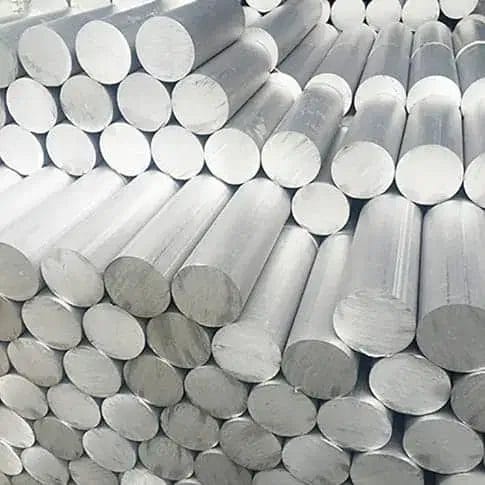
The aluminum vs. titanium strength-to-weight ratio comparison reveals that titanium has a significantly higher value, making it ideal for applications where maximum strength and weight reduction are critical. Titanium’s strength-to-weight ratio reaches approximately 187 kN·m/kg, while aluminum’s maximum is about 158 kN·m/kg, depending on the specific alloy and treatment.
This superior ratio means titanium offers high strength without excessive weight, enabling it to withstand greater stress while using less material—a crucial advantage in aerospace, medical, and high-performance applications. The strength advantage becomes even more pronounced at elevated temperatures, where titanium maintains its mechanical properties much better than aluminum.
Alloy-Specific Performance Metrics
- Ti-6Al-4V (Grado 5): Offers tensile strength of titanium alloys ranging from 900-1200 MPa with a density of 4.43 g/cm³
- Commercially Pure Titanium (Grade 2): Provides 345-490 MPa with a density of 4.51 g/cm³
- Aluminio 7075-T6: Delivers 570 MPa with a density of 2.81 g/cm³
- 6061-T6 Aluminum: Achieves 310 MPa with a density of 2.70 g/cm³
A 2024 study in the Biblioteca Nacional de Medicina applied Response Surface Methodology to optimize the cutting parameters for Ti-6Al-4V. The results showed that using higher cutting speeds (120 m/min) combined with shallower depths of cut (0.10 mm) substantially lowered the cutting temperature (to approximately 607 °C) and enhanced surface finish quality (achieving a roughness of 0.19 μm). Conversely, employing lower cutting speeds and deeper cuts led to increased temperatures and poorer surface roughness.
For weight-critical applications that don’t require titanium’s exceptional strength and corrosion resistance, aluminum is a cost-effective solution without compromising performance.
What Makes Titanium So Corrosion-Resistant Compared to Aluminum?
Titanium’s excellent corrosion resistance stems from its ability to form a stable, self-healing protective oxide layer (TiO₂) instantly when exposed to oxygen. This passive oxide film provides resistance to corrosion against most chemicals, acids, chlorides, and saltwater environments, making titanium virtually immune to environmental deterioration.
Aluminum also forms a protective oxide layer (Al₂O₃), but it’s less robust than titanium’s. While aluminum resists general atmospheric corrosion well, it’s more vulnerable to galvanic corrosion when in contact with other metals and can deteriorate in aggressive chemical environments.
Comparación de la resistencia química
| Environment | Titanium Performance | Aluminum Performance |
|---|---|---|
| Saltwater | Excellent (no visible corrosion) | Poor to Fair (requires protection) |
| Acids (HCl, H₂SO₄) | Good to Excellent | Pobre |
| Alkalis (NaOH) | Excelente | Poor (rapidly dissolves) |
| Industrial Atmosphere | Excelente | Good (with anodizing) |
In marine applications, titanium shows almost no corrosion after decades of saltwater exposure, whereas aluminum requires protective coatings or regular maintenance to prevent degradation, especially in applications with a dissimilar metal contact.
Which Industries Benefit Most from Titanium’s Properties?
Aerospace industries benefit tremendously from titanium’s high strength-to-weight ratio and high-temperature stability. Aircraft engines, structural components, and fasteners made from titanium alloys like Ti-6Al-4V significantly reduce weight while maintaining strength integrity under extreme conditions.
The medical industry relies on titanium’s biocompatibility and corrosion resistance for implants, surgical instruments, and prosthetics. Titanium’s unique properties make it suitable for dental implants and orthopedic devices that must perform reliably for decades inside the human body.
Marine applications leverage titanium’s extraordinary resistance to corrosion for propeller shafts, heat exchangers, and desalination equipment, where its higher cost of titanium is often justified by substantially longer service life and reduced maintenance.
Critical Titanium Applications by Industry
- Aeroespacial
- Jet engine components (compressor blades, discs)
- Componentes del tren de aterrizaje
- Airframe structural elements
- Fasteners for critical connections
- Médico
- Dental implants (endosseous, subperiosteal)
- Joint replacements (hip, knee)
- Bone plates and screws
- Pacemaker casings and surgical instruments
- Procesado químico
- Reaction vessels for corrosive media
- Heat exchangers for aggressive environments
- Valves and pumps for chemical transport
- Offshore oil and gas equipment
Where does Aluminum Outperform Titanium in Industrial Applications?
Aluminum exhibits superior performance compared to titanium in thermal management applications due to its high thermal conductivity (205-235 W/m·K versus titanium’s 17-22 W/m·K). Heat sinks, radiators, and HVAC components benefit from aluminum’s ability to facilitate heat dissipation quickly and efficiently.
In electrical applications, aluminum’s excellent conductivity (64% of copper) makes it far superior to titanium (3.1% of copper) for power transmission, electronics housing, and conductive components. This property, combined with aluminum’s lightweight properties, makes it the preferred choice for electrical infrastructure.
High-volume manufacturing scenarios favor aluminum over titanium because of its exceptional machinability, lower tool wear, faster cutting speeds, and significantly reduced processing costs compared to titanium, which requires specialized equipment and techniques.
Aluminum’s Performance Advantages
- Thermal Management
- Computer heat sinks and LED lighting fixtures
- Automotive radiators and engine cooling components
- HVAC ductwork and heat exchangers
- Electronic device enclosures
- Electrical Applications
- Power transmission lines (weight advantage over copper)
- Bus bars and electrical conductors
- Electromagnetic shielding components
- Transformer windings and electrical housing
How do Manufacturing and Processing Requirements Differ?
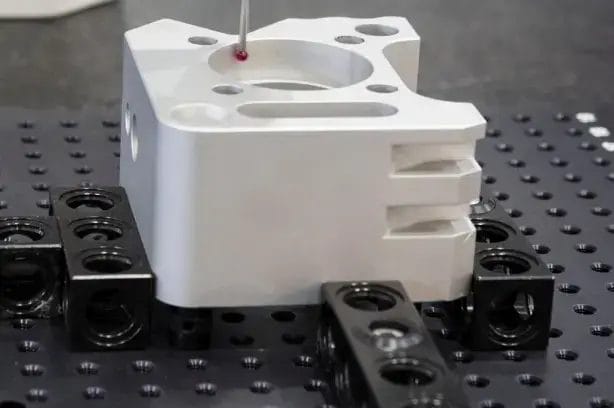
Titanium machining requires specialized tooling, slower cutting speeds, and abundant cooling due to its low thermal conductivity and high strength. The material’s work hardening tendency and chemical reactivity, when exposed to extreme heat, make it approximately 10x more challenging to machine than aluminum.
Aluminum processing is significantly more straightforward, with faster cutting speeds, less tool wear, and simpler cooling requirements. CNC machining of aluminum can achieve excellent surface finishes and tight tolerances with standard tooling and conventional equipment, resulting in lower production costs.
Welding presents different challenges for both metals—titanium requires complete inert gas shielding to prevent contamination, while aluminum’s high thermal conductivity demands careful heat management to prevent distortion and achieve strong joints.
CNC Machining Parameters Comparison
| Parámetro | Titanio | Aluminio |
|---|---|---|
| Velocidad de corte | 30-60 m/min | 150-1500 m/min |
| Material de la herramienta | Carbide, PCD, CBN | HSS, metal duro |
| Coolant Requirement | High pressure, abundant | Moderate to low |
| Tasa de desgaste de la herramienta | Alta | Bajo |
| Rigidity Requirement | Muy alta | Moderado |
| Surface Finish Capability | Good with proper techniques | Excelente |
What Cost Factors Should You Consider When Choosing Between these Materials?
The aluminum vs. titanium cost comparison represents the most obvious difference, with titanium typically priced 3-10x higher than aluminum, depending on grade and market conditions. Raw material costs for titanium are significantly higher due to complex extraction and processing requirements, limited supply, and specialized production facilities.
Processing costs add another layer to the economic comparison, with titanium demanding specialized equipment, expertise, and longer machining times. The same part might cost 5 to 7x more to machine in titanium than in aluminum due to reduced tool life, slower cutting speeds, and increased labor.
Lifecycle costs must also factor into your decision—titanium’s durability, superior strength, and corrosion resistance can offset higher initial costs in applications where maintenance, downtime, or replacement would be particularly expensive or problematic. In these scenarios, titanium’s premium price can represent a long-term economic advantage.
Total Cost of Ownership Analysis
When evaluating the true economic impact of material selection, consider these factors:
- Initial Production Costs
- Raw material procurement
- Processing and machining expenses
- Surface treatments and finishing requirements
- Quality verification and testing
- Operational Lifetime Costs
- Scheduled maintenance requirements
- Corrosion prevention measures
- Replacement frequency
- Downtime costs during replacement
- Safety margins and overengineering needs
How Should You Choose Between Titanium and Aluminum for Your Project?
Determine your application’s primary performance requirements first, considering factors like maximum operating temperature, exposure to corrosive environments, and mechanical stress levels. When choosing between titanium and aluminum, these functional needs establish whether titanium’s premium properties are necessary, or if aluminum wins in terms of providing adequate performance.
Evaluate your budget constraints realistically, including both initial production costs and long-term maintenance or replacement expenses. For high-volume products or cost-sensitive applications, inexpensive aluminum typically offers the best value, unless specific performance requirements demand titanium.
Consider your manufacturing capabilities and timeline, as titanium is often harder to work with and requires specialized equipment and expertise that may impact production feasibility. At Yijin Hardware, our advanced CNC machining capabilities handle both materials expertly, but understanding these processing differences helps set appropriate expectations for project timelines and costs.
What are the Most Common Titanium and Aluminum Alloys for CNC Machining?
Among titanium alloys, Ti-6Al-4V (Grade 5) dominates machining applications, accounting for approximately 50% of all titanium use due to its excellent balance of strength, machinability, and weldability. This versatile alloy contains 6% aluminum and 4% vanadium, offering a tensile strength of about 900 MPa and good fatigue resistance.
Commercially pure titanium grades (Grade 1-4) provide exceptional corrosion resistance with moderate strength and are preferred for chemical processing equipment, marine components, and medical applications where biocompatibility is paramount, but ultimate strength is less critical.
For aluminum alloys, the 6061-T6 alloy represents the most widely machined grade, providing excellent strength (310 MPa), good corrosion resistance, and superior machinability. The 7075-T6 aluminum offers even higher strength (570 MPa) for aerospace and high-stress applications, while 5052 aluminum provides enhanced corrosion resistance for marine environments.
Popular Alloy Specifications and Applications
Aleaciones de titanio:
- Grade 1 (CP-Ti): The purest commercial grade with excellent formability and optimal corrosion resistance. Used for chemical processing equipment.
- Grade 2 (CP-Ti): Offers slightly higher strength than Grade 1 while maintaining excellent corrosion resistance. Common in chemical processing and marine applications.
- Grade 4 (CP-Ti): The highest strength commercially pure grade, used for aerospace components and medical implants requiring moderate strength.
- Grado 5 (Ti-6Al-4V): The “workhorse” titanium alloy offering excellent mechanical properties for aerospace, medical, and marine applications.
- Grade 7 (Ti-0.15Pd): Palladium-enhanced titanium with exceptional resistance to reducing acids and crevice corrosion.
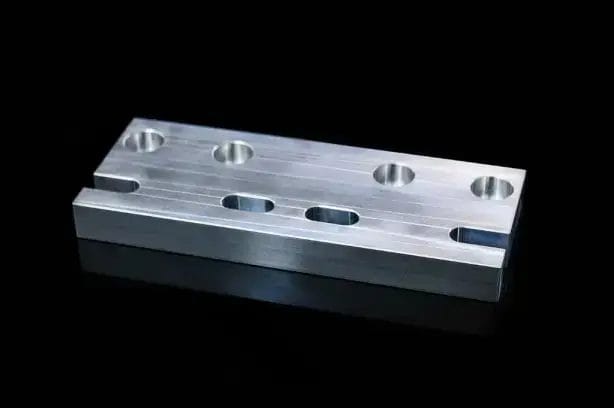
Aluminum Alloys:
- 1100: Commercially pure aluminum with excellent formability and corrosion resistance but with lower strength.
- 2024-T3: High-strength aerospace alloy containing copper, used for aircraft structures.
- 5052-H32: Excellent corrosion resistance and moderate strength, popular for marine applications.
- 6061-T6: Versatile alloy with good strength, corrosion resistance, and excellent machinability.
- 7075-T6: A very high-strength aerospace alloy containing zinc, used for heavily loaded structural parts.
How Can Yijin Hardware Help with Your Titanium and Aluminum Projects?
Yijin Hardware’s advanced CNC machining capabilities accommodate both titanium and aluminum projects with exceptional precision and quality. Our specialized equipment and experienced machinists handle the unique challenges of using titanium for precision parts, while maximizing efficiency with aluminum components.
Our material selection expertise helps you determine the ideal material for your specific application, considering performance requirements, budget constraints, and long-term objectives. We provide detailed consultations to ensure you receive the most cost-effective solution without compromising quality or functionality.
From prototype to production, our comprehensive machining services deliver consistent quality for both metal types, with in-house quality control processes that verify dimensional accuracy, surface finish, and mechanical properties according to your exact specifications.
Our Titanium and Aluminum Processing Capabilities
- CNC Precision: Titanium (±0.05 mm tolerance), Aluminum (±0.02 mm tolerance)
- Tratamientos superficiales: Anodizing, passivation, brushing, polishing, and bead blasting
- Geometrías complejas: 5-axis machining for intricate titanium and aluminum components
- Verificación de la calidad: Coordinate measuring machines, hardness testing, and chemical analysis
- Volume Capabilities: From one-off prototypes to mid-volume production runs
Yijin Hardware: Top Titanium and Aluminum CNC Machining
Selecting between titanium vs. aluminum requires careful consideration of your application’s specific requirements, environmental conditions, and budget constraints. Titanium offers superior strength, exceptional corrosion resistance, and biocompatibility, making it ideal for aerospace, medical, and marine applications despite its higher cost. Aluminum provides excellent thermal conductivity, easier machinability, and cost-efficiency, perfect for electronics, automotive, and general manufacturing applications.
At Yijin Hardware, we leverage our extensive experience with both titanium and aluminum to deliver optimal CNC machining solutions that maximize performance while respecting your budget and timeline constraints. Póngase en contacto con nosotros, and our engineering team can help evaluate your specific needs and recommend the right material for your unique application requirements.
Titanium vs. Aluminum FAQs
Is titanium always worth the higher cost over aluminum?
Yes, titanium justifies its higher cost only when its unique properties—exceptional strength-to-weight ratio, superior corrosion resistance, or biocompatibility—are critical to application success. For components exposed to extreme heat or demanding environments, like aerospace structures or medical implants, titanium’s premium price represents a necessary investment in performance and reliability. The material properties of titanium make it suitable for these specialized applications where performance cannot be compromised.
How do environmental conditions affect material selection?
Saltwater environments strongly favor titanium due to its near-immunity to chloride corrosion that would quickly degrade unprotected aluminum. Marine applications exposed to seawater realize significant longevity benefits from titanium despite higher initial costs, often providing decades of maintenance-free service. The two metals respond very differently to environmental conditions—titanium generally maintains its integrity in harsh settings, where aluminum may require additional protection or more frequent replacement.
What future trends are emerging in titanium and aluminum manufacturing?
Additive manufacturing technologies are transforming both titanium and aluminum production, enabling complex geometries not possible with traditional machining. 3D printing with these metals allows for optimized designs that enhance performance while reducing material usage. A particularly promising development is titanium aluminides (TiAl), intermetallic compounds containing approximately 45-48% aluminum that offer significantly lower density than conventional titanium alloys while maintaining excellent high-temperature strength retention up to 800 °C.
Volver arriba: Titanio vs. Aluminio: Cómo elegir el mejor metal




 ES
ES  EN
EN  RU
RU  DE
DE  FR
FR