


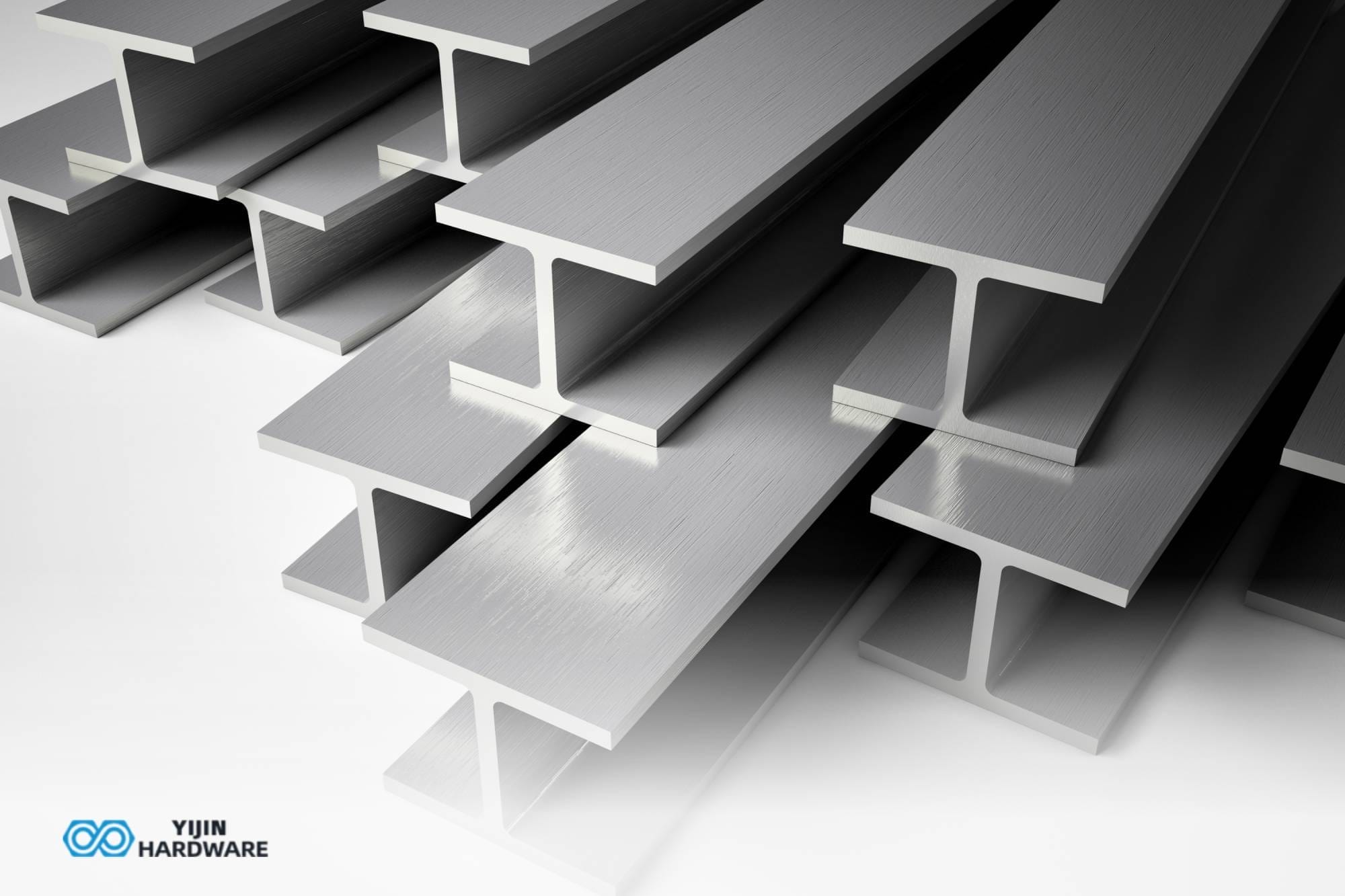
Steel is an alloy that is primarily composed of iron and carbon, and it’s the world’s most widely used material. Steel is a versatile material — essential in construction, manufacturing, and various industries due to its unique properties and strength.
Knowing what steel is, and its characteristics, can help you to decide on the best material for your project’s specific applications. At Yijin Hardware, we are experienced in providing high-quality steel products through sophisticated Mecanizado CNC China, tailored to meet diverse needs.
Principales conclusiones
- Steel is an alloy made primarily from iron and carbon.
- The properties of steel vary depending on its composition and processing methods.
- Different types of steel include carbon steel, stainless steel, and tool steel.
- The production of steel involves various methods that impact its final properties.
- Steel is widely used across multiple industries due to its strength and durability.
What is Steel?
Steel is an alloy mainly composed of iron and carbon, with carbon content typically ranging from 0.02 to 2.14%. This combination results in a material that is stronger than pure iron, making it suitable for a wide range of applications.
| Aspecto | Detalles | Aplicaciones |
|---|---|---|
| Definición | Alloy of iron and carbon; stronger than pure iron | Construction, automotive, machinery |
| Propiedades clave | Strong, ductile, tough, corrosion-resistant | Structural and reliable uses |
| Physical Traits | Dense, high melting point, good thermal conductivity | Heat-resistant designs |
| Composición | Iron (≈98%), carbon (0.02 to 2%), alloying elements (e.g., chromium, nickel) | Versatile steel grades |
| Chemical Traits | Corrosion-resistant, reacts to coatings, heat-treatable | Environmental and thermal uses |
Steel is produced in various forms, including sheets, bars, and plates, depending on the intended use. The flexibility in its manufacturing process allows for the creation of different grades of steel that cater to specific requirements in industries such as construction, automoción, and machinery.
The Properties of Steel
Steel is strong, ductile, tough, and corrosion-resistant. Notably, the properties of steel are influenced by its composition and the method of steel production. Key properties include:
- Fuerza: So, what is steel’s yield strength? Steel is known for its high yield strength, which means steel can withstand significant loads without deforming.
- Ductilidad: This property enables steel to be stretched into wires or shaped into components without breaking.
- Toughness: Steel can absorb energy without fracturing, making it ideal for applications where impact resistance is crucial.
- Resistencia a la corrosión: Certain types of steel, particularly stainless steel, are designed to resist rust and corrosion, extending their lifespan in harsh environments.
These unique properties make steel a critical material in many applications where structural integrity and reliability are paramount.
The Physical Properties of Steel
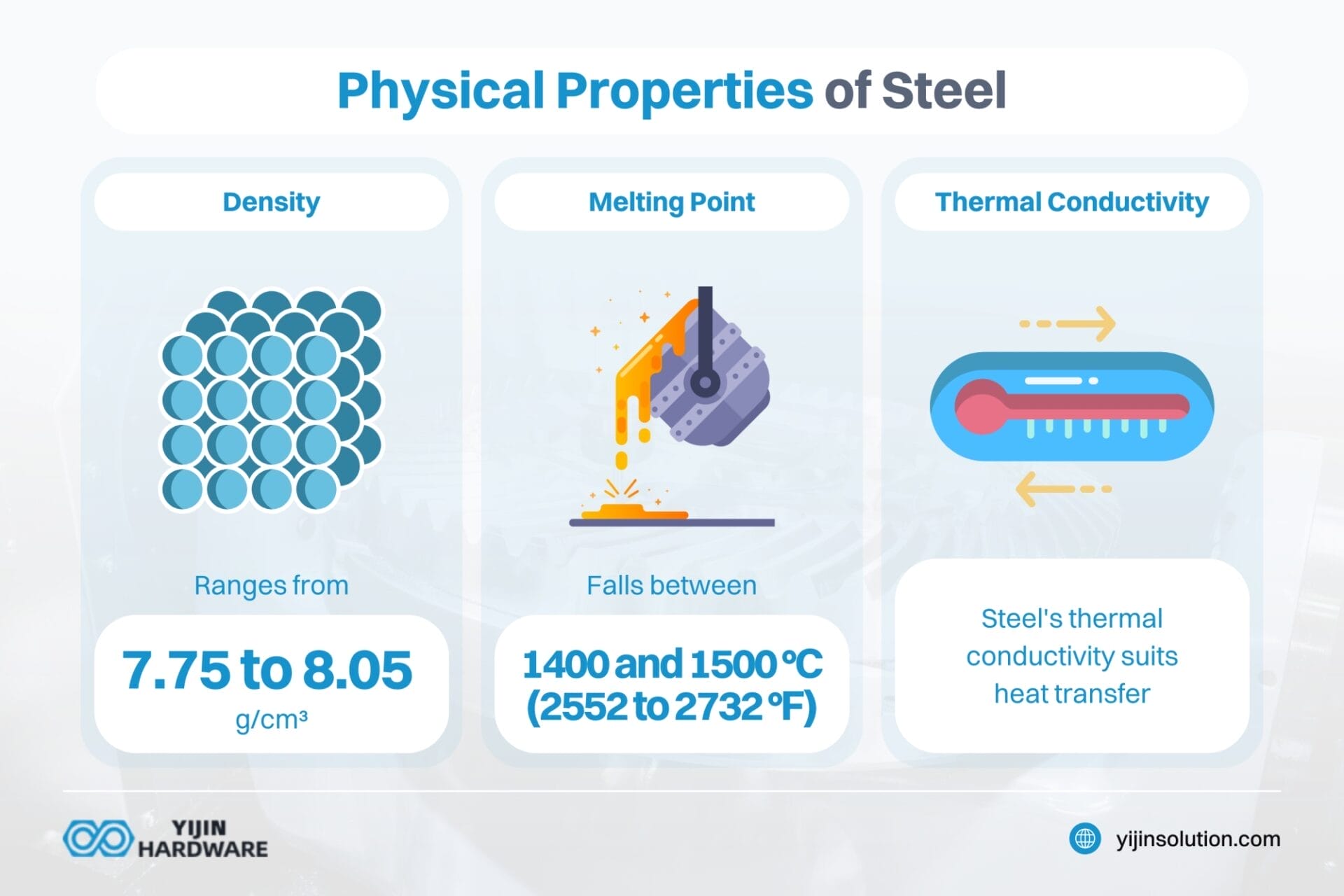
The physical properties of steel include characteristics such as density, melting point, and thermal conductivity.
- Densidad: The density of steel typically ranges from 7.75 to 8.05 g/cm³, depending on its composition.
- Punto de fusión: Steel has a melting point that generally falls between 1400 and 1500 °C (2552 to 2732 °F), allowing it to be easily molded during production.
- Conductividad térmica: Steel has good thermal conductivity, making it suitable for applications that require heat transfer.
These physical traits contribute to the versatility of steel in various industrial applications.
The Composition of Steel
Steel is primarily composed of iron and carbon; however, its composition can vary significantly depending on the desired properties. So, you might be wondering, “What is steel made from?”
- Iron Content: Iron constitutes about 98% of most steels.
- Carbon Content: Carbon levels typically range from 0.02% to just over 2%, affecting hardness and strength.
- Alloying Elements: Various alloying elements such as manganese, chromium, nickel, molybdenum, and vanadium may be added to enhance specific characteristics. For example:
- Manganeso improves hardenability
- Cromo enhances corrosion resistance
- Níquel increases toughness
This tailored composition for steel allows manufacturers to produce a wide range of steel grades suited for different applications.
The Chemical Properties of Steel
- Resistencia a la corrosión: Stainless steel contains chromium which forms a protective oxide layer that prevents rusting. Steel is highly corrosive resistant.
- Reactivity: Steel can react with environmental factors such as moisture and salt; thus, protective coatings are often applied.
- Heat Treatment Response: The chemical composition influences how well steel responds to heat treatment processes like quenching or tempering.
The chemical properties of steel play a crucial role in determining its performance under various conditions. Understanding these chemical properties helps industries select the appropriate type of steel for their specific needs.
Different Types of Steel
| Steel Type | Características | Aplicaciones |
|---|---|---|
| Acero al carbono | Varies in carbon content; low, medium, high categories | Construction, tools, machinery |
| Acero inoxidable | Corrosion-resistant with chromium content | Kitchenware, medical devices, cutlery |
| Acero aleado | Enhanced with alloying elements for strength | Aerospace, structural, machinery |
| Acero para herramientas | High hardness; water, oil, or high-speed variants | Tools, dies, machining |
| HSLA Steel | Lightweight with improved strength | Bridges, buildings, automotive parts |
| Electrical Steel | Magnetic properties and low conductivity | Transformers, electric motors |
| Weathering Steel | Forms a rust layer for corrosion protection | Outdoor structures, sculptures |
| Acero galvanizado | Zinc-coated for rust prevention | Roofing, fences, automotive parts |
| Maraging Steel | High strength and toughness after aging | Componentes aeroespaciales |
| Dual-Phase Steel | Mix of strength and formability | Automotive safety parts |
There are many types of steel, each designed to meet specific requirements based on their unique properties and applications. Understanding these types is essential for selecting the right steel for various projects. Here’s an expanded overview of the most common types of steel:
1. Carbon Steel
Carbon steel is the most widely used type of steel, accounting for approximately 90% of global steel production. It is primarily composed of iron and carbon, with the carbon content influencing its properties. Carbon steel can be categorized into three main groups based on carbon content:
- Low Carbon Steel (Mild Steel): Contains up to 0.3% carbon, making it ductile and malleable. It is easy to weld and shape, which makes it ideal for construction materials, automotive parts, and everyday items like pipes and food cans.
- Medium Carbon Steel: Has a carbon content ranging from 0.3 to 0.6%. This type strikes a balance between strength and ductility, making it suitable for applications such as railway tracks, crankshafts, and machinery components.
- High Carbon Steel: Contains between 0.6 to 2.1% carbon, resulting in increased hardness and wear resistance. However, this type is less ductile and more brittle, making it ideal for cutting tools, springs, and high-strength wires.
2. Stainless Steel
Acero inoxidable is a specialized material known for its exceptional corrosion resistance thanks to the addition of chromium (at least 10.5% by weight). This alloy is widely used in environments where rust and staining are concerns. Stainless steel can be further divided into several categories:
- Austenitic Stainless Steel: Contains high levels of nickel and chromium, providing excellent corrosion resistance and good formability. Common grades include 304 and 316, often used in kitchen equipment, productos sanitarios, and food processing.
- Ferritic Stainless Steel: Contains less nickel but more chromium than austenitic types. This group offers good corrosion resistance but is less ductile. It is commonly used in automotive applications and architectural structures.
- Martensitic Stainless Steel: Known for its hardness and ability to be heat-treated. It typically contains higher carbon levels and is used in cutlery, surgical instruments, and certain industrial applications.
3. Alloy Steel
Alloy steel includes various alloying elements beyond carbon that enhance specific properties such as strength, toughness, and wear resistance. The composition can vary widely depending on the intended application:
- Low-Alloy Steel: Contains less than 8% alloying elements like manganese or chromium. It offers improved mechanical properties compared to carbon steel and is often used in structural applications.
- High-Alloy Steel: Contains more than 8% alloying elements, providing superior corrosion resistance and strength. These steels are used in specialized applications such as aeroespacial components and high-stress machinery.
4. Tool Steel
Tool steel is engineered specifically for manufacturing tools and dies due to its hardness and resistance to deformation at high temperatures. It typically contains higher levels of carbon along with other alloying elements:
- Water-Hardening Tool Steel: Hardens when cooled in water; suitable for simple tools.
- Oil-Hardening Tool Steel: Requires oil for cooling; offers good toughness.
- High-Speed Tool Steel: Designed for high-speed machining; retains hardness at elevated temperatures.
5. High-Strength Low-Alloy (HSLA) Steel
HSLA steel is designed to provide better mechanical properties than conventional carbon steels while being lighter in weight. This particular type of steel includes small amounts of alloying elements such as vanadium or titanium. It is commonly used in structural applications like bridges, buildings, and automotive parts due to its strength-to-weight ratio.
6. Electrical Steel
Electrical steel is designed specifically for electrical applications where magnetic properties are crucial. Moreover, silicon steel is often used in transformers and electric motors due to its low electrical conductivity and reduced magnetic losses.
7. Weathering Steel
Weathering steel is a steel type that develops a protective rust layer when exposed to the elements, which prevents further corrosion. This steel is ideal for outdoor structures such as bridges or sculptures, where aesthetics will also be a consideration due to its unique patina.
8. Galvanized Steel
Galvanized steel has a protective zinc coating that prevents rusting. It is commonly found in roofing materials, fences, and automotive parts where moisture exposure is frequent.
9. Maraging Steel
Maraging steel is a high-strength alloy that undergoes a special aging process to enhance its properties. This steel is used in aerospace components due to its excellent toughness and fatigue resistance.
10. Dual-Phase Steel
Dual-phase steel consists of a mix of ferrite and martensite microstructures. This steel offers high strength combined with good formability — the final steel product is often used in automotive safety components.
At the end of the day, steel is a very flexible material to use in your projects!
Yijin Hardware: Metal CNC Machining Services
At Yijin Hardware, we provide precision metal CNC machining services tailored to your needs. Our expertise in working with various types of steel ensures that you receive high-quality products designed for durability and performance. Whether you require structural components or specialized tool steels, we have the capabilities to deliver exceptional results.
Póngase en contacto con nosotros today to learn more about how we can assist you with your metal fabrication needs.
FAQs on What is Steel? | Definition, Properties, and Composition Explained
Is steel basically iron?
Yes, steel is iron alloyed with carbon and sometimes other elements, making it stronger and more versatile. The transformation through iron and steel production is what allows steel to withstand higher stresses compared to pure iron.
Is steel technically a metal?
Steel is technically an alloy of iron, not a pure metal, as it combines iron with carbon and other elements. The steel production process creates modern steel variants like high-carbon steel and structural steel, which are kinds of steel used across industries for their durability and functionality. Iron and steel are both great metals to use in your projects.
Volver arriba: Qué es el acero | Definición, propiedades y composición explicadas






 ES
ES  EN
EN  RU
RU  DE
DE  FR
FR