



Bevel and chamfer are used for edge treatments. Edge treatments play a decisive role in customizing the sharp corners of CNC machined parts. Precisely, a bevel is a slanted edge like a wedge shape. Subsequently, a chamfer is similar to a flattened surface. It is produced by cutting away material at a 45-degree angle.
Bevel et chamfer are important in CNC machining, woodworking, 3D printing,and metal working. They prevent splinters and improve the object’s appearance. They significantly reduce sharp edges which leads to better safety.
In this article, you will get a hand on experience on the following topics:
- What is bevel and chamfer?
- Geometric Differences
- Applications of Bevel and Chamfer
- Choosing Between Chamfer and Bevel
- Cost Analysis
What is Bevel?
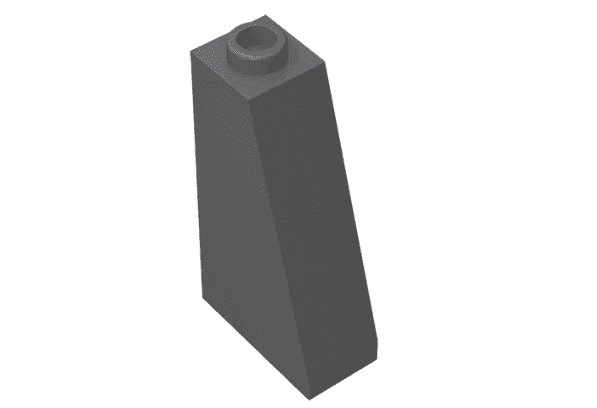
Beveled definition. It is a slanted edge. It is also known as bevelled edge. Unlike chamfer, a bevel is easy to cut at different angles. However, chamfer can be cut at 45 degrees only. In the production of parts, milling is one of the main methods of machining parts bevels.
Bevels produce sloped edges. These edges significantly accelerate transition. Multi-cut angles help in cutting on different sides. The common applications of bevels are picture frames and structural steel.
There are three types of bevels in machining:
- Simple Bevel
- Double Bevel
- Compound Bevel
What is Chamfer?
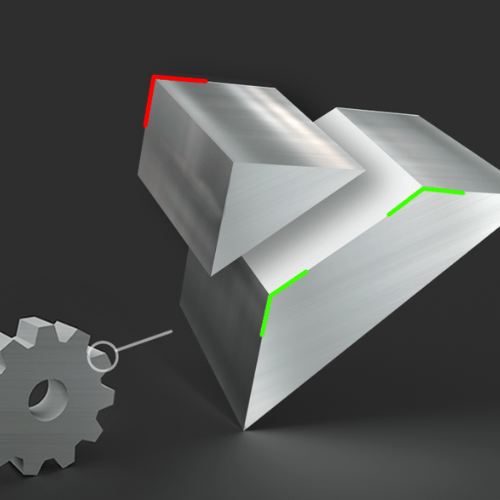
Chamfer is also a slanted edge. Chamfering is the process of cutting the edges and corners of the metal part to smooth a sharp corner. Chamfers are usually made at a 45-degree angle.
Chamfering removes the burrs on the machined parts due to machining. It also helps to assemble the machined parts. Assembly of mechanical parts is easy with chamfering. Generally making chamfers at the ends of the machined parts. Chamfers include outer and inner chamfer.
Inner Chamfer
An inner chamfer is a concave cut. It is located on the inside edge of the parts. It makes angled transitions from interior to its exterior edge.
Outer Chamfer
An outer chamfer is a convex cut. You can find it on the exterior edge of the metal parts. It generates an angled transition from the part’s outer surface to interior.
Combining inner and outer chamfers complete the edge treatment. They assist in making a flawless transition between inner and outer custom part’s surfaces.
Like beveled edges, chamfer also has three types:
- Single chamfer
- Double chamfer
- Tripple chamfer
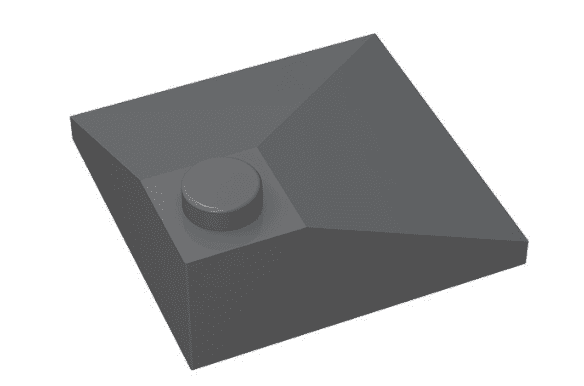
The Functions of Chamfering Are As Follows:
- Remove sharp edges(for safety)
- Guide(Conducive to assembly)
- Remove burrs and make the machined parts beautiful.
- Bearing steel must be chamfered during rough machining before heat treatment.
When the material is subjected to such heat treatment, it plays a very important role in:
- The release of stress
- Redistribution of the internal structure
- The avoidance of cracks
- And the reduction of deformation.
Generally, the function of chamfering is to remove burrs and make them beautiful. However, for the chamfering specified in the drawing, is generally a requirement of the installation process. For example, the installation guide of the bearing, and some arc chamfers (or arc transitions) can also reduce stress concentration and strengthen the shaft.
The Importance of Chamfers in Agricultural Machined Parts
Chamfers significantly handle the stress on agricultural machinery parts. You can easily control cracks on the custom machined parts. SImilarly, assembly of the CNC parts is easy. You can insert the parts at one place without damaging anything.
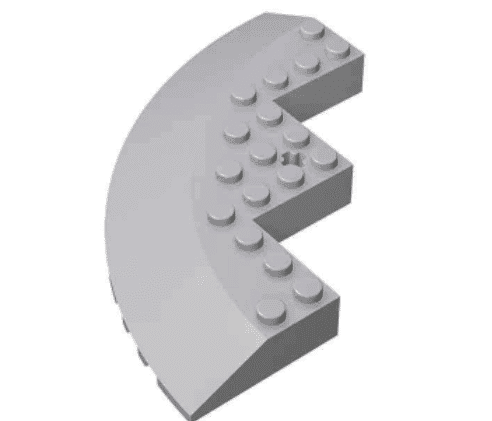
However, it is crucial to maintain the good health of the chamfers with time. Routine maintenance is important because you can face difficulty in the following areas:
- Difficulty in assembly
- Increased stress concentration
- Reduced performance
Bevel vs Chamfer: Geometric Comparison
A. Chamfer vs. Bevel Edge Geometry
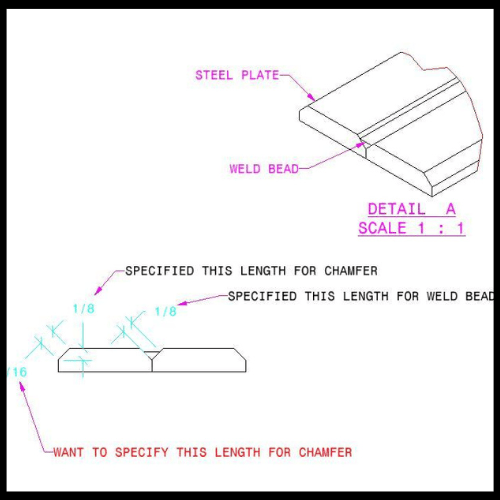
- Chamfer: Chamfer is a flat, slightly angled edge on a piece of wood. It’s similar to cutting off a small corner at a given angle. Usually, it is 45 degrees.
- Bevel: A bevel is an angled edge. However, it’s more flexible. The angle can vary along the edge following the design of the metal piece.
B. Mechanical Properties and Stress Distribution
- Chanfreins : Chamfers spread out stress evenly. This feature helps in controlling parts from breaking. Their main advantage is to absorb shocks during working.
- Bevels: Bevels are often incorporated in welding. Because they create a larger area where you can combine the two pieces of metal. This makes the joint stronger and improves the machined part’s life.
Comparative Table of Bevel And Chamfer
| Fonctionnalité | Chanfrein | Bevel |
| Angle Cut | Typically 45° | Variable angles (e.g., 30°, 45°, 60°) |
| Tolérance d'usinage | Tight tolerance (±0.005 mm or less) | Moderate tolerance (±0.010 mm or more) |
| Finition de surface | Smooth finish (e.g., Ra 0.4 µm) | Varies according to application (e.g., Ra 0.8 µm for welding) |
| Métaux | e.g., steel, aluminum, brass) | Suitable for most metals |
Example: Helical Grooving on Slip Rings
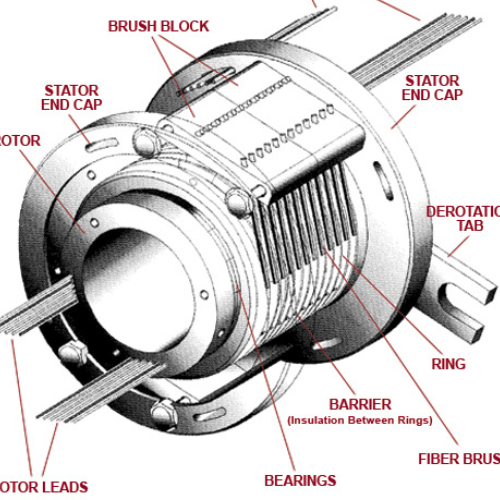
In helical grooving on slip rings, a chamfer is applied on the edges of the helical grooves. This can effectively control brush wear. Similarly, the operation remains smooth.
Specifications:
- Angle: 45° chamfer
- Tolerance: Tight tolerance (±0.005 mm)
- Finition de la surface : Smooth finish (Ra 0.4 µm)
- Métal : Copper or brass
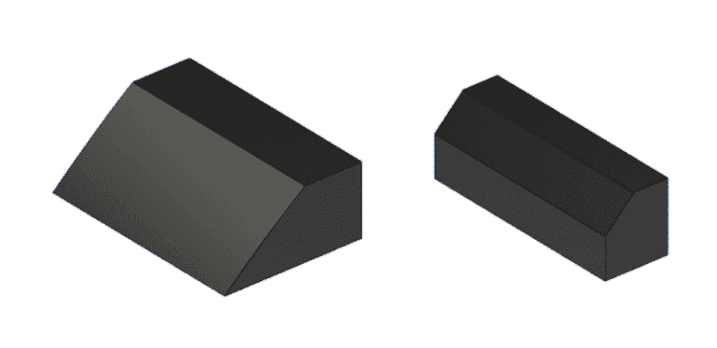
Visual Comparisons of Chamfer Vs Bevel
A. Diagrams & Visual Aids
Diagram 1: Chamfer
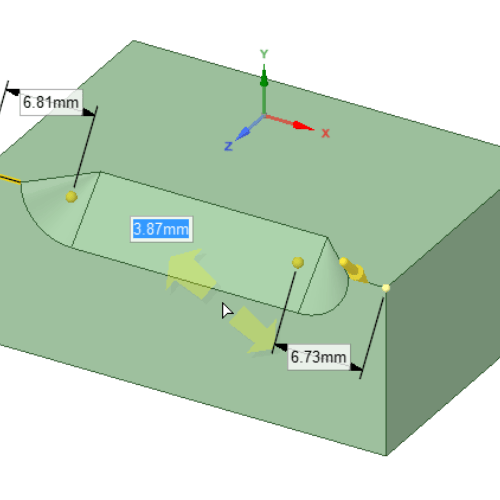
chamfered edge on a rectangular object
- Caractéristiques :
- Consistent angle
- Flat surface
- Often used for safety and functional purposes
Diagram 2: Bevel
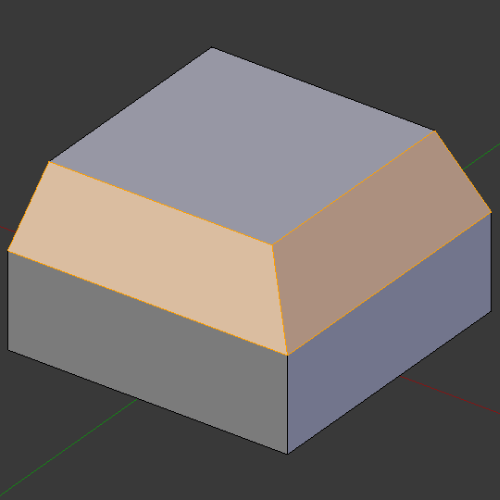
Beveled edge on a rectangular object
- Caractéristiques :
- Variable angle
- Sloped surface
- Used for welding or appealing appearance
Applications of Chamfer and Bevel
Chamfers and bevels give practical solutions or edge treatments in various industries. They make parts more functional and appealing. Let’s read more about in which industries they are used with real examples.
Chanfreins :
- Machining: Gear teeth, metal shafts, automotive engine parts
- Carpentry: Furniture edges (tables, chairs, cabinets), doors, window frames
- Dentistry: Crown margins, dental implants
Bevels:
- Steel for Structuring: I-beams, H-beams, and angle irons
- Decorative: Picture frames, glass tabletops, furniture (e.g., bevelled edges on cabinets or shelves)
- Fabrication : Metalworking (e.g., beveling sheet metal), woodworking
The Cost of Adding Bevel And Chamfer in A Part
It’s easy to see why bevels and chamfers are used to protect parts and their users.
However, these features are good for visually appealing than function. Simultaneously, if you add the extra bevel and chamfer, it will increase the production cost of the CNC machined parts.
Some practical questions to ask before including a bevel or chamfer in your design:
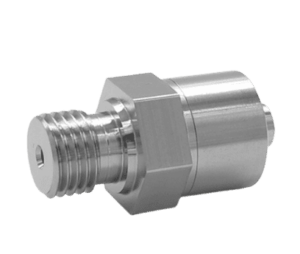
Does the part require bevels or chamfers to function?
Are bevels required for safety purposes?
How to check the tolerance of bevels or chamfers?
Are bevels and chamfers a cost-effective feature to add to a design?
Adding bevelled and chamfered edges takes extra time. It lowers the turnaround time.
Suppose, if you add 5% increase in time per part. It will significantly add up the cost. Just multiply it with the number of parts.
If the extraneous features don’t have any necessary function or purpose, reconsider adding bevels and chamfers.
The specified tolerances for bevels or chamfers should also undergo some scrutiny.
Machine shops need more time to manufacture and inspect tighter tolerances, which also increases the expense of part production.
5 Factors That Impact Chamfer and Bevel Cost
There are 5 different factors which can increase the cost of bevels and chamfers. There are
Parts Complexity
Chamfers and Bevels with complex angles and designs will be expensive to machine.
Matériaux
What type of material do you want to process? Harder material will take more time and increase tool wear. Ultimately, the cost will be high too.
Tolérance
If you have tight tolerance in machining CNC parts, it will lead to high precision machining for chamfers and bevels which is a costly process.
Méthode d'usinage
Milling, turning, and grinding are different machining methods. Each method comes with variable cost. Your selection of the machining process will affect the cost also.
Volume
Bulk orders will lead to reduced overall cost. It allows economies of scale. However, small-batch production incurs tooling and overhead cost which increase cost per unit.
Money-Saving Countersinks and Other Chamfering Features
You should carefully examine the aesthetic uses of chamfer. It will help you to avoid unnecessary manufacturing costs. However, there are some affordable chamfer applications.
Tips to Reduce Chamfering Cost
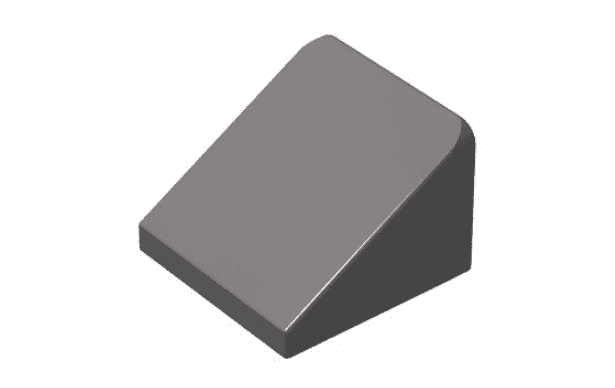
For example, countersinking threaded holes help avoid burrs during the tapping process. It can affect how the two mating surfaces hold together.
Countersinks also help the bolts align correctly at the outset and avoid costly cross-threading during assembly.
For some holes, such as aircraft rivets, accurate countersinks are so important that they require tight tolerances. It is to ensure a sufficient amount of mating material available for a secure connection.
Another cost-effective use of chamfering is on internal features of iron-cut parts. Design chamfers into a part feature rather than grinding them flat. It will reduce part manufacturing costs.
Chamfering will reduce the time it takes to cut right angles in a part. Similarly, it allows the use of cheaper tools. Internal chamfer also helps prevent dust and waste from accumulating in the corners of the machined part.
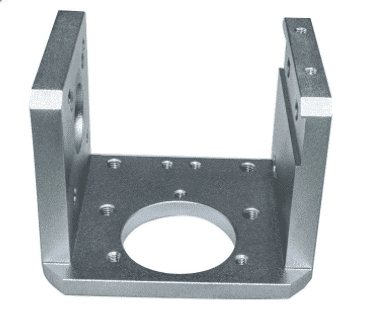
Balancing Design and Cost
Considering all of these issues before designing the bevel or chamfer into the machined part. It will provide advantages.
If you have a design which has some extra features, you can remove them. Removing extra bevels and chamfers will save time and money.
On the other hand, if the design does require bevels and chamfers, the impact on production time and expense can still be reduced.
One approach is to provide large tolerances, simplifying the manufacture of bevels and chamfers if exact dimensions are not critical.
You can also remove the chamfer feature from the CAD model. Next, add your note on the 2D drawing instructions to “remove all sharp edges.”
Choosing Between Chamfer and Bevel
Choosing between chamfer and bevel depends on the function of the part and practical application.
The very first question is about the design and functional features of chamfers and bevels. Chamfers are best in the following areas:
- Assemblée
- Reducing stress concentrations
- Removing sharp edges
The standard 45 degree angle makes CNC machining pretty easy and it can be machined with high precision.
Subsequently, bevels are good for large surface area with a custom angle. Although bevels have multiple angle features they need more complex machining. It is important where part appearance is important
Choosing Yijin Hardware for Your Machining Partner
Yijin Hardware Co. specializes in precision machining and provides OEM ODM services for various industries including aviation, electronics, furniture, military defense, health care, automotive, communication, racing cars, new energy, and infrastructure construction (such as high-speed trains and bridges).
Based on its exceptional standards, Yijin Hardware has got a lot of experience in providing cost-effective professional services for both private companies and governmental agencies for 20 Years, with a real focus on customer satisfaction.
Conclusion
After reading this article, now you have learnt the basic concepts of chamfer vs bevel. You can easily make a comparison by reading their basic functions and applications. Also, controlling cost is also possible but you need to consult a professional machining company. So it can suggest the best possible modification in part design.
FAQ
What is the difference between a chamfer and a bevel?
Chamfer is created by cutting the material at a 45-degree angle. Bevel is a sloped edge. It can be manufactured at different angles. Boh are used for different applications.
Are chamfers always 45 degrees?
Yes, chamfers are generally 45 degrees. However, it depends on the part and functions. Machinists also change the angle according to the design requirement.
What is a rounded bevel called?
A rounded bevel is fillet. It has a round edge in millimeters or inches. It is used to treat curved surfaces. Rounded bevel can significantly reduce stress concentration on a machined part.
What is the difference between a chamfer bit and a bevel bit?
A chamfer bit makes a flat angled edge. On the other hand, a bevel bit creates a sloped edge. Bevel edges can be processed at different angles.





 FR
FR  EN
EN  ES
ES  RU
RU  DE
DE