
Services de pliage des métaux
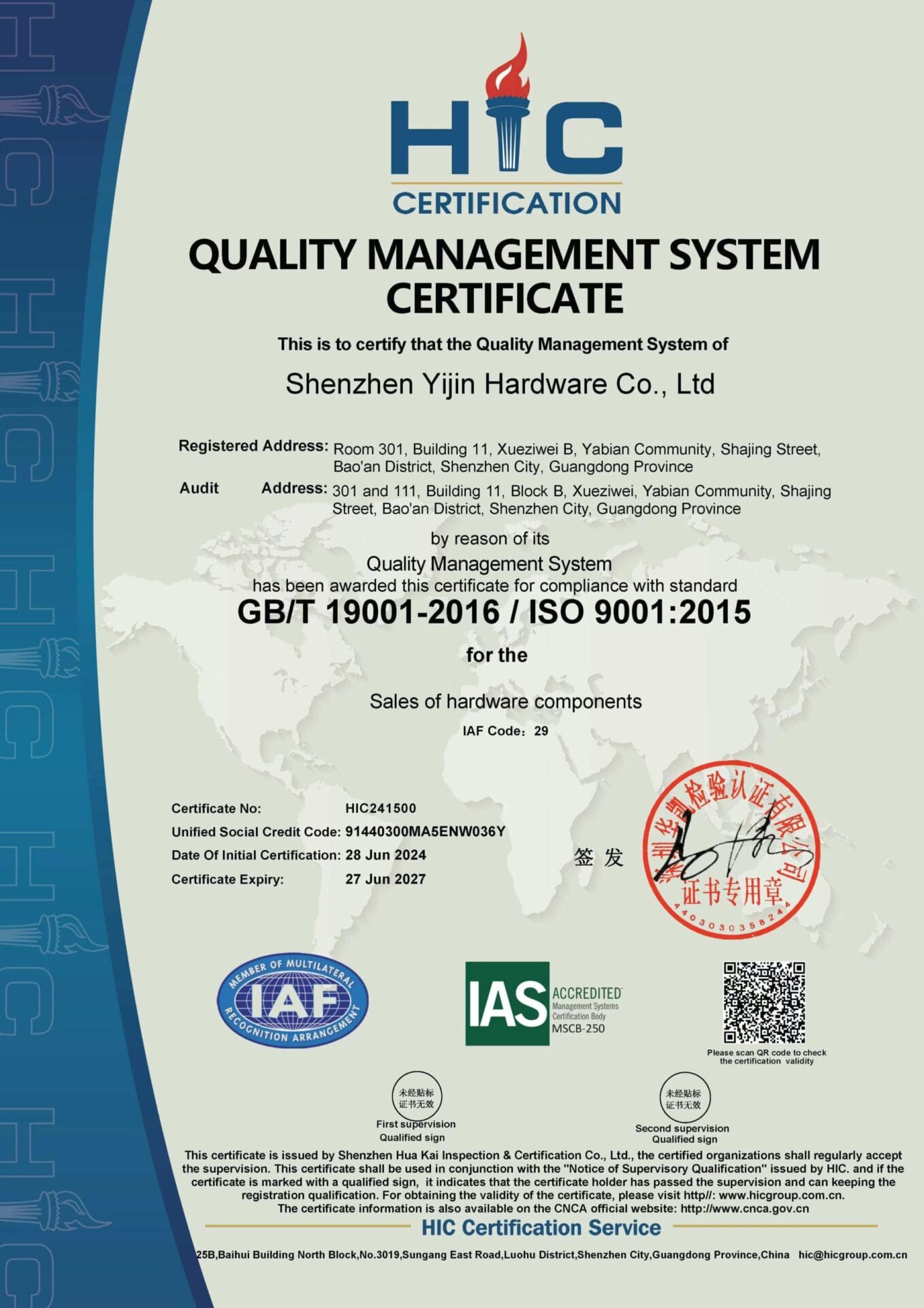
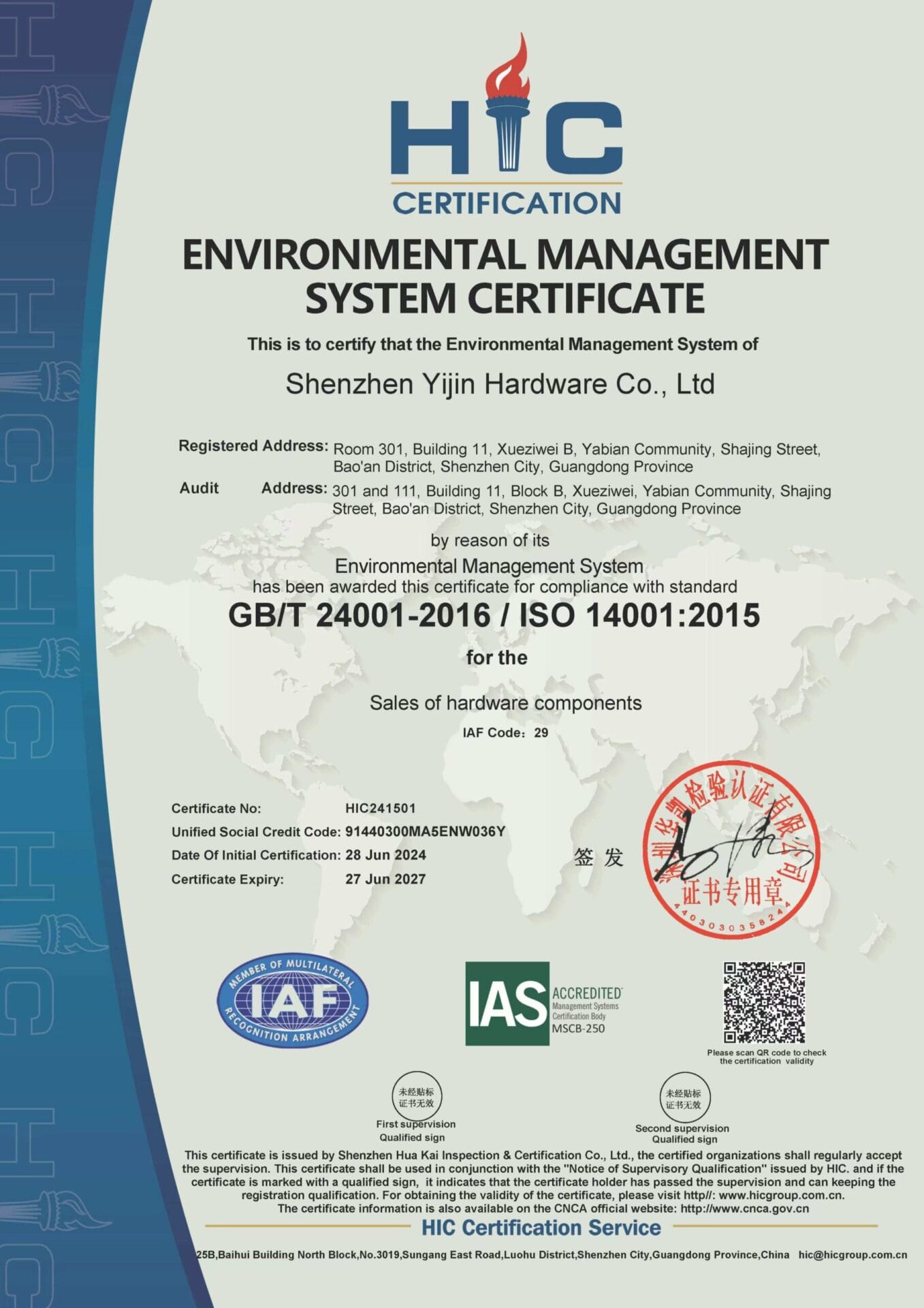
CNC press brake, tube, and roll bending for sheet metal, plate, and tubing in carbon steel, stainless, aluminum, copper, and brass. End-to-end bending plus laser cutting, welding, and finishing under one roof at our 25,000 m² facility in Shenzhen, operating under ISO 9001 and ISO 14001 quality systems.
Upload your DXF, DWG, or STEP file to receive a DFM review and instant quote within 24 hours.
- Bend angle tolerance ±0.5°; positional accuracy ±0.05 mm on flange lengths
- Sheet 0.5 to 6 mm; bend length up to 4,000 mm; press force up to 3,000 tons
- No minimum order. Prototype through serialized production


Custom Metal Bending Services with Yijin Solution
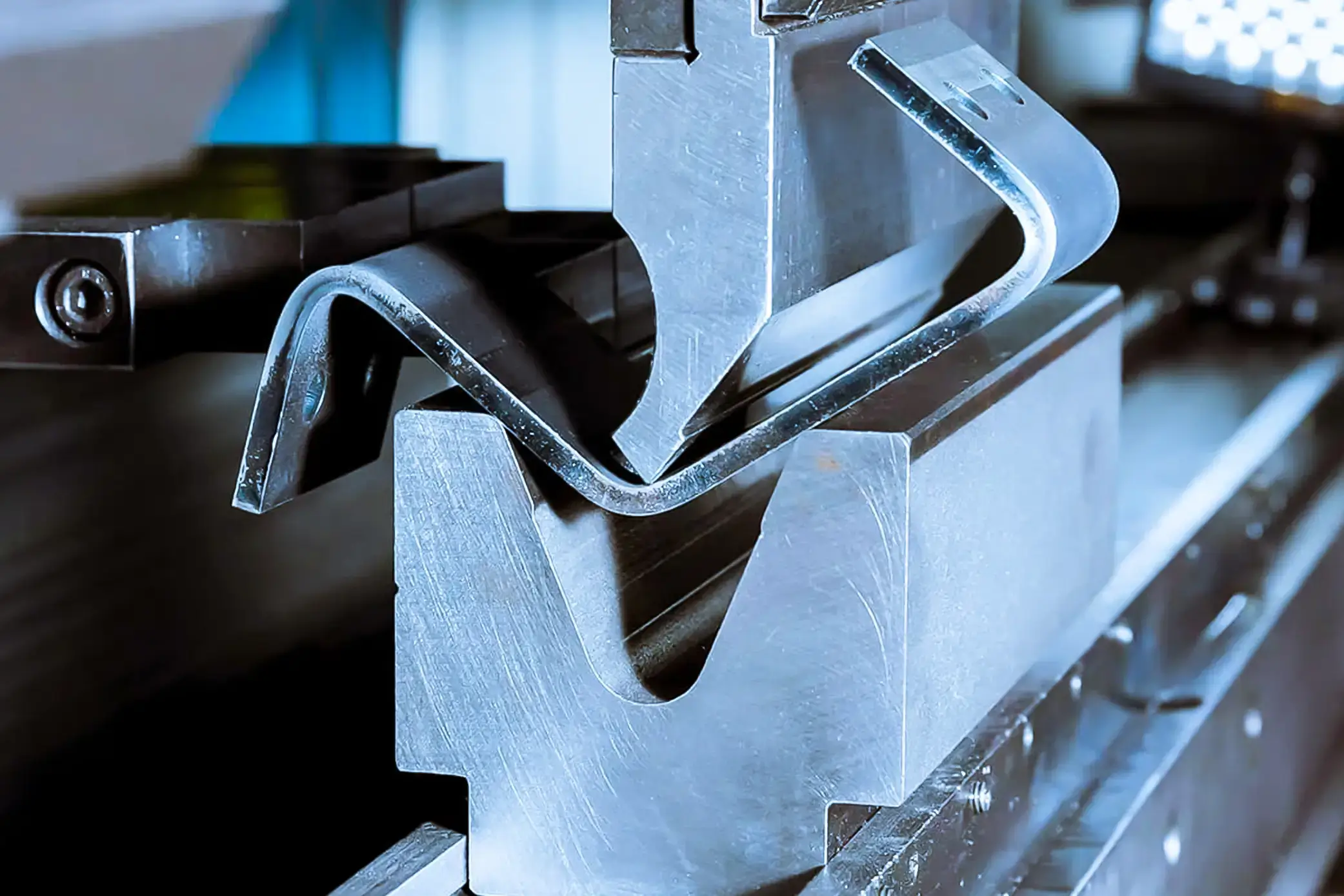
Metal bending shapes flat sheet, plate, and tube into angles, channels, flanges, enclosures, and tubular geometries by applying controlled force without removing material. CNC press brakes drive the upper punch into a die at programmed depth and angle, while roll bending and rotary draw bending shape long stock around forming rolls or mandrels. Springback compensation, grain direction, and bend radius all factor into the final part dimensions, which is why DFM review before production saves rework cost.
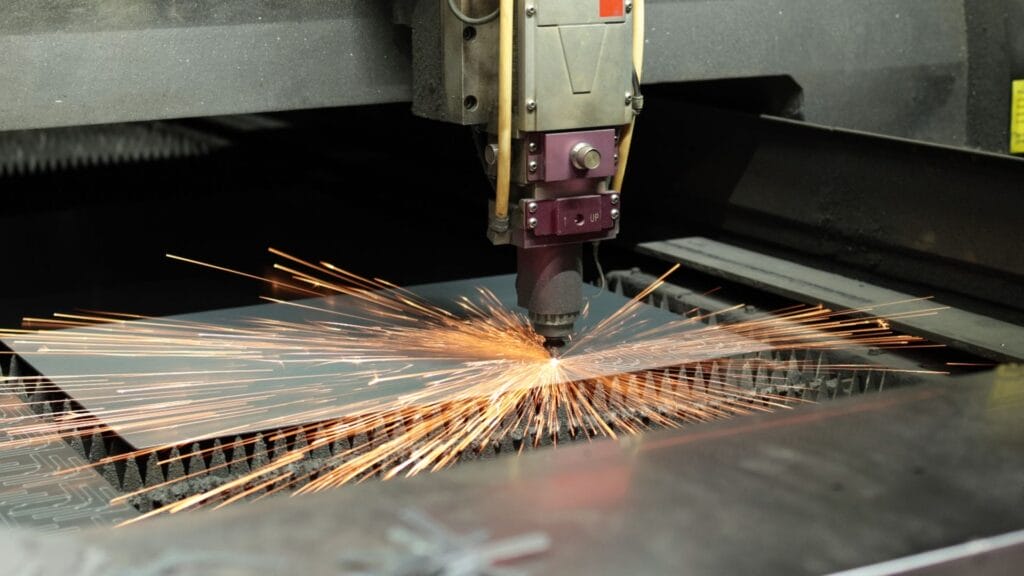
Metal bending sits inside our broader Fabrication de tôles service alongside laser cutting, plasma cutting, waterjet cutting, welding, and finishing. The cutting and bending lines run on the same traveler, so cut blanks move directly to the press brake without supplier handoffs. Use bending whenever a flat blank needs to become a structural channel, enclosure, bracket, or tubular profile.

Metal Bending Manufacturing Capabilities
| Fonctionnalité | Description |
|---|---|
| Bend Accuracy | ±0.5° standard; ±0.25° with adaptive press brakes; positional accuracy ±0.05 mm |
| Epaisseur du matériau | 0.5–6 mm sheet standard; up to 12 mm plate on heavy press brakes |
| Maximum Capacity | Bend length up to 4000 mm standard; up to 6000 mm with tandem press brakes |
| Rayon de courbure | Typically ≥1× material thickness; down to 0.5× with specialized tooling on soft alloys |
| Délai d'exécution | Prototypes: 3–7 days; production: 2–4 weeks |
Metal Bending Materials
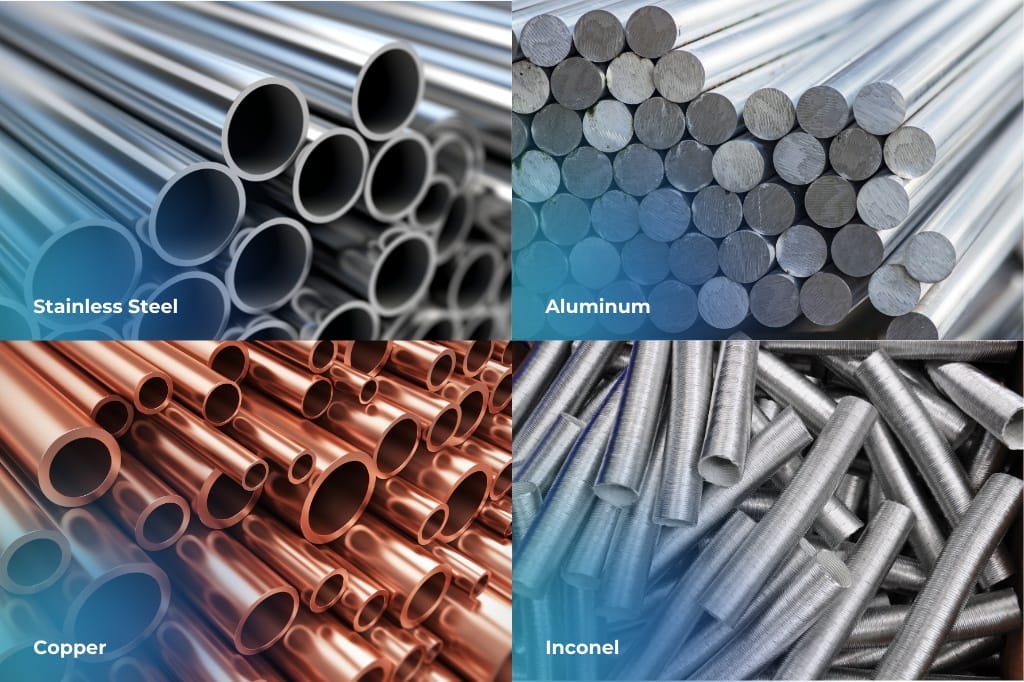
We bend sheet, plate, and tubing across carbon steel, stainless, aluminum, copper, and brass. Material grade and grain direction affect minimum bend radius, springback, and tooling selection, so material is reviewed alongside the drawing during DFM analysis.
Carbon and Mild Steel
| Type | Common Notes |
| Mild Steel Sheet | SPCC, SPHC, A36, S235JR |
| Structural and Pressure-Vessel | Q235, Q345, S355J2, A516 Gr 70 |
| Galvanized and Coated | SGCC, DX51D, electro-galvanized, pre-primed |
Acier inoxydable
| Type | Common Notes |
| Austénitique | 304, 304L, 316, 316L, 321 |
| Ferritic and Martensitic | 430, 410, 420 |
| Duplex | 2205 (limited bend radii due to work hardening) |
Aluminium
| Type | Common Notes |
| General Purpose | 1050, 1060, 1100, 3003 |
| Aluminium | C36000, C26000, C28000, C11000, C12200 |
| Aerospace Grade | 7075-T6, 2024-T3 (require warm forming on tight bends) |
Copper, Brass, and Specialty
| Type | Common Notes |
| Cuivre | C1100 (T2), C1020 (TU1) |
| Laiton | C26000 (H65), C2680 (H62), C2801 (H59) |
| Spécialité | Phosphor bronze C5191, beryllium copper C1720, Inconel 625 |

Metal Bending Surface Finishes
Bent parts inherit the surface finish of the incoming sheet. The finishes below add corrosion resistance, color, or cosmetic appearance to the bent assembly. Most are applied after cutting and bending, before final inspection and packaging.
Finition de la surface
SPECIFICATION

Mill Finish (As-Bent)
Parts ship with the original mill surface from the sheet supplier, with bend marks from the upper punch. Standard for hidden brackets, internal frames, and parts that will be coated downstream. No additional surface processing applied.

Deburring and Edge-Eased
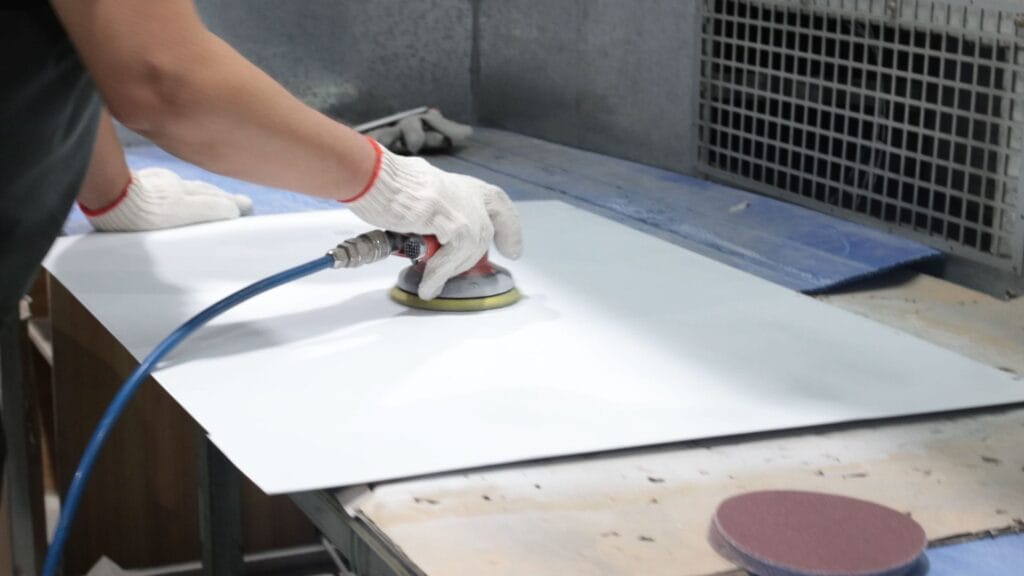
Mechanical deburring, disc grinding, or timesaver belt sanding removes laser dross and eases cut edges before bending. Required on any visible part or part handled by end users. Holds Ra 1.6 to 3.2 μm on cut edges.

Anodizing (Aluminum)

Revêtement par poudre
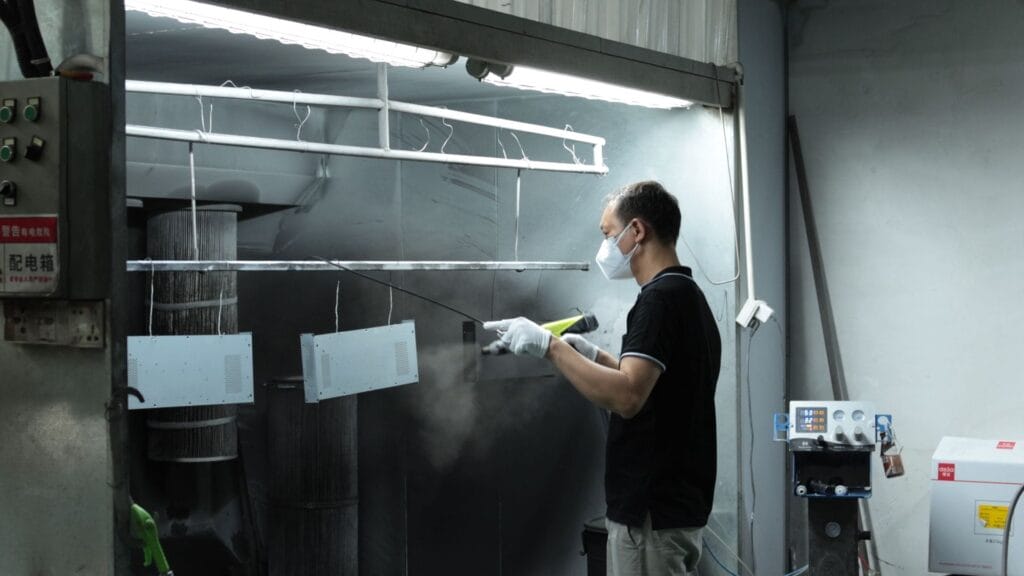
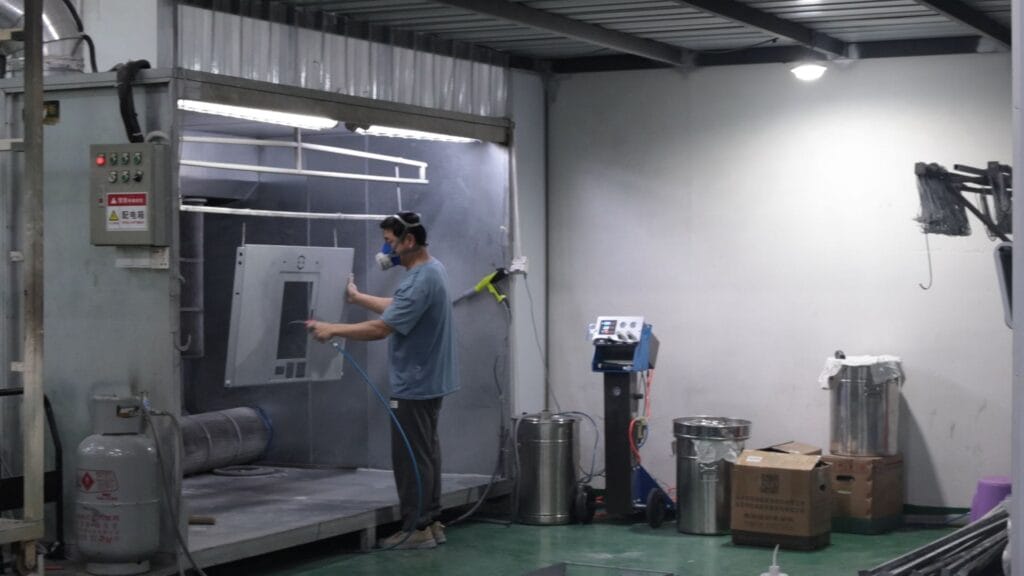
Electrostatic powder application baked at 180 to 200 °C for steel and aluminum bent assemblies. Coating thickness 60 to 120 μm. RAL and Pantone color matches available. Delivers 500 to 1,000 hours of salt spray resistance.

Hot-Dip Galvanizing and Plating
Hot-dip galvanizing per ASTM A123 for outdoor structural bent parts. Zinc coating thickness 50 to 100 μm. Cold-zinc, nickel, or chrome plating available for cosmetic and corrosion protection. Plating thickness 5 to 30 μm.

Brushing and Passivation
Types of Metal Bending We Offer
We run three bending configurations under one roof, each suited to a different stock form (sheet, tube, or long profile) and bend geometry. Below are the main variants and where each is the correct choice.

CNC Press Brake Bending
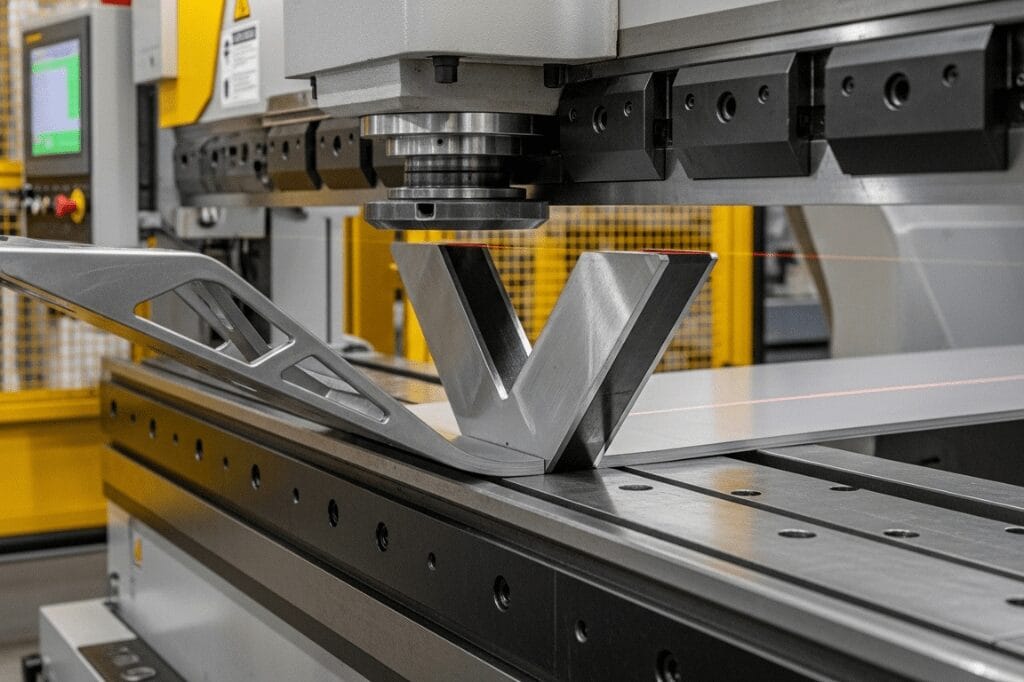
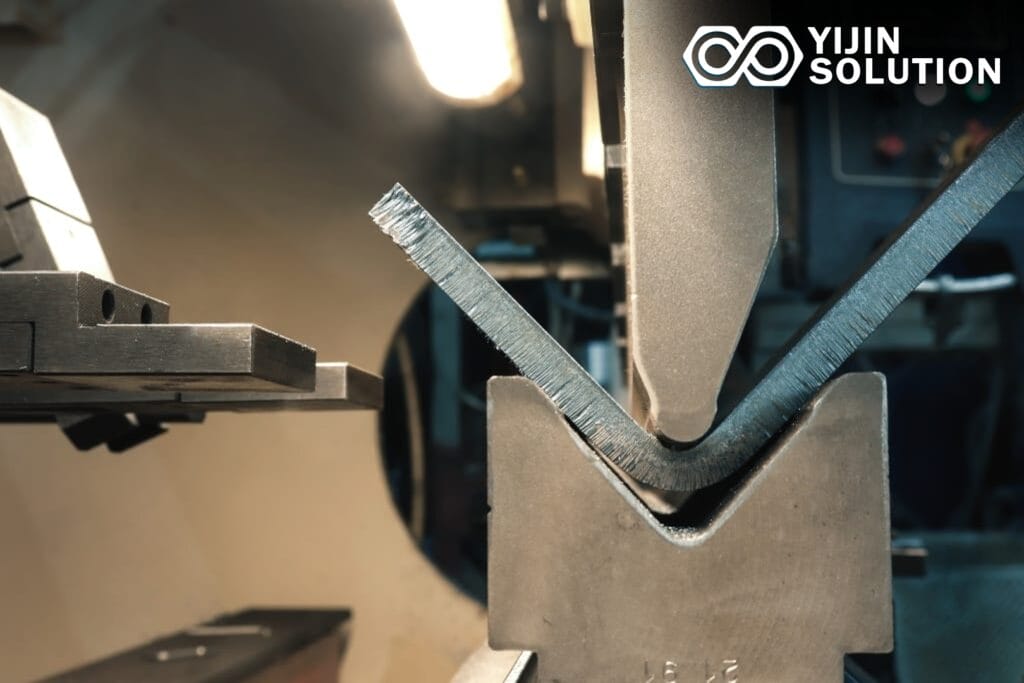
Punch-and-die bending for sheet and plate from 0.5 to 12 mm thick. Adaptive press brakes with laser angle measurement compensate for material variation in real time, holding bend angles to ±0.25°. Used for enclosures, brackets, channels, flanges, and any flat blank that needs angled features. The default process for 80 percent of bent parts.
Tube and Profile Bending
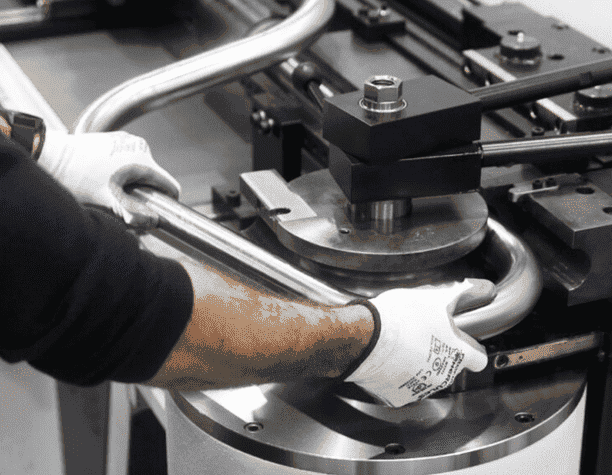
Rotary draw and mandrel bending for round, square, and rectangular tubing from 6 to 100 mm in cross-section. Internal mandrels prevent wall collapse on tight-radius bends, holding centerline radius down to 1× tube diameter on aluminum and 1.5× on steel. Used for handrails, exhaust runs, roll cages, and structural tubular frames.
Roll Bending and Stretch Forming
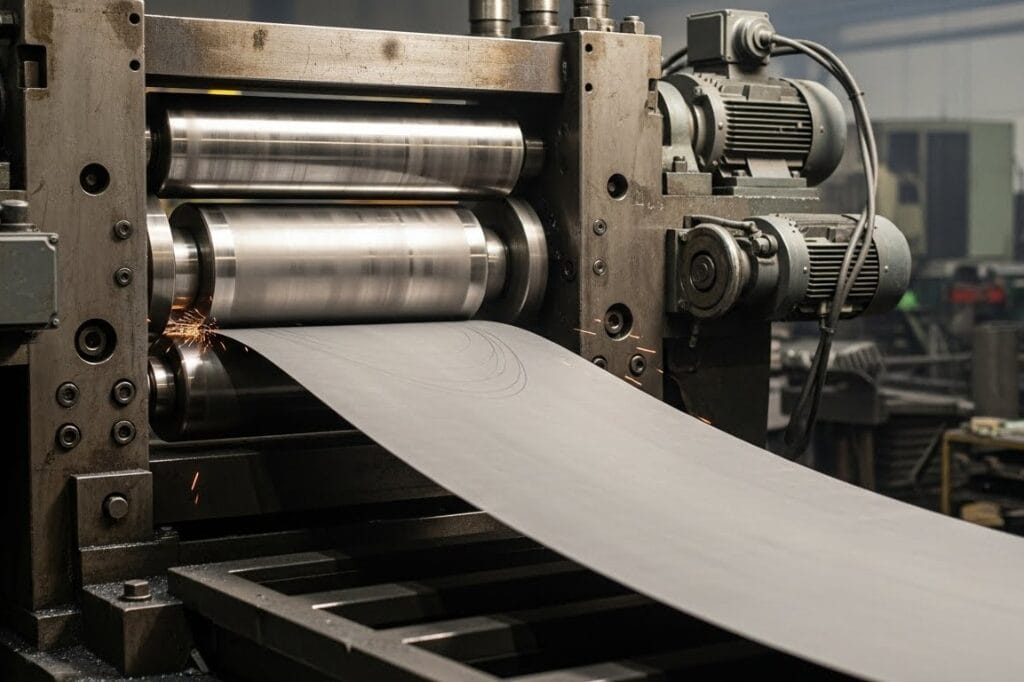
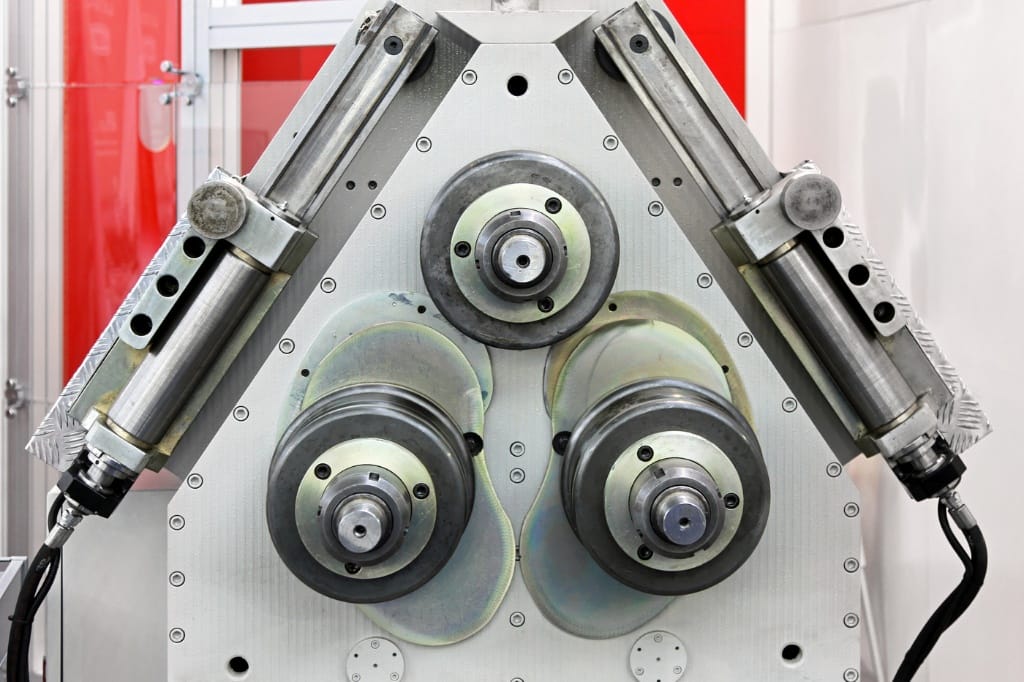
Three-roll and four-roll bending for cylinders, cones, and large-radius arcs in plate and bar stock from 1 to 25 mm thick. Stretch forming clamps a sheet at its edges and pulls it over a form die, producing compound curves used in aerospace skin panels and architectural cladding. The right choice for long-radius bends and double-curvature parts that press brakes cannot reach.
Applications of Metal Bending
Enclosures, brackets, channels, and structural reinforcements in carbon steel, stainless, and aluminum. Press brake bending pairs with laser cutting on the same traveler so cut blanks move directly to forming.
Duct flanges, register frames, equipment housings, damper bodies, and elbow assemblies in galvanized steel and aluminum. High-volume nesting on standard sheet sizes plus quick-change tooling keeps per-part cost competitive.
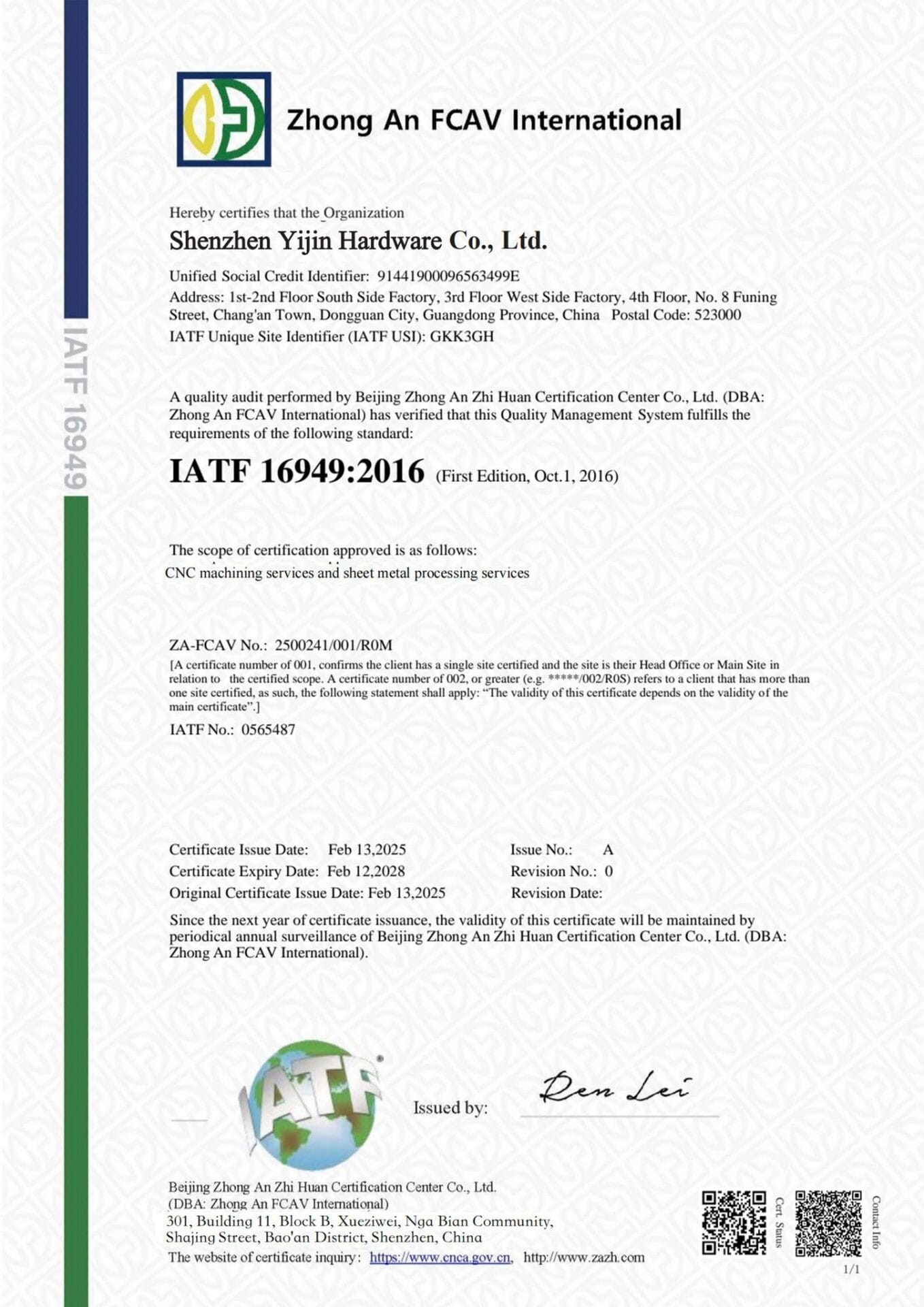
Chassis brackets, frame reinforcements, exhaust runs, and dashboard sub-assemblies in mild and high-strength steel. Truck, trailer, and agricultural vehicle parts produced under IATF-aligned quality systems with PPAP Level 3 documentation on request.
Curved structural members, handrails, balustrades, decorative panels, and roofing components in carbon steel, weathering steel, and stainless. Roll bending produces long-radius arcs for architectural facades and atriums.
Stretch-formed skin panels, fuselage frames, bulkhead reinforcements, and bracket assemblies in 2024-T3 and 7075-T6 aluminum. AS9100-aligned production with First Article Inspection and full material traceability.
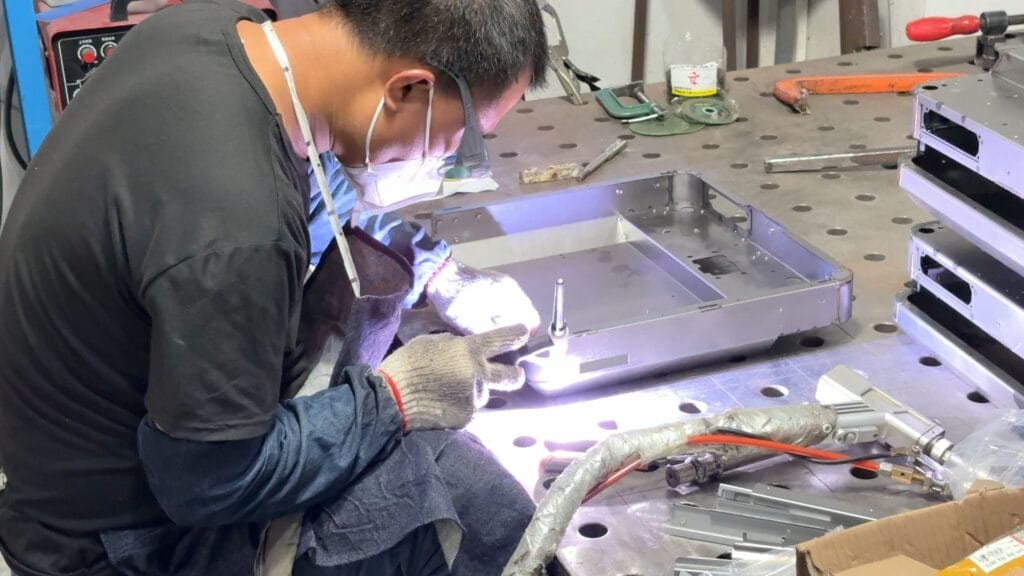
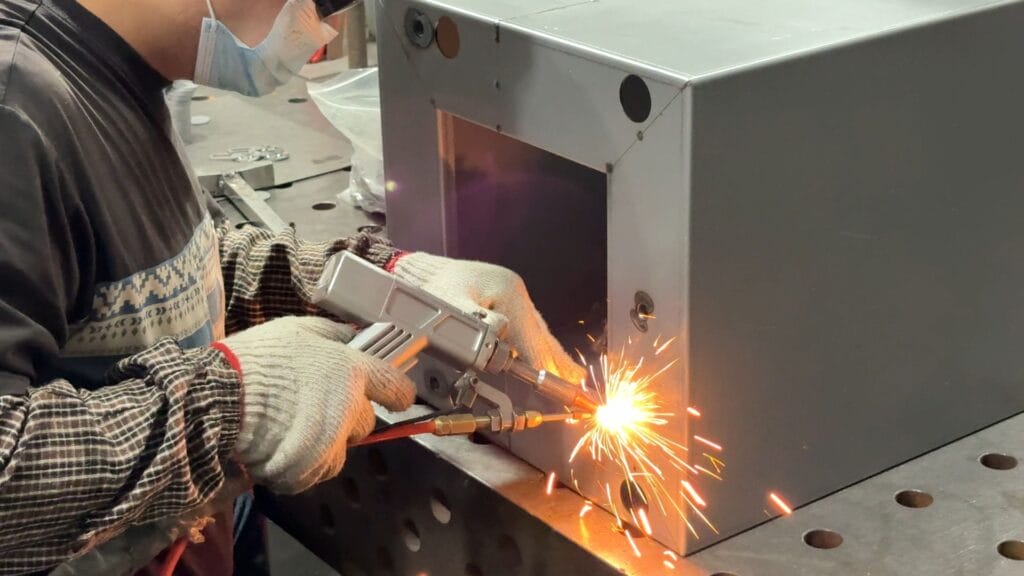
Frame weldments, machine guards, control cabinets, conveyor side panels, and chute liners in structural steel and abrasion-resistant plate. Bent parts feed directly into in-house TIG and MIG welding cells.
Solar mounting frames, wind turbine sub-assemblies, battery enclosures, and electrical cabinet bodies in galvanized and powder-coated steel. Corrosion-resistant finishes available in-house for outdoor service.
Chair frames, table bases, shelving brackets, lighting fixtures, and appliance trim in stainless, aluminum, and brass. Brushed and powder-coated finishes for visible consumer-facing parts.
Bulkhead panels, deck reinforcements, handrail systems, and hardware brackets in marine-grade 316L stainless and 5083 aluminum. Salt-spray-resistant finishes and AS aligned material traceability for vessel and offshore work.
Yijin Solution Metal Bending Factory
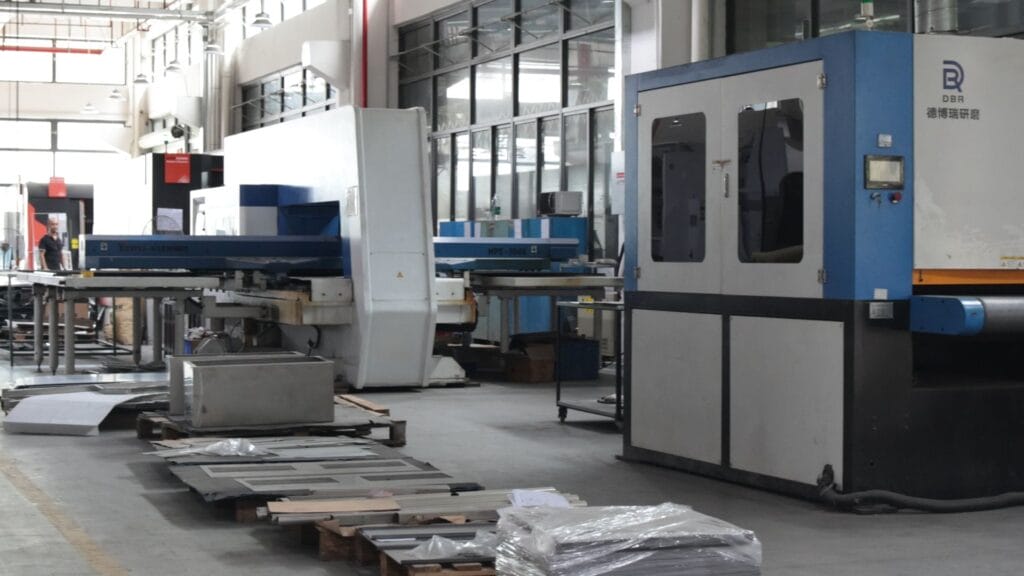
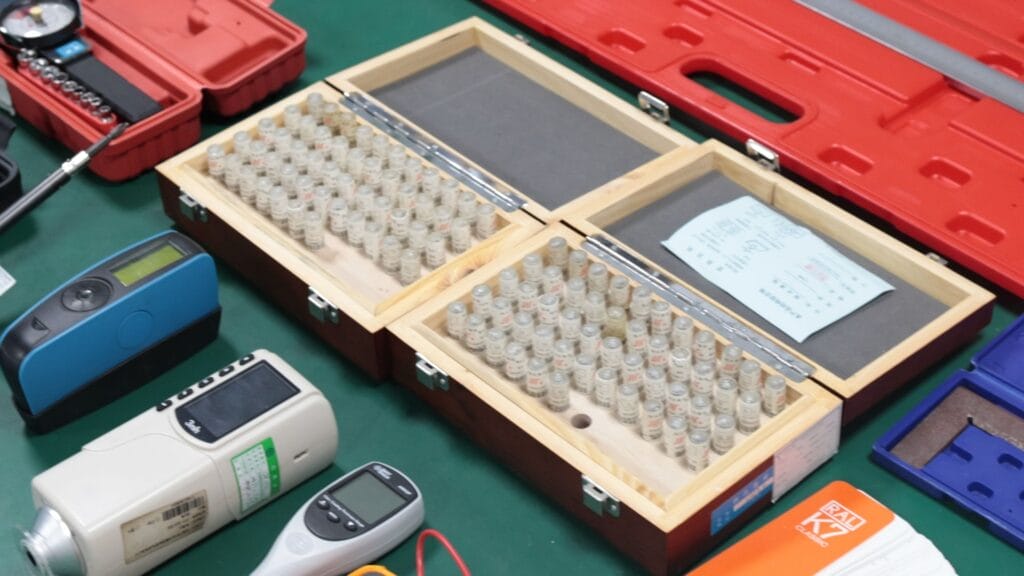
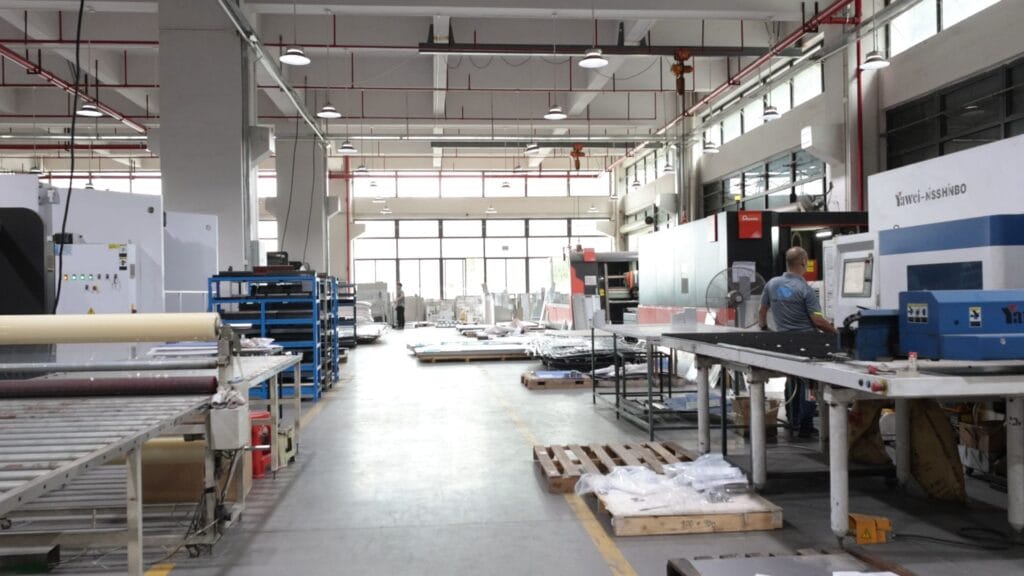
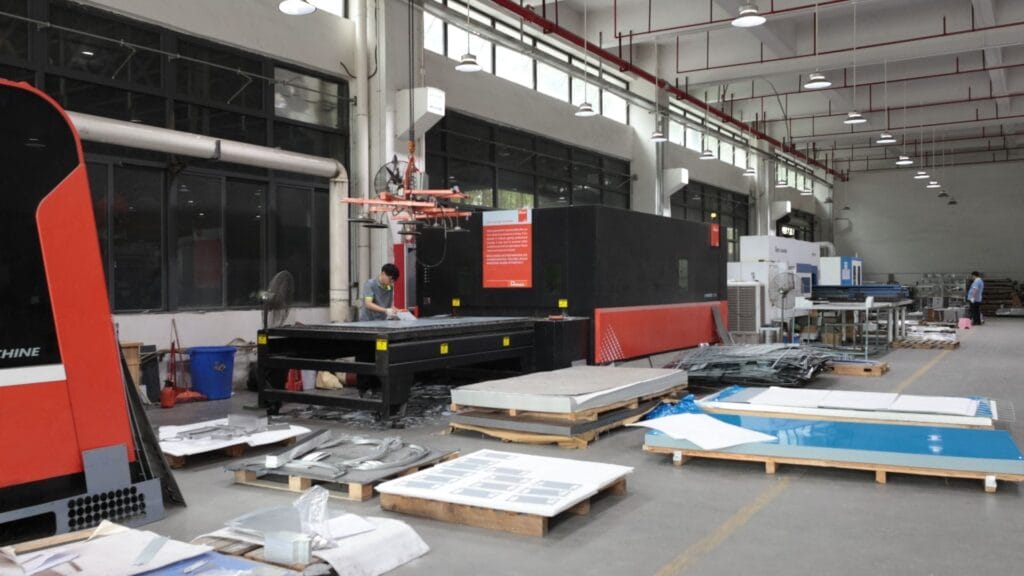
Yijin Solution operates a 25,000+ m² manufacturing facility in Shenzhen, China. The bending cell houses CNC press brakes from 100 to 3,000 ton capacity, rotary draw and mandrel tube benders, three-roll and four-roll plate rollers, plus 281 inspection instruments including Zeiss CMMs, profile projectors, and angle gauges. Sheet, plate, and tube stock move from cutting through bending, welding, finishing, and inspection without leaving the facility.
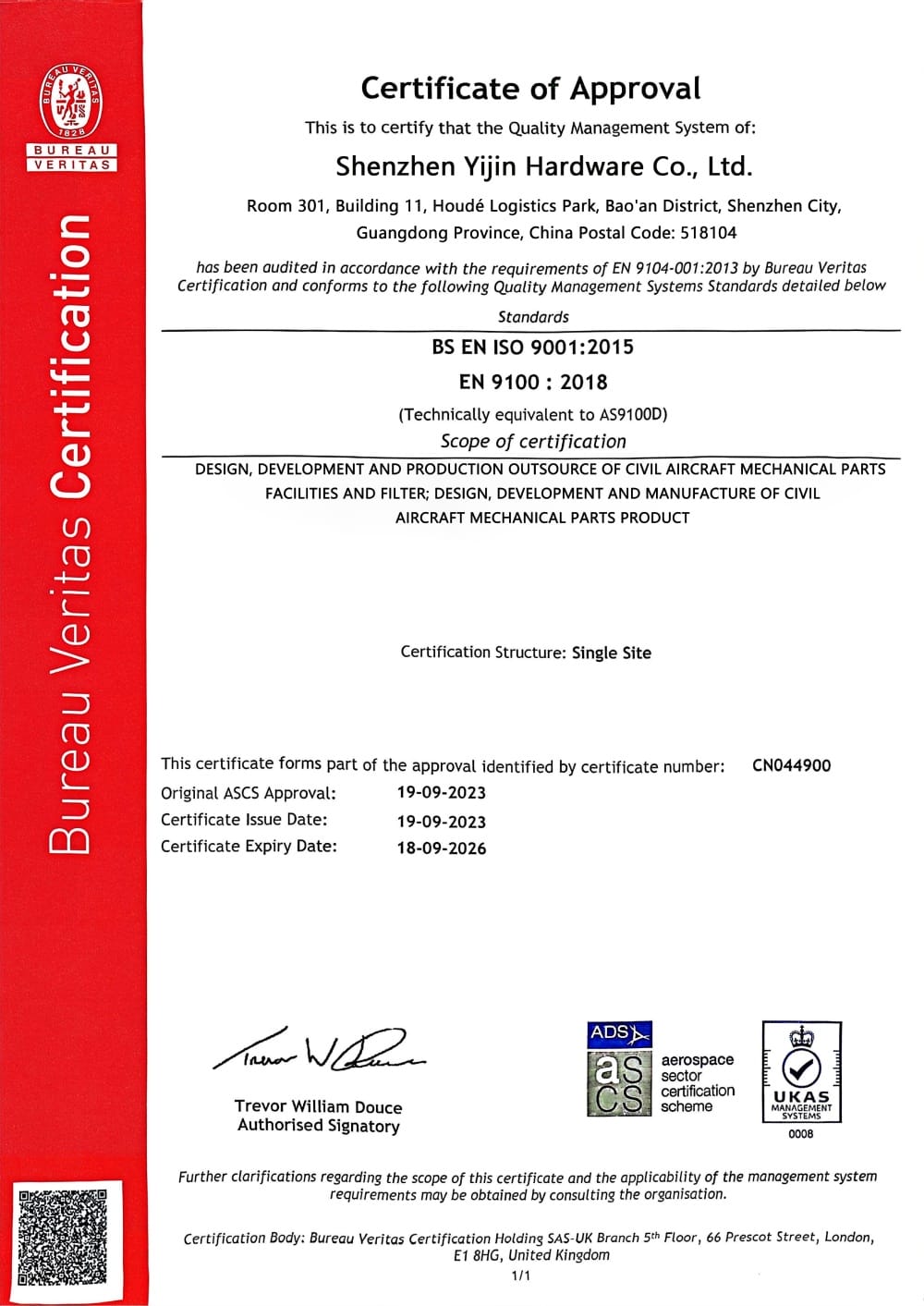
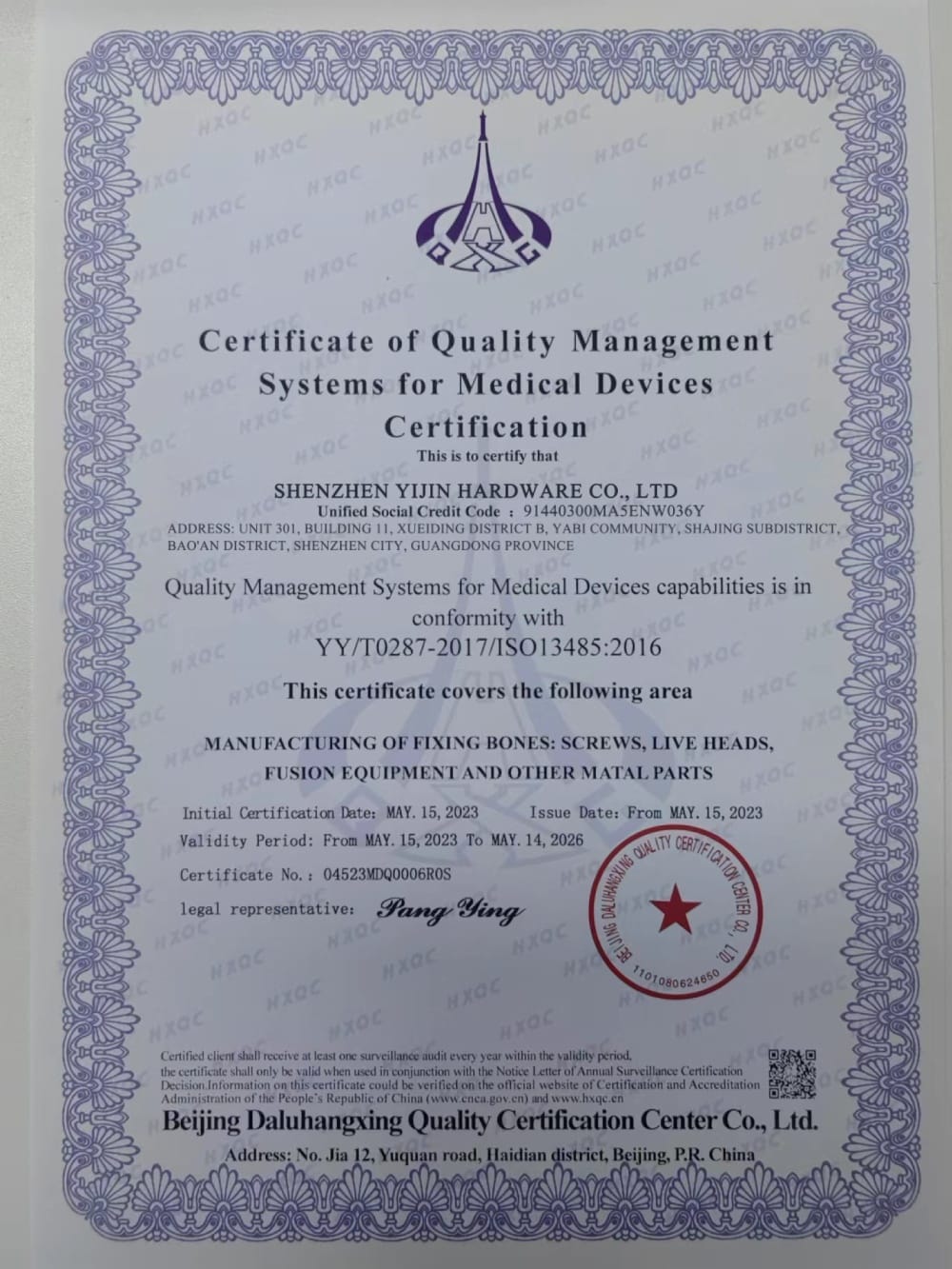
We serve clients across North America, Europe, and Asia-Pacific. Every order ships with full dimensional inspection reports, material certifications, and where applicable, mechanical test data and FAI documentation. For aerospace and medical programs, production runs under AS9100 and ISO 13485 quality management systems.


What's Metal Bending
Metal bending is a forming process that deforms sheet, plate, or tube into an angled, curved, or tubular geometry without removing material. A press brake applies controlled force through an upper punch and lower die to fold flat stock into V-bends, U-bends, channels, hems, and offsets. Tube benders use rotary draw motion and an internal mandrel to bend round and rectangular tubing without collapsing the wall. Roll bending passes plate or bar through a triangular roller arrangement to produce cylinders, cones, and long-radius arcs.
Three variables drive bending outcome: minimum bend radius, springback, and grain direction. Minimum bend radius depends on material strength and thickness; below it, the outer fiber cracks. Springback is the slight angular relaxation after the punch retracts, compensated for by overbending or adaptive control. Grain direction matters because bends parallel to the rolling grain are more prone to cracking than bends across the grain. DFM review catches all three before production begins.


How Metal Bending Works
Metal bending follows four steps from a digital design to a finished bent part.
- Design to program. Your DXF, DWG, or STEP file is converted to a flat pattern with bend allowances, then to a press brake program with tooling selection, bend sequence, and back-gauge positions.
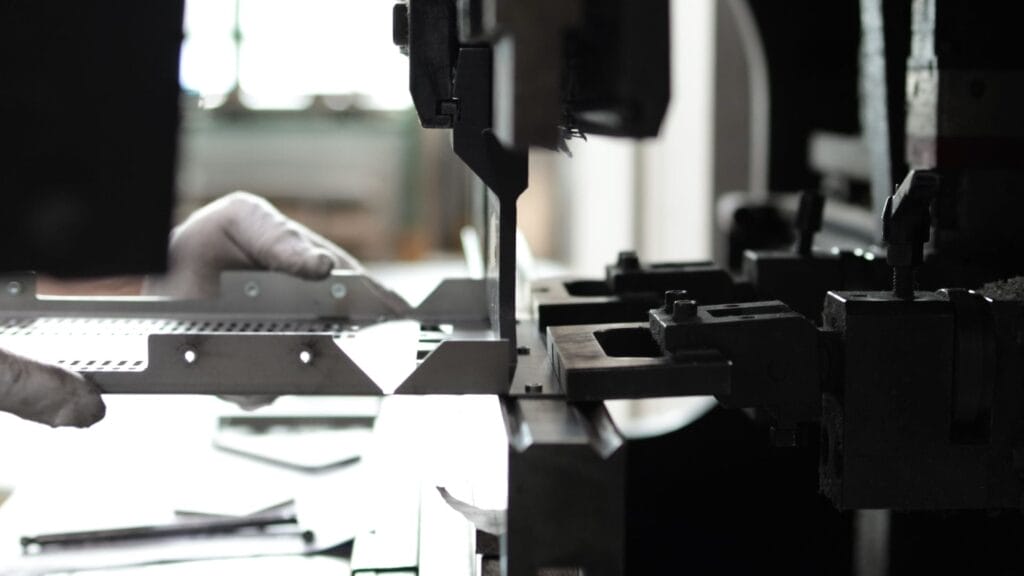
- Setup. The operator loads the upper punch and lower die into the press brake, sets the back gauge, runs a first-piece check, and verifies bend angle with a digital protractor or laser angle measurement.
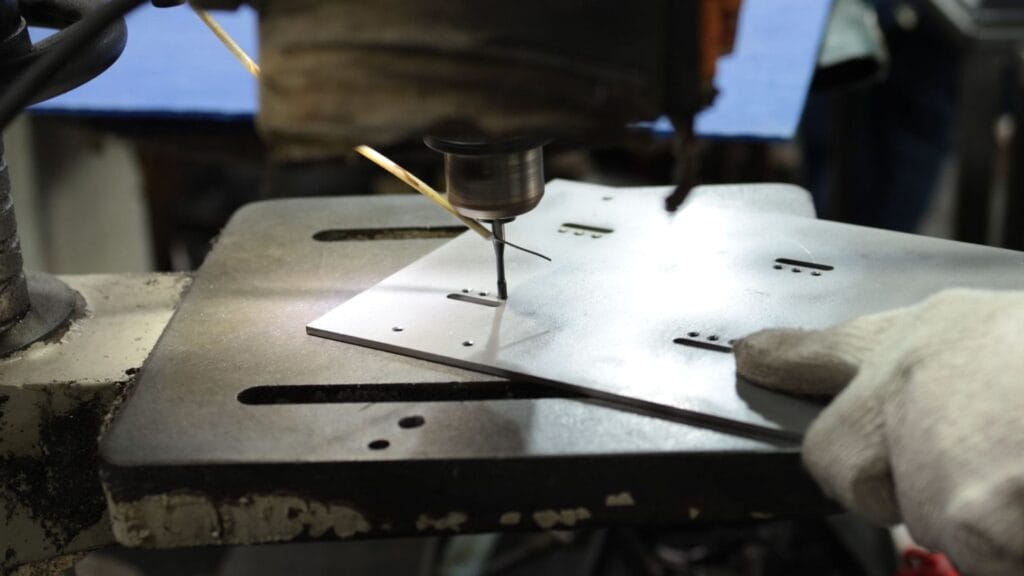
- Bending. The press brake drives the punch into the die at programmed depth, deforming the sheet to the target angle. Adaptive control measures angle in real time and adjusts depth to compensate for material variation. Tube and roll bending operations follow similar setup and first-article verification.
- Inspection and finish. Bent parts are checked against the drawing for angle, flange length, and overall dimensions, then deburred, surface-finished, and packaged for shipment.
A typical prototype cycle takes 3 to 7 days. Production batches take 2 to 4 weeks.
Why Choose Yijin Solution for Metal Bending
We control every step of metal bending from programming through cutting, bending, welding, finishing, and inspection. That vertical integration means shorter lead times, consistent angle accuracy, and direct factory pricing without broker margins.

Zeiss CMMs, laser interferometers, and optical comparators verify every critical batch. Parts hold ±0.05 mm typical and ±0.02 mm on 5-axis programs. First Article Inspection and PPAP Level 3 documentation standard on production runs.

Prototypes ship in 3 to 7 business days and production shipments in 2 to 4 weeks. Press brakes plus in-house cutting, welding, and finishing keep parts moving without supplier handoffs.

Single-piece prototypes and production runs of 100,000+ parts go through the same machines and the same inspection standards. No minimum order quantity. Volume does not change quality gates.

Your prototype and production parts come off the same press brakes with the same program. No re-qualification, no new vendor onboarding, and no process variation when you scale from validation to volume.

Press brake, rotary draw tube, mandrel tube, three-roll and four-roll plate bending, plus stretch forming on the same factory floor. One supplier handles flat sheet, tubular frames, and curved cylinders without splitting your bill of materials across vendors.

Direct factory pricing without broker margins. Our engineering team reviews your drawing before programming starts to identify bend sequence, tooling, and material adjustments that reduce setup time and per-part cost.
FAQs About Metal Bending
Common questions about metal bending processes, materials, and our production system.
1. How Do I Choose Between 3-Axis, 4-Axis, and Roll Bending and Stretch Forming?
The choice depends on stock form and bend geometry.
Press brake bending is the default for sheet and plate from 0.5 to 12 mm thick. Used for enclosures, brackets, channels, and flanges where flat blanks need angled features. Bend angle tolerance ±0.5° standard, ±0.25° with adaptive control.
Tube bending (rotary draw with mandrel) is used for round, square, and rectangular tubing where the wall must stay round through the bend. Standard for handrails, exhaust runs, roll cages, and structural frames in tubular stock.
Roll bending produces cylinders, cones, and long-radius arcs in plate or bar from 1 to 25 mm. Stretch forming is added when the part has compound curvature, such as aerospace skin panels.
Most production assemblies use two processes: press brake for the flat panels and tube bending for the framework. Our DFM review can recommend the right combination during quoting.
2. What Tolerances Can Metal Bending Achieve?
Tolerance depends on bending method, material, and number of bends in sequence.
Press brake bend angle holds ±0.5° standard and ±0.25° with adaptive press brakes that measure angle in real time. Positional accuracy on flange length holds ±0.05 mm with proper back-gauge calibration.
Tube bending centerline radius holds ±0.5 mm typical, with bend angle accuracy ±0.5°. Wall thinning on the outside of the bend ranges 10 to 20 percent depending on bend radius and material.
Roll bending diameter and ovality hold ±1 mm on cylinders up to 1,000 mm, looser on larger diameters.
Each bend in a multi-bend part introduces a small cumulative error, so parts with five or more bends should have tolerances reviewed during DFM. Over-tolerancing every dimension drives up cost without improving fit.
3. What Materials Can Be Bent?
Metal bending works on most ductile metals.
Mild and carbon steel from 0.5 to 12 mm bends readily on standard press brakes. SPCC, A36, Q235, and S235JR are the cost leaders for structural and bracket work.
Stainless steel from 0.5 to 6 mm bends with slightly larger minimum radii than mild steel due to work hardening. 304 and 316L are standard; 2205 duplex requires heavier press tonnage and a bend radius of 2× thickness or more.
Aluminum from 0.5 to 8 mm bends with very small radii on softer grades (5052, 1050) and larger radii on heat-treated alloys (6061-T6, 7075-T6). Springback is higher on aluminum than on steel.
Copper, brass, and bronze bend with the smallest radii of any common material because they are highly ductile. Beryllium copper (C1720) requires age hardening after forming to reach final mechanical properties.
Specialty alloys like Inconel 625 and Hastelloy bend, but require slow press speed, frequent annealing, and tooling allowance for high springback. These are quoted per-project rather than as a standard menu item.
4. What Is the Minimum Bend Radius for Sheet Metal?
The minimum inside bend radius depends on material grade and thickness.
A general rule for soft and medium-hardness materials is 1× material thickness. A 1.5 mm aluminum 5052-H32 sheet bends safely down to 1.5 mm inside radius. A 1.5 mm mild steel sheet bends to 1.0 mm.
Heat-treated alloys require larger radii: 6061-T6 aluminum needs 2.5× thickness and 7075-T6 needs 3× to 4× thickness or warm forming.
Stainless 304 bends at 1× thickness across the grain and 1.5× along the grain. Stainless 316L is slightly worse at 1.2× to 1.5× across the grain.
Going below the minimum bend radius causes outer-fiber cracking, springback variation, and reduced fatigue life. Our DFM review verifies bend radius against material data before tooling is selected.
5. How Long Are the Press Brakes and What Is the Maximum Bend Length?
Our standard press brakes accommodate parts up to 4,000 mm bend length with table tonnages from 100 to 3,000 tons. Tandem press brake setups extend bend length to 6,000 mm for long architectural and structural components.
Press tonnage is matched to material thickness and bend length. A 3 mm mild steel sheet bent at a 1,000 mm length needs about 60 tons; a 6 mm sheet at 4,000 mm length needs over 600 tons. Our 3,000-ton press handles 12 mm structural plate at full table length.
Tube benders accommodate round tubing up to 100 mm in diameter and rectangular tubing up to 80 × 80 mm. Roll bending handles plate up to 3,000 mm in length and cylinders up to 2,000 mm diameter.
If your part exceeds these envelopes, splitting and welding the assembly is usually the right approach. Our welding cell handles the joint downstream.
6. How Do You Compensate for Springback?
Springback is the angular relaxation that happens when the press brake punch retracts. Steel typically springs back 1 to 3 degrees; aluminum 2 to 5 degrees; titanium 5 to 10 degrees.
Three methods compensate for springback:
Overbending. The press programs an angle slightly past the target, accounting for the predicted springback. Standard for mild steel and most production work.
Adaptive press brakes with laser angle measurement. The press measures bend angle during the cycle and adjusts depth in real time, holding ±0.25° regardless of material variation. Standard on tight-tolerance work.
Bottoming and coining. The press drives the punch fully into the die, plastically deforming the bend region and eliminating most springback. Used on thicker material where appearance and angle accuracy both matter.
Springback compensation is set during first-article setup and confirmed against the drawing before production begins.
7. Can Bent Parts Be Welded, Cut, or Coated In-House?
Yes. Most production programs include at least one post-machining operation.
Anodizing is standard on aluminum parts for corrosion and wear resistance. Type II anodizing adds 5 to 25 μm; Type III hardcoat adds 25 to 75 μm for abrasion-heavy applications.
Powder coating is standard on steel parts for outdoor or high-salt environments. Powder coat delivers 500 to 1,000 hours of salt spray resistance in 60 to 120 μm coatings.
Passivation is required on stainless steel medical and food-grade parts to remove free iron and restore the chromium oxide layer (ASTM A967).
Hot-Dip Galvanizing and Plating adds bright chrome, nickel, zinc, or tin for cosmetic and functional finishes on steel and brass. Plating adds 5 to 30 μm to part dimensions.
Polishing to Ra 0.2 to 0.8 μm is available for optical surfaces, sealing faces, and mirror finishes. Specify on the drawing which surfaces require polishing since it is a manual operation.
Decide on finish requirements during the DFM review because they often influence material selection and dimensional tolerance.
8. What File Formats Do You Accept and What Does the Quoting Process Look Like?
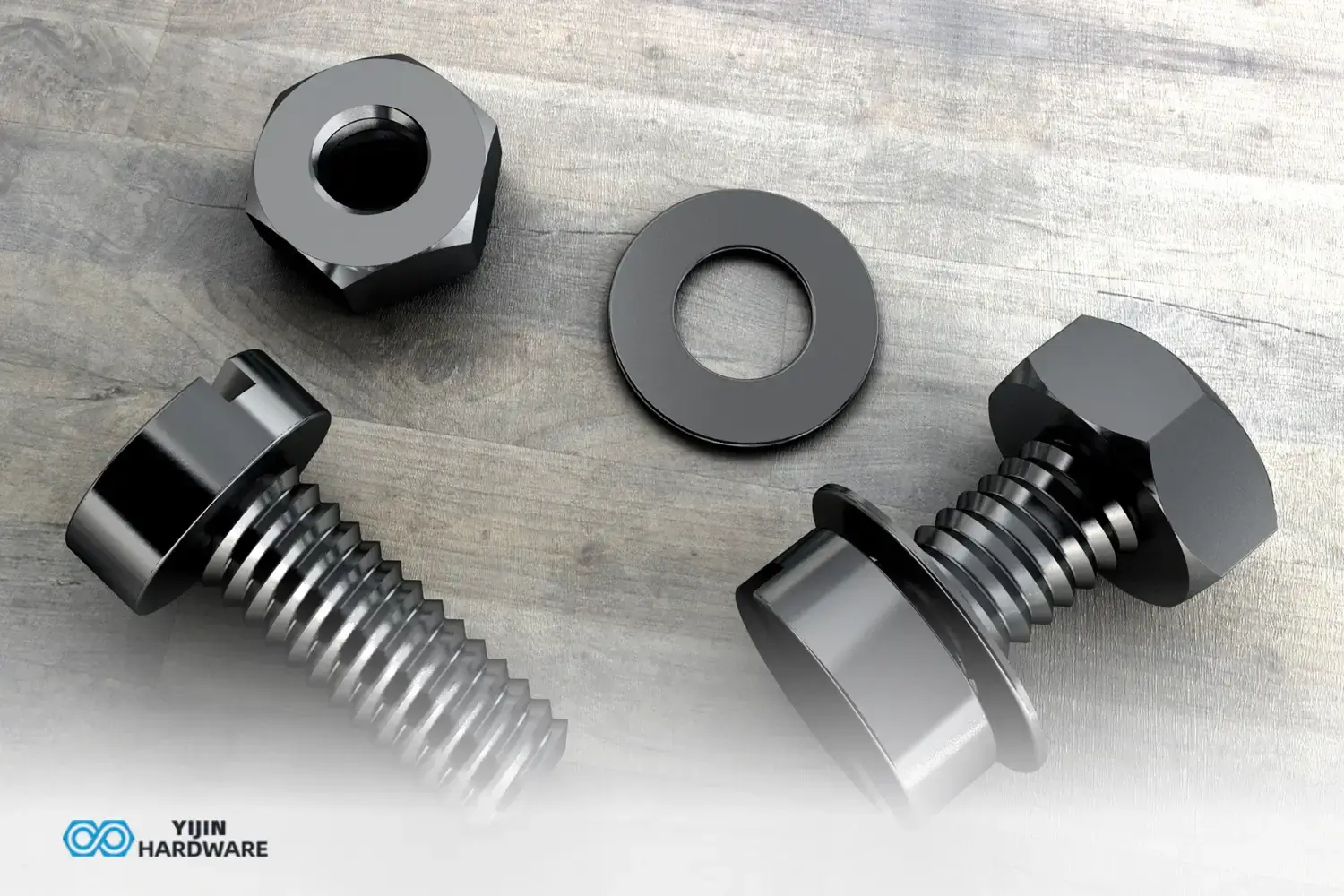
Custom fastener production covers a range of processes that convert wire or bar stock into finished parts. Here are the primary processes available through most full-service fastener manufacturers.
Cold Heading: Progressive dies form the head, shank, and recesses from a wire blank. The most cost-effective process for volumes above 10,000 pieces. Diameter range 1.5 to 25 mm.
CNC Turning: Rotating bar stock is machined by cutting tools. Suitable for fasteners with complex geometries, unusual thread forms, or tolerances tighter than cold heading allows.
Swiss Machining: A variant of CNC turning for small-diameter, long, or precision parts. Used for miniature fasteners and medical screws with tolerances to ±0.01 mm.
Thread Rolling: Hardened dies form threads by cold displacement rather than cutting. Rolled threads are stronger than cut threads and produce no chips. Standard process for high-strength fasteners.
Traitement thermique : Quenching, tempering, carburizing, or induction hardening produces fasteners to specified strength grades (Grade 5, 8, Class 8.8, 10.9, 12.9).
Plating and Coating: Zinc, hot-dip galvanizing, electroless nickel, black oxide, Dacromet, and chrome plating applied after threading. Provides corrosion resistance and appearance.
Inspection and Testing: Dimensional inspection with CMM and thread gauges. Mechanical testing includes tensile, hardness, and torque-tension. Salt spray testing for plated fasteners.
A full-service manufacturer combines these processes under one roof, reducing lead times and eliminating the coordination overhead of managing multiple suppliers.
Metal Bending Guides

Types de filetages mécaniques
Threads are basically helical ridges that get machined onto cylindrical or conical surfaces. They’re pretty ingenious – they convert rotational
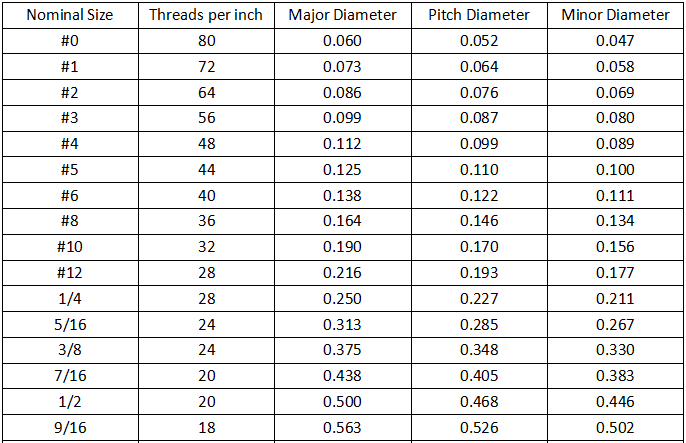
Guide complet du tableau des tailles de filets : Comprendre toutes les normes et applications
Threaded components have accurate specifications for assembly integrity and performance. We have put together this thread size chart to help
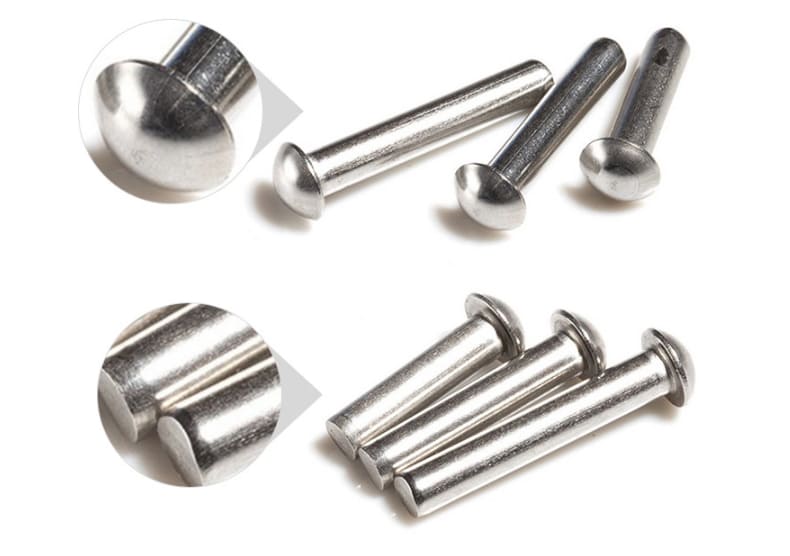
Types de rivets et leurs applications
Rivets are permanent mechanical fasteners used to join materials. Common types include solid, blind, tubular, split, shoulder, drive, self-piercing, and
Commencez dès aujourd'hui. Les pièces sont fabriquées rapidement.
Free Machined Parts Design to Your Projects with Reduced Lead Times Times.