- Fabricant de pièces de précision
- Services
- Moulage
- Injection
Injection Molding Services | From Prototype to Production
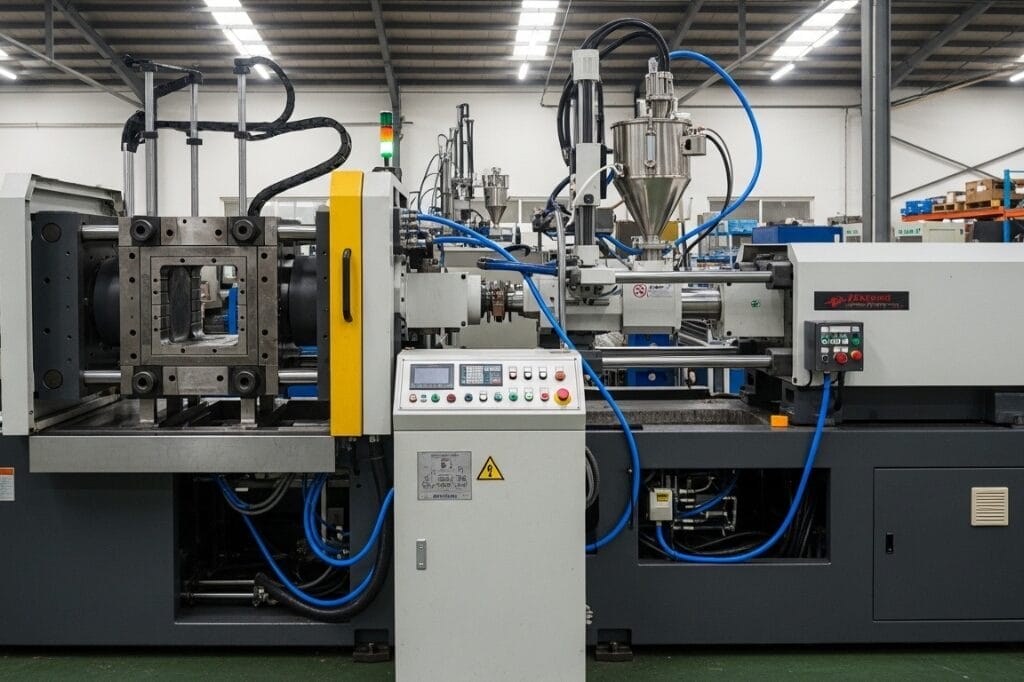
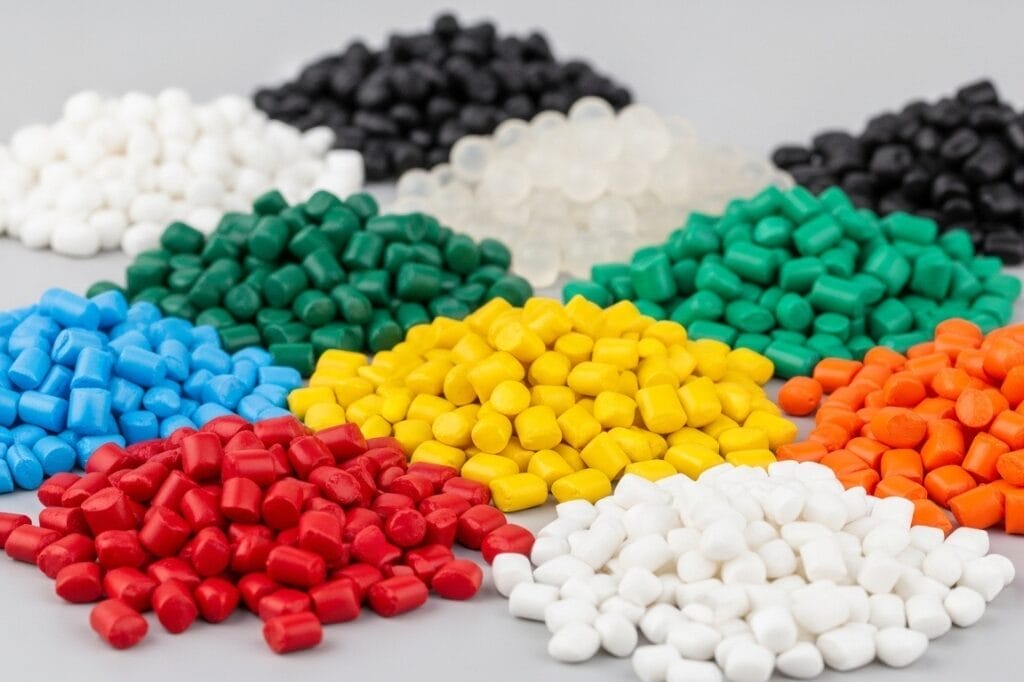
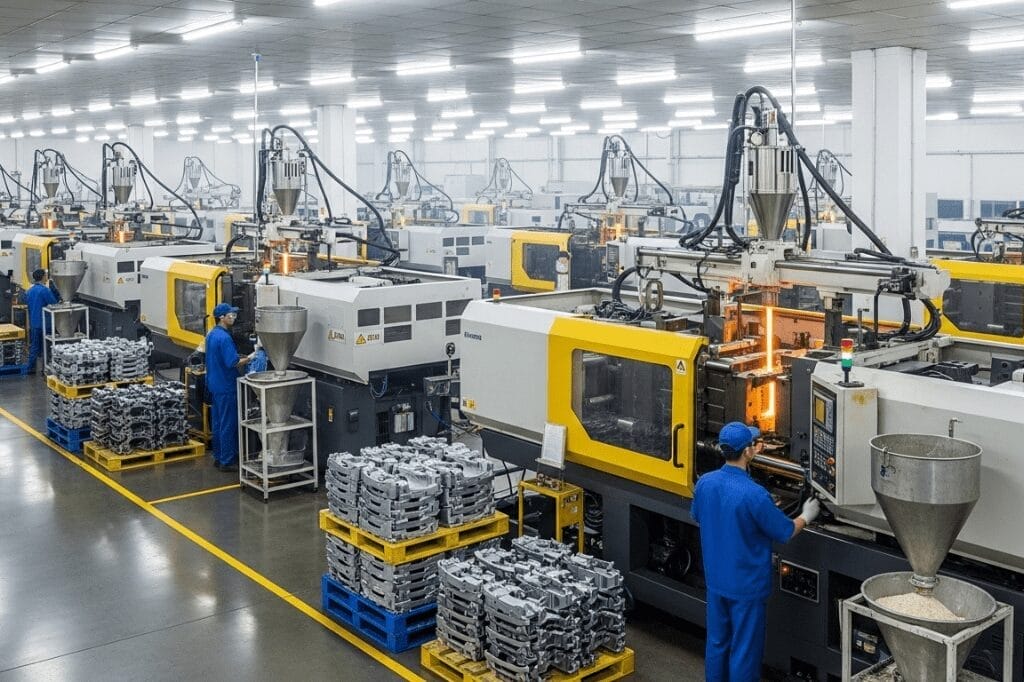
Yijin Hardware’s custom injection molding services turn raw plastique pellets into precise, complex parts with the consistency and cost-efficiency your production demands. Our plastic injection molding equipment runs from 30-ton machines for tiny precision components all the way up to 1800-ton presses for large-scale parts, handling everything from automotive and medical applications to consumer goods. Whether you’re prototyping a new design or ramping up full production, we’ve got the capacity and expertise to deliver tight-tolerance parts that meet your specifications without the quality headaches.
- ⬤Service
- ⬤Vos coordonnées
- ⬤Soumettre


Qu'est-ce que le moulage par injection ?
Injection molding is a manufacturing process that produces parts by injecting molten material into precision-machined molds. The injection mold tool contains a cavity where molten plastic is injected under high pressure (up to 200 MPa) where it cools and solidifies. This versatile process accommodates a wide range of molding materials including thermoplastics, thermoset polymers, and elastomers, making it ideal for producing everything from automotive components to medical devices.
The plastic part injection molding process delivers exceptional part consistency with minimal waste, making it the most cost-effective manufacturing method for medium to high-volume production runs.
Key Process Stages
- Serrage: The injection molding machine secures mold halves with forces up to 3000 tons
- Injection: The inject unit pushes molten plastic into the mold cavity
- Dwelling/Packing: Pressure maintained to compensate for material shrinkage (0.4-2%)
- Refroidissement: Material cools and solidifies (typically the longest stage of the cycle)
- Ejection: Finished molded parts removed from the mold

What Injection Molding Services do We Offer?
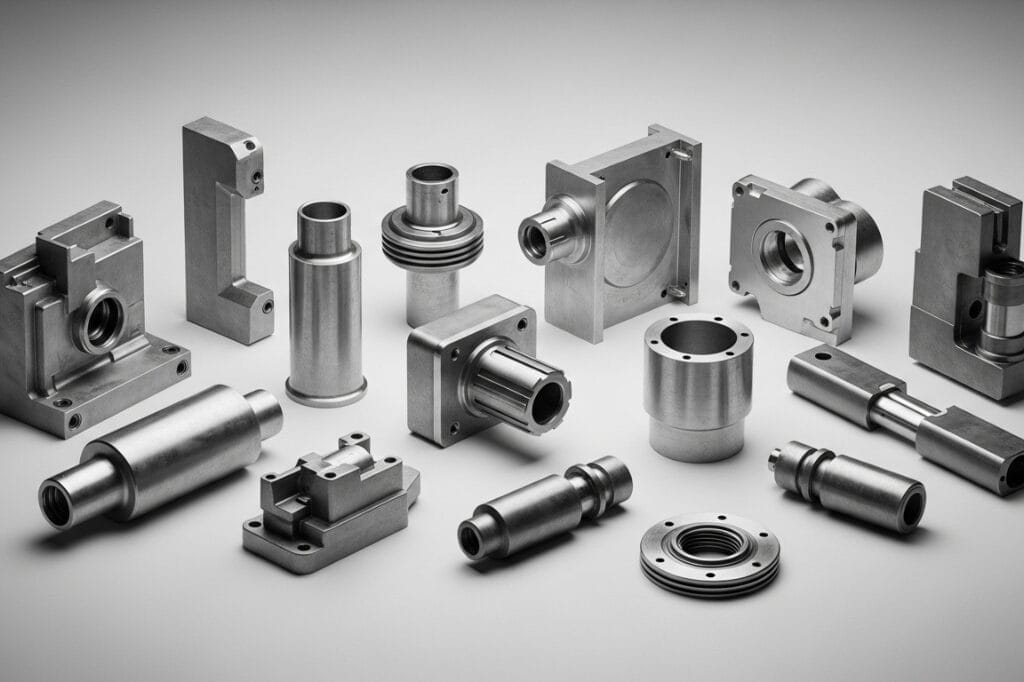
Yijin Hardware provides comprehensive custom plasting molding services covering the entire product development process from initial CAD design to finished parts. Our services include standard production molding for mass manufacturing, rapid prototype injection molding for testing fit and function, overmolding for combining multiple materials, and insert moulding for creating hybrid metal-plastic components. We also offer two-part injection molding for complex applications requiring different material properties in a single part.
Our Service Portfolio
- Standard Injection: High-volume, consistent part production
- Prototype Injection Molding: Low-volume testing and validation
- Surmoulage: Enhanced functionality with multiple materials
- Moulage par insertion: Embedding metal parts within plastic
- Multi-shot Molding: Sequential injection moulding process of different materials
What Materials Can Be Used for Injection Molding?
The injection molding process accommodates over 100 different injection molding materials, giving you exceptional flexibility for your project requirements. Our material selection includes common thermoplastics such as ABS, polypropylene (PP), polycarbonate (PC), and Nylon (PA), as well as high-performance options like PEEK, PEI (ULTEM), and PPS. We also work with thermoset materials and elastomers, including liquid silicone rubber (LSR), for applications requiring flexibility and durability.
| Catégorie de matériaux | Exemples | Propriétés principales |
|---|---|---|
| Standard Thermoplastics | ABS, PP, PE, PS | Cost-effective, good general properties |
| Engineering Thermoplastics | PC, PBT, PA, POM | Enhanced mechanical and thermal properties |
| High-Performance Plastics | PEEK, PEI, PPS | Extreme temperature and chemical resistance |
| Elastomers & Rubber-like | TPE, TPU, LSR | Flexibility, compression set resistance |
| Bio-based/Sustainable | PLA, Bio-PE, PHA | Reduced environmental impact |
How does Our Injection Molding Process Ensure Quality?
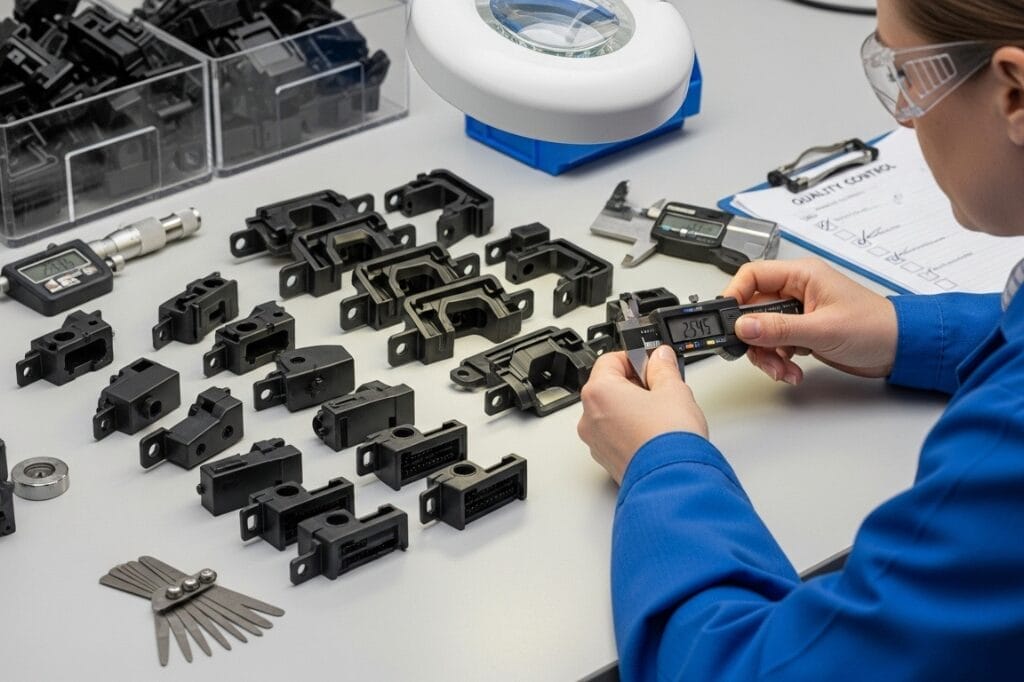
Our injection moulding process follows a rigorous methodology to ensure consistent, high-quality injection molded parts that meet or exceed specifications. The process begins with thorough design review and tooling design analysis to identify potential issues before production. We then create precision molds using advanced Usinage CNC, following SPI standards from Class 105 (prototype) to Class 101 (high-volume production tooling). During production, our experienced team operates with precise control of heat and pressure, and cycle time to maintain part consistency.
Quality Control Measures
- Scientific Molding: Process parameter optimization using data-driven methods
- In-Process Monitoring: Real-time control of critical parameters
- Statistical Process Control (SPC): Ongoing quality verification
- Inspection du premier article: Comprehensive validation before production
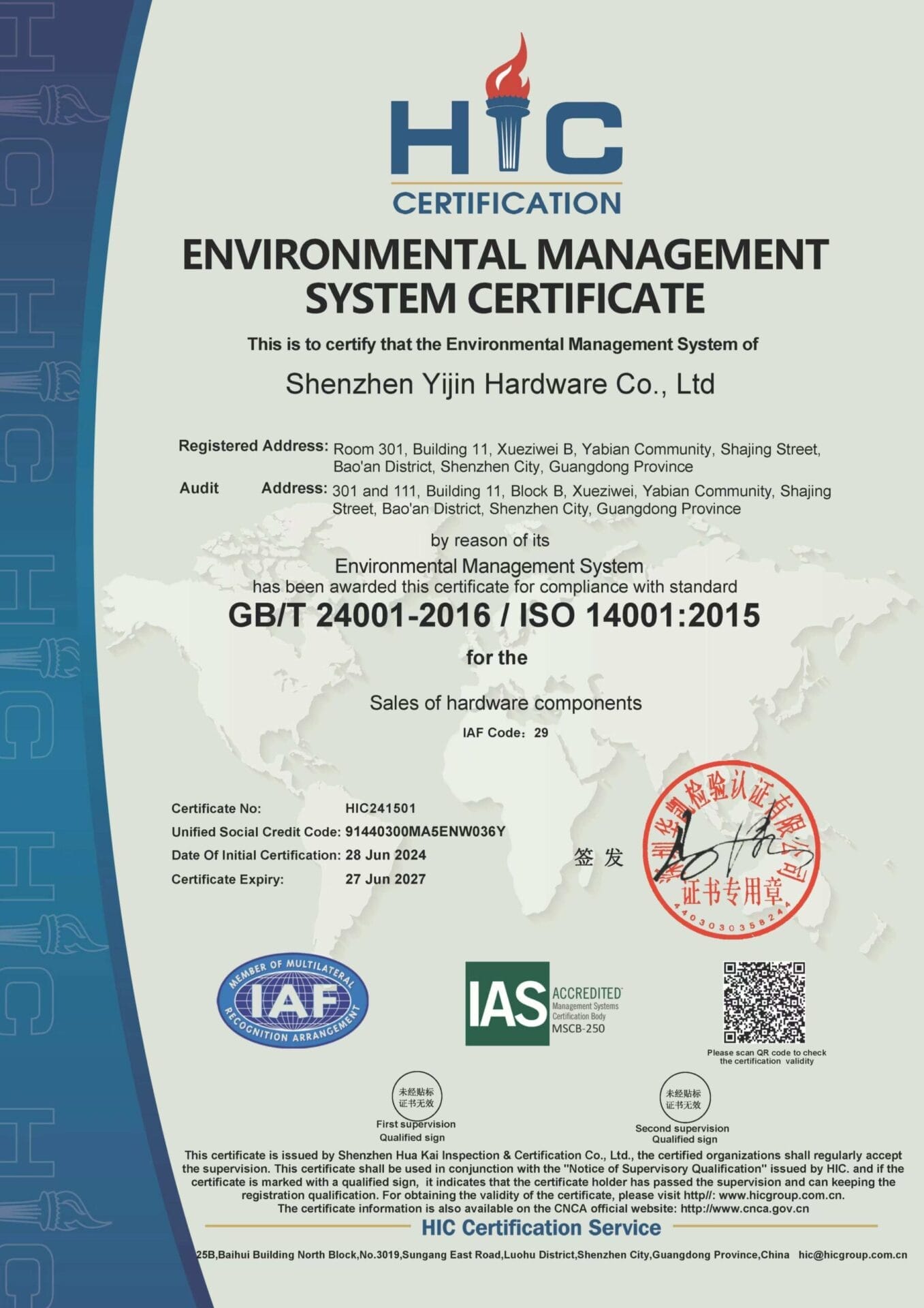
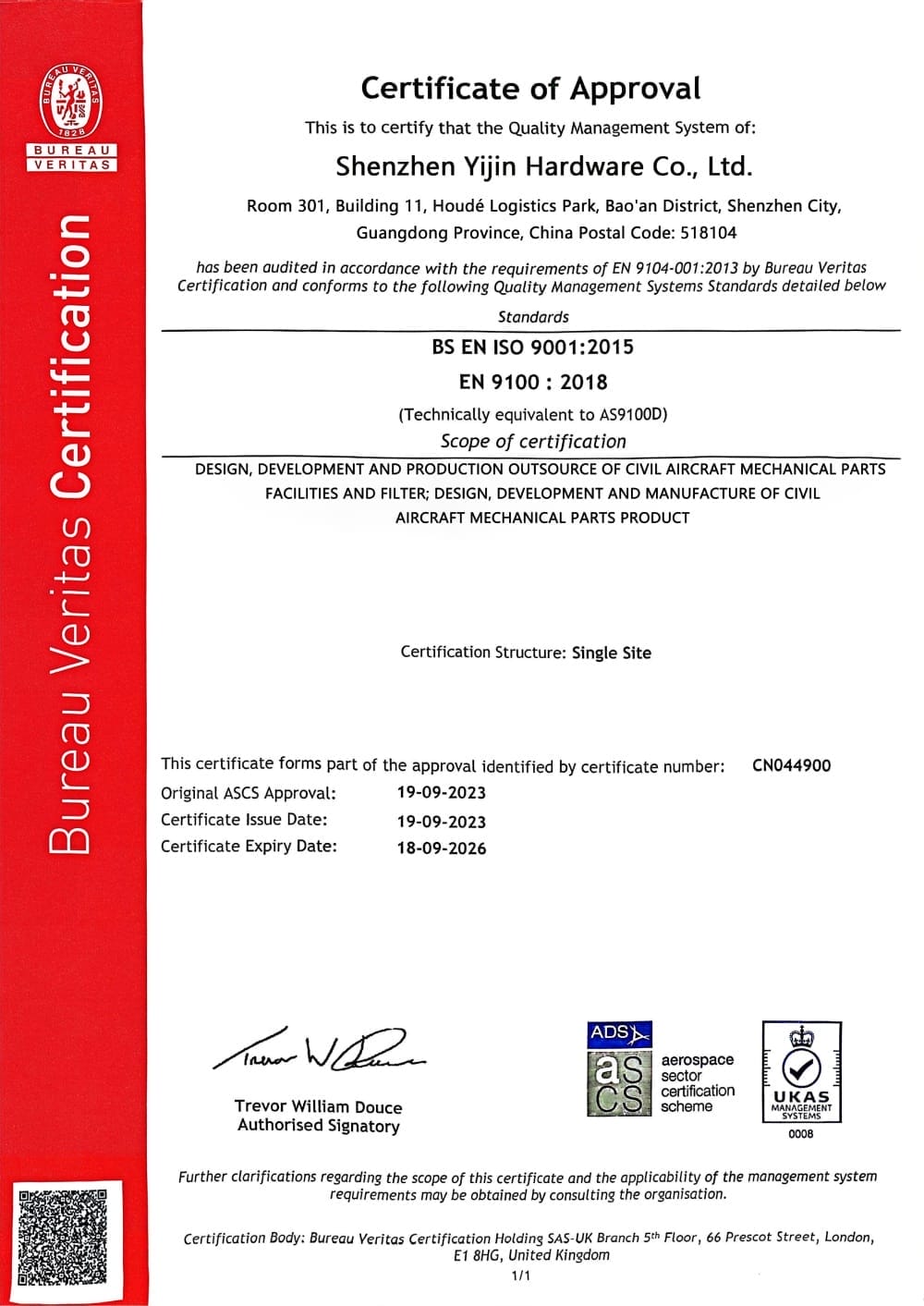
- ISO 9001:2015 Certification: Stringent quality control systems
| Mold Classification | Production Cycles | Matériau | Application |
|---|---|---|---|
| Class 101 | 1,000,000+ | Hardened tool steel | Mass production |
| Class 102 | 1,000,000 | Hardened steel/P20 | Biens de consommation |
| Class 103 | 500,000 | Pre-hardened steel | Electronics, medical |
| Class 104 | 100,000 | Aluminum/Carbon Steel | Low-volume production parts |
| Class 105 | 500 | Soft aluminum | Prototypage rapide |
What Surface Finishes are Available for Injection Molded Parts?
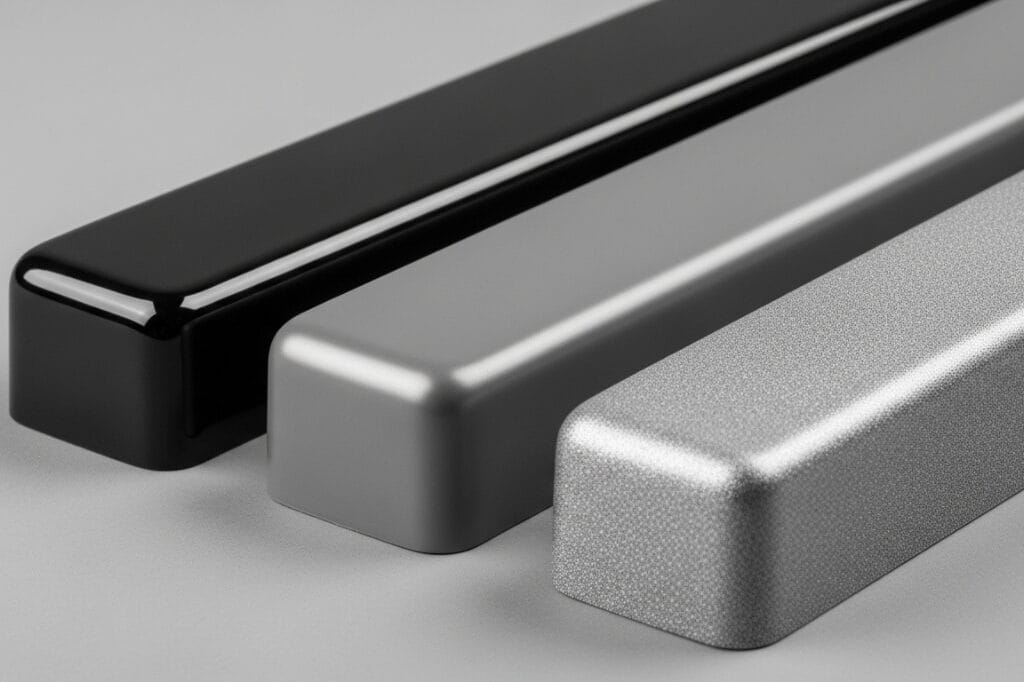
Finition de la surface quality significantly impacts both the appearance and functionality of injection moulded parts. We offer a complete range of surface finish options from mirror-gloss (A-1) to textured (D-3) to meet diverse application requirements. High-gloss finishes (SPI-A grades) are achieved through diamond buffing with grit levels from 6000 to 1200, creating surfaces with Ra values as low as 0.012 μm.
Surface Finish Options
| SPI Grade | Type de finition | Rugosité de la surface (Ra) | Applications typiques |
|---|---|---|---|
| A-1 to A-3 | Mirror to High Gloss | 0.012–0.10 μm | Optical parts, consumer products |
| B-1 to B-3 | Semi-Gloss | 0.05–0.28 μm | Electronics, automotive interiors |
| C-1 to C-3 | Matte | 0.28–0.55 μm | Functional parts, industrial products |
| D-1 to D-3 | Textured | 0.55–1.50 μm | Non-slip surfaces, industrial plastic injection molding |
How do Different Industries Benefit from Injection Molding?
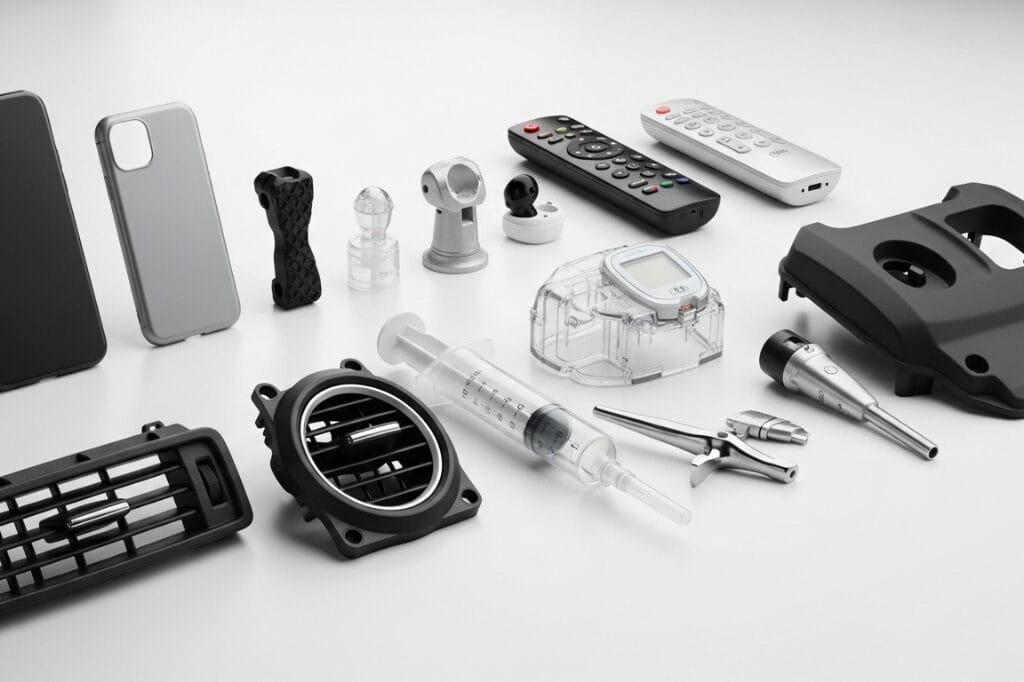
Injection moulding techniques serve diverse industries, with specialized applications tailored to each sector’s unique requirements. The automotive industry uses injection molded components for dashboards, interior trim, under-hood parts, and exterior elements that require precise dimensions and durable materials. Medical device manufacturers rely on micro injection molding for producing sterile, biocompatible components with exceptional quality and consistency.
Applications industrielles
- Automobile: Dashboards, connectors, body panels, under-hood components
- Médical: Surgical instruments, device housings, drug delivery systems
- Électronique: Housings, connectors, internal components
- Biens de consommation: Toys, appliances, sporting equipment
- Emballage: Containers, closures, dispensing systems
- Aérospatiale: Interior components, non-structural elements
- Renewable L'énergie: Component housings, connection systems
What Production Volumes Can You Handle?
Yijin Hardware accommodates all production volumes, from single prototypes and low-volume production parts to mass production runs of millions of units. For prototypes, we utilize rapid aluminum tooling that delivers parts in as little as 15 days with lower initial injection molding cost. Medium volume production (5,000-100,000 units) typically employs Class 103 or 102 tooling for optimal balance between tool longevity and investment.
Advanced Production Technologies
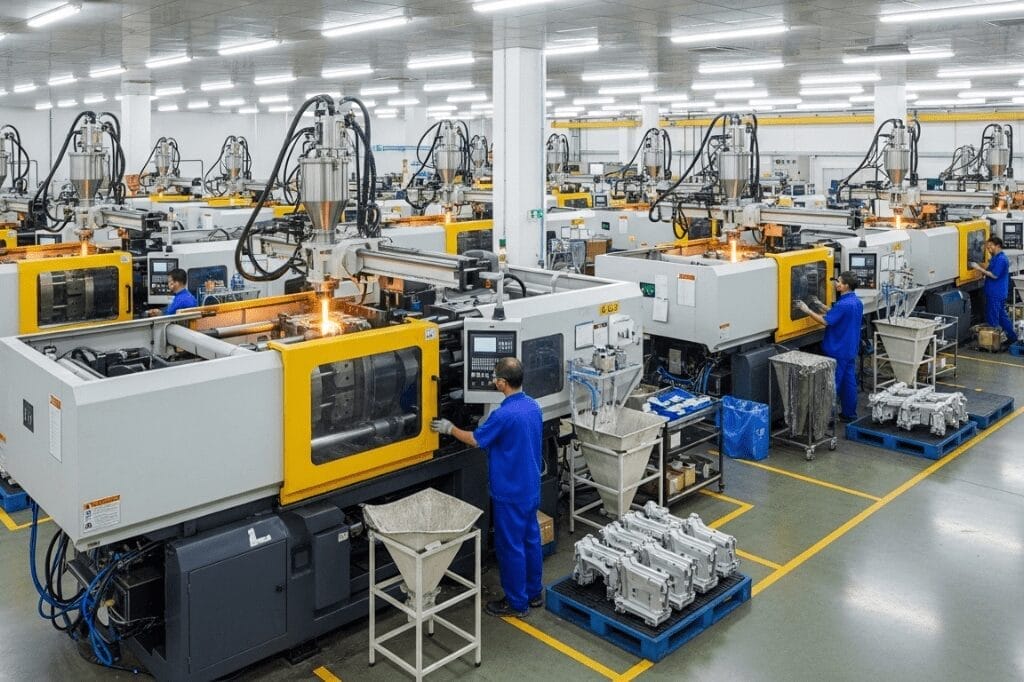
- Intégration de l'industrie 4.0: Digital monitoring of the injection unit
- Hot Runner Systems: Minimized waste when injecting molten plastic
- Automated Part Handling: Reduced cycle times and labor costs
- Cycle Time Optimization: Typical cycles from 15 to 60 seconds
- Energy-Efficient Machines: Reduced carbon footprint and operating costs
Why Choose Yijin Hardware for Injection Molding?
Yijin Hardware delivers exceptional moulding services through our comprehensive capabilities and customer-focused approach. We specialize in creating complete plastic products for clients worldwide, including services in Australia and Melbourne. Our injection molding suppliers provide a wide range of materials and offer injection moulding solutions with parts with tight tolerances across production runs of any size.
Our Key Differentiators
- Complete End-to-End Service: From 3D CAD to production under one roof
- Fabrication durable: Biodegradable options and waste reduction
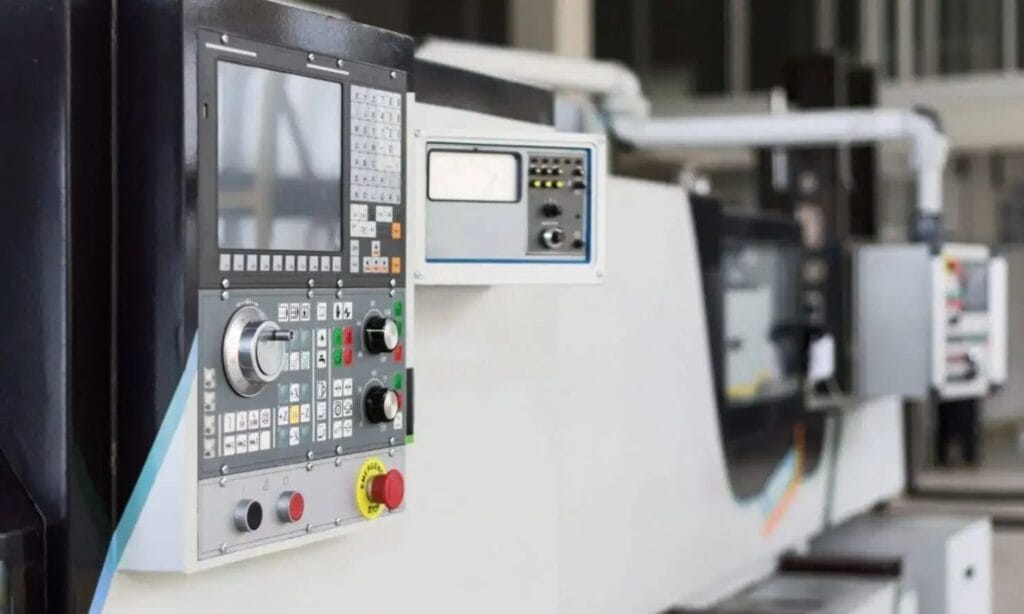
- Advanced Digital Process Control: The barrel is heated and monitored precisely
- Material Science Expertise: Factors like material selection guidance
- Vacuum Casting Alternative: For when traditional injection molding isn’t suitable
- Metal Injection Moulding: For complex design metal parts production
Ce que disent nos clients


Injection Molding Services FAQs
The primary tools include the injection mold tool (cavity and core plates), the injection molding machine (barrel, screw, injection unit), and auxiliary equipment. Production tooling typically uses hardened tool steel, while prototype tooling often uses aluminum. Supporting tools include temperature controllers, material dryers, robotic systems, and quality inspection equipment for consistent part production.
The injection nozzle size depends on material viscosity, part size, and design complexity. Standard thermoplastics typically use 3-8 mm diameter nozzles, while micro injection molding applications may use smaller diameters down to 0.5 mm. Our team selects the optimal injection setup based on part volume, gate size, and flow path length to ensure proper filling of the mold cavity.
Two-shot injection molding is a manufacturing method where two different materials are molded together in a single process. The first material creates a base component, then a second material is injected, creating a chemical or mechanical bond without assembly. This technique produces parts with different colors, textures, or properties (rigid and flexible sections) in one production cycle, commonly used for tool handles with soft grips and multicolored components.
Ressources CNC
Les 10 premiers fabricants de tôles en laiton
La tôle en laiton possède des propriétés qui la rendent précieuse dans de nombreuses industries et attrayante pour des utilisations architecturales et décoratives. Qu'il s'agisse de
Les 10 meilleures entreprises de fabrication de tôles de précision (guide complet)
La fabrication de tôles de précision n'est pas un travail de métallerie ordinaire - il s'agit d'une fabrication qui respecte des tolérances mesurées en millièmes de millimètre.
Les 10 meilleurs fabricants de couvertures métalliques à connaître
Le choix d'un fabricant de toitures métalliques ne doit pas être une erreur, car votre toit est littéralement ce qui protège tout ce qui se trouve en dessous
Commencez dès aujourd'hui. Les pièces sont fabriquées rapidement.
Conception gratuite de pièces usinées pour vos projets avec des délais d'exécution rapides.
 FR
FR  EN
EN  ES
ES  RU
RU  DE
DE